Kennedy Mine
82 photos from Kennedy Mine on Starbuck.org.
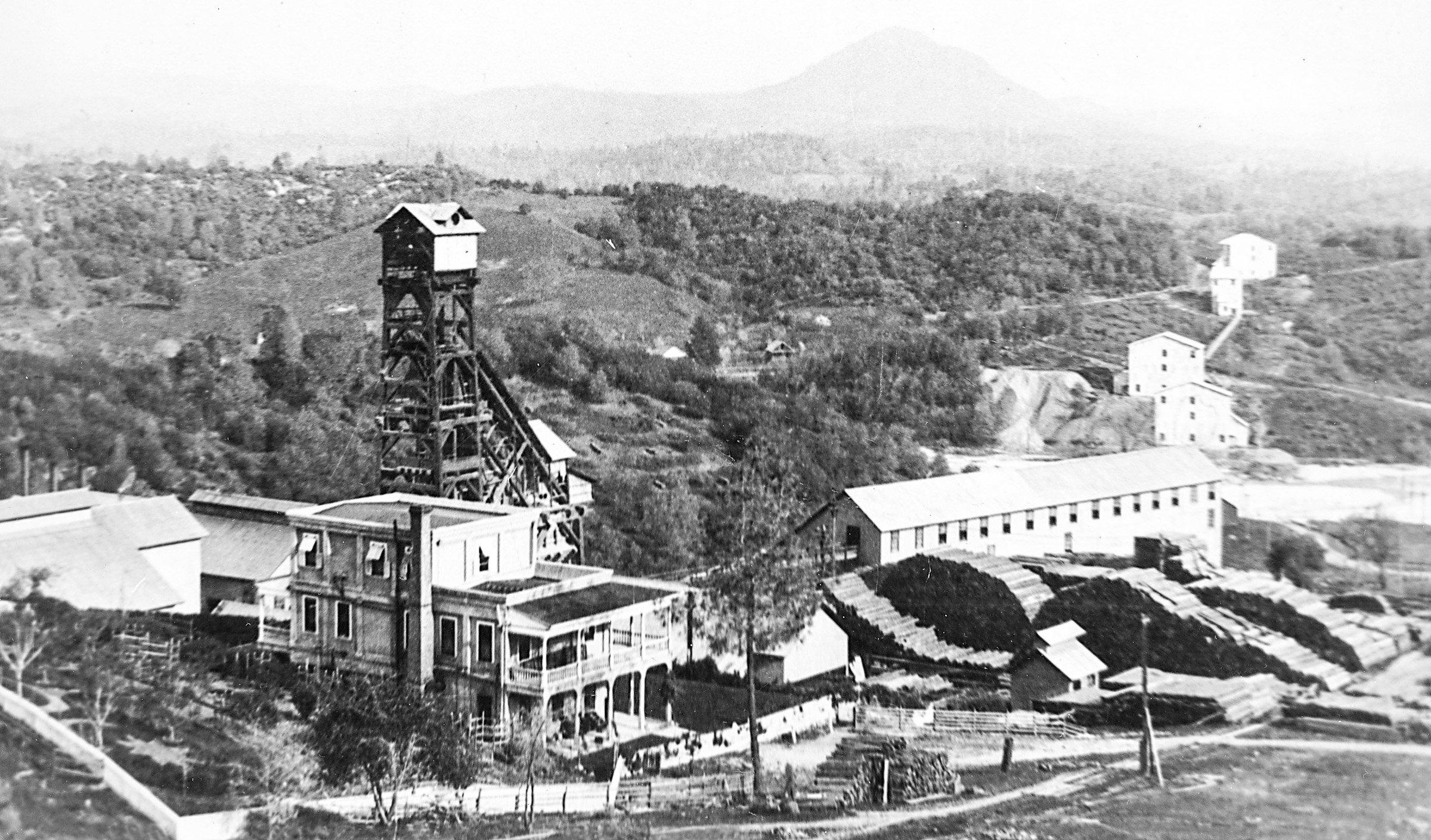 Kennedy Mine circa 1920
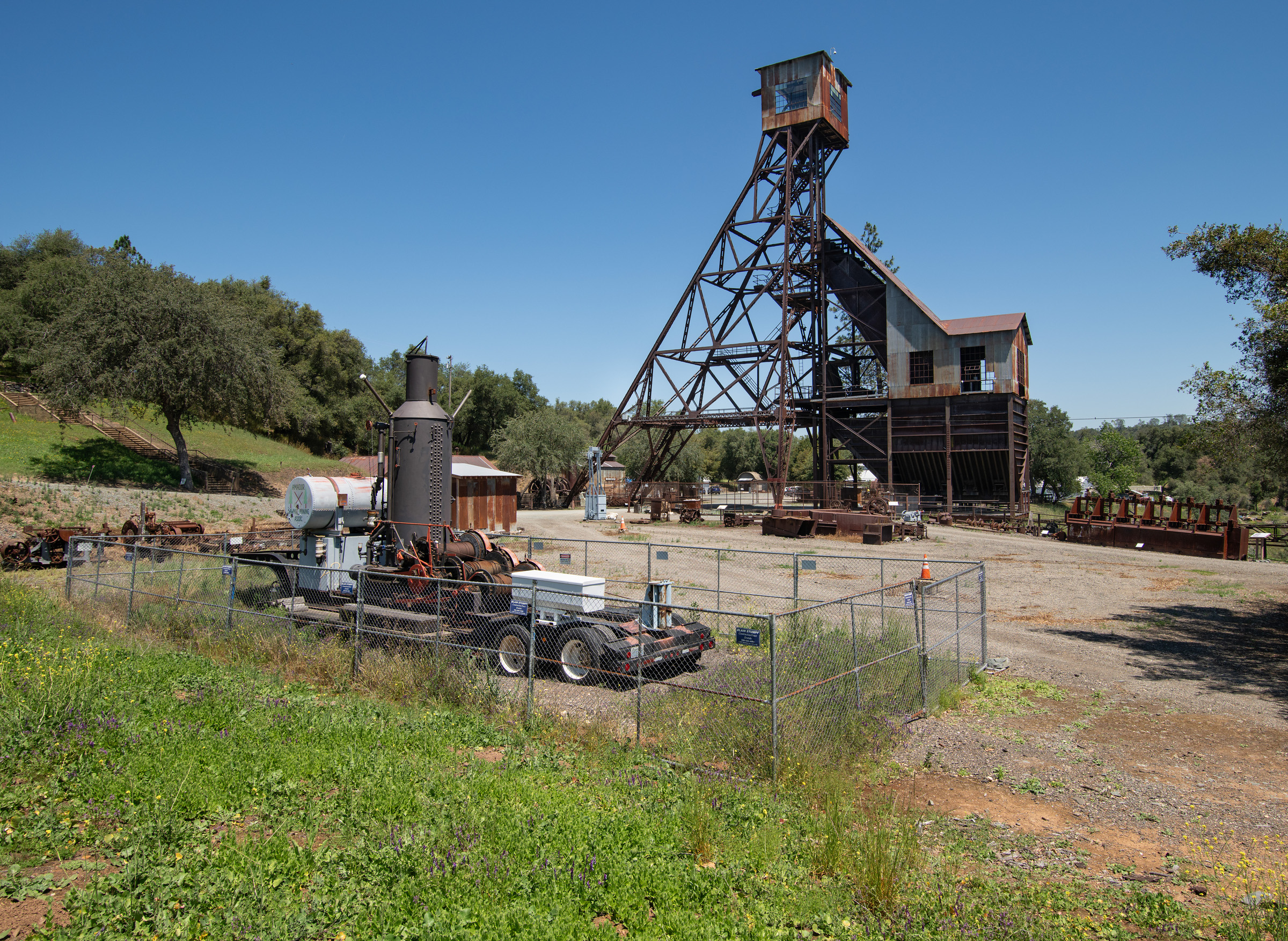
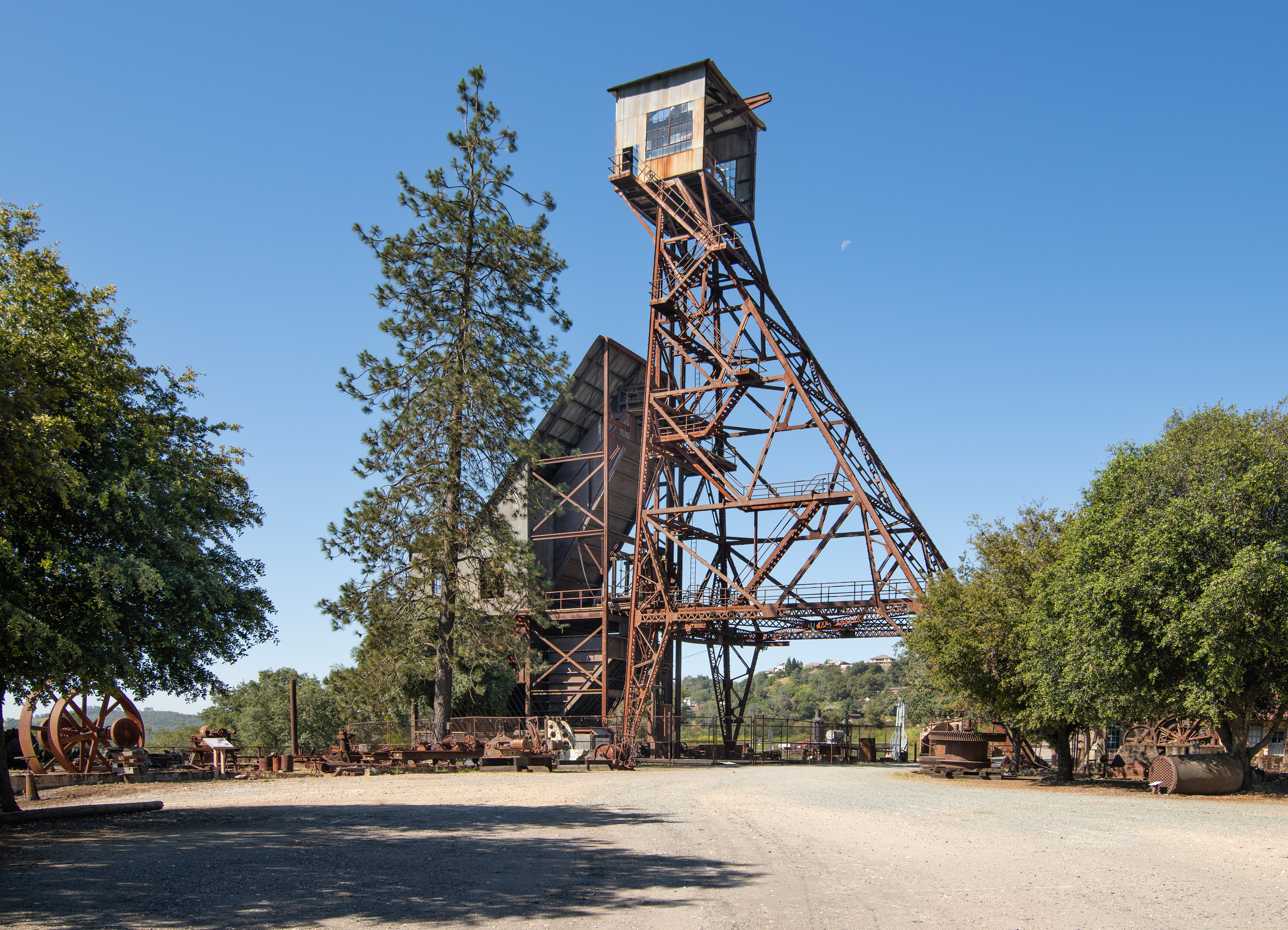 The metal 135-foot headframe was built after the 1928 fire
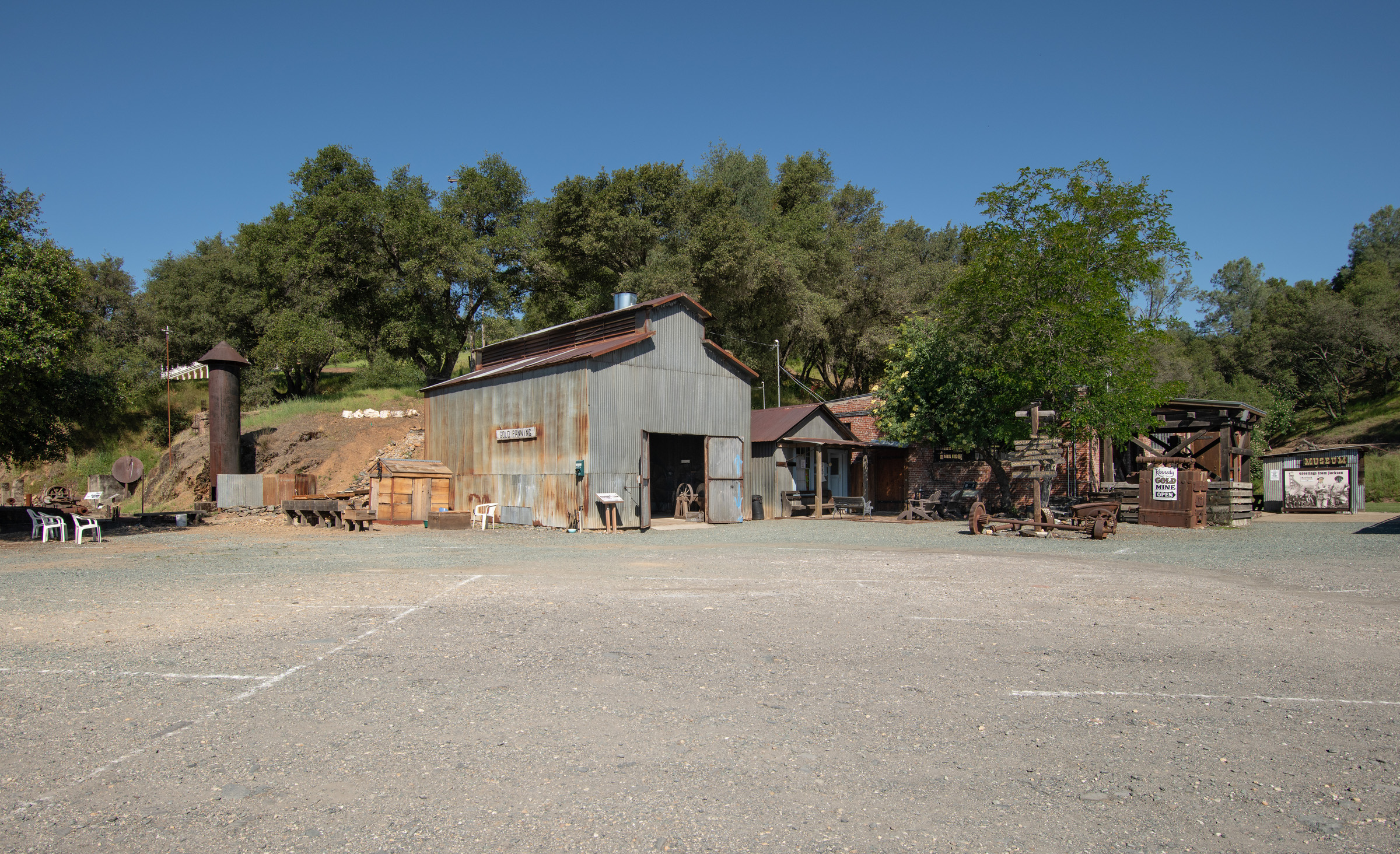 View from the parking area
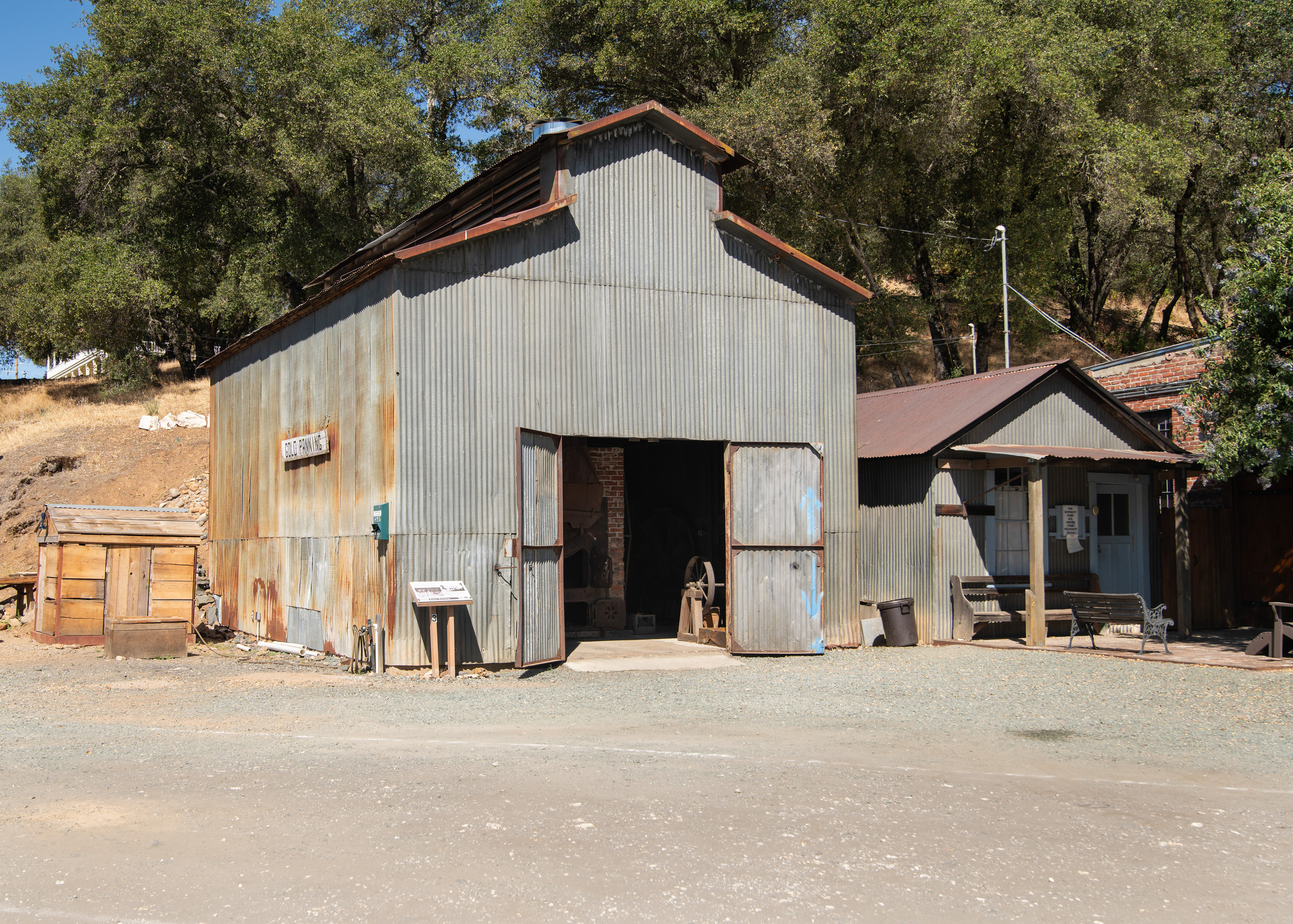 Boiler building and first aid clinic
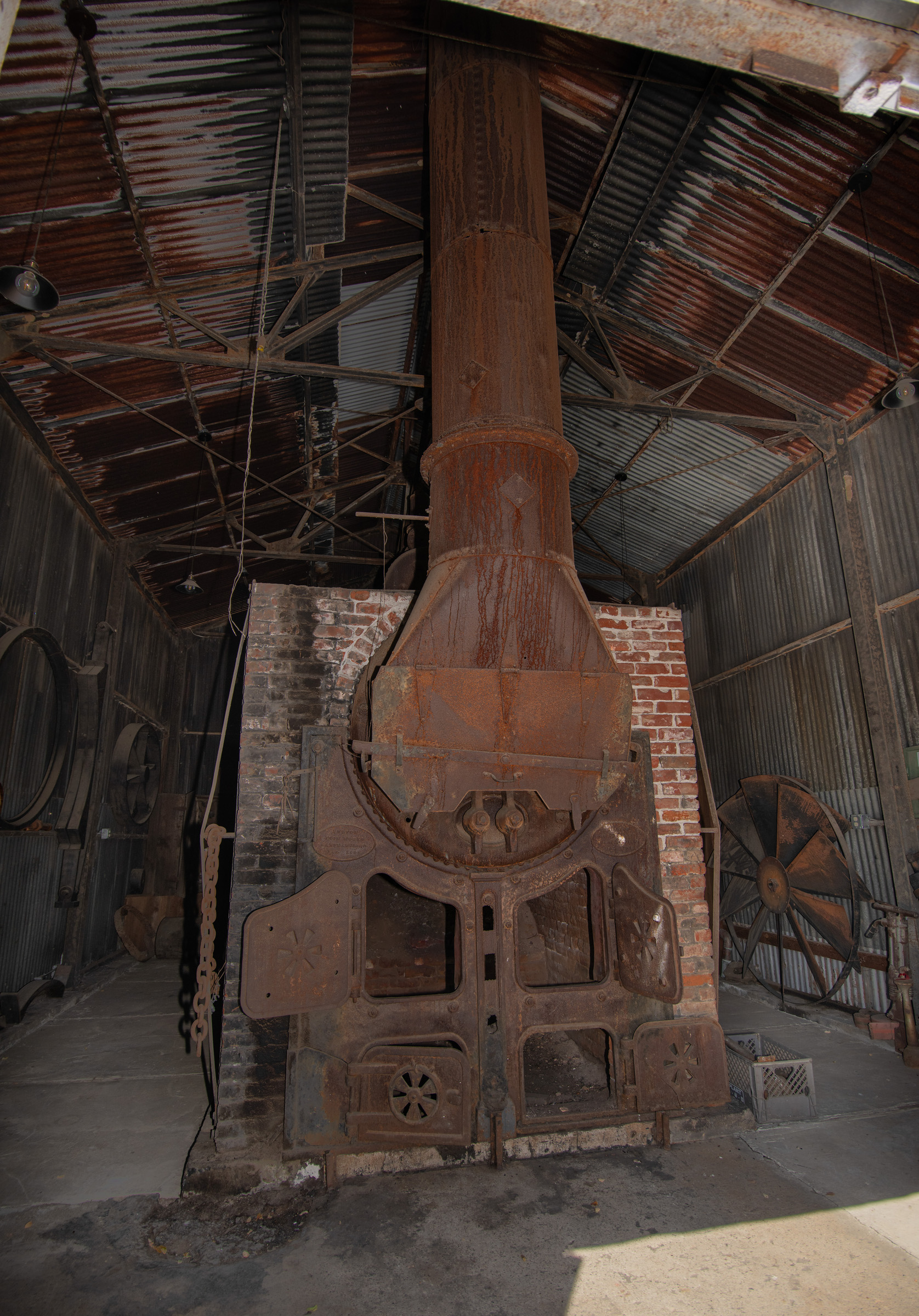 After the mine converted to electric in 1926, this boiler provided heat and hot water
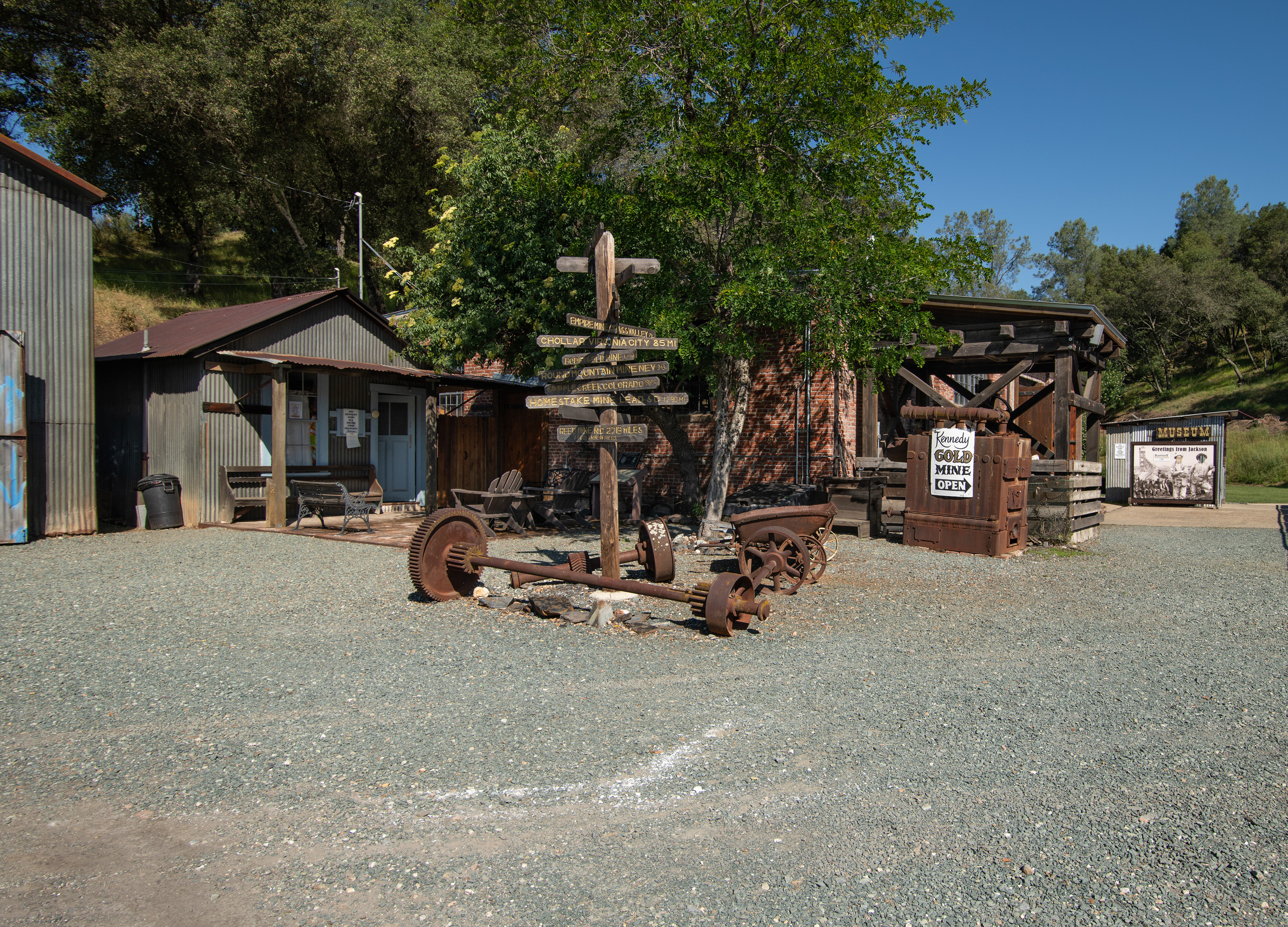 The brick Change House now serves as a museum/visitor center/gift shop
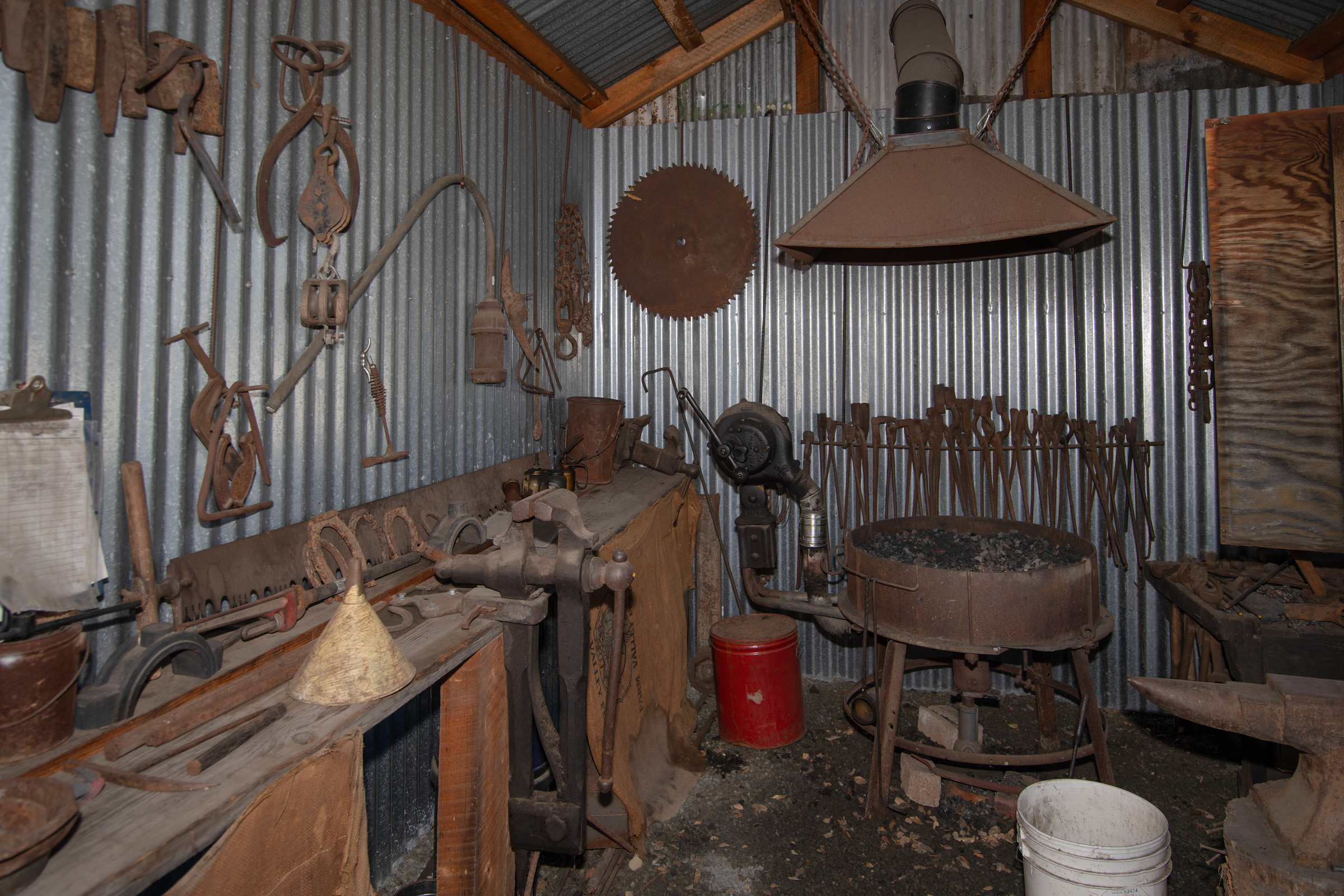 This is a replica 1849 blacksmith shop
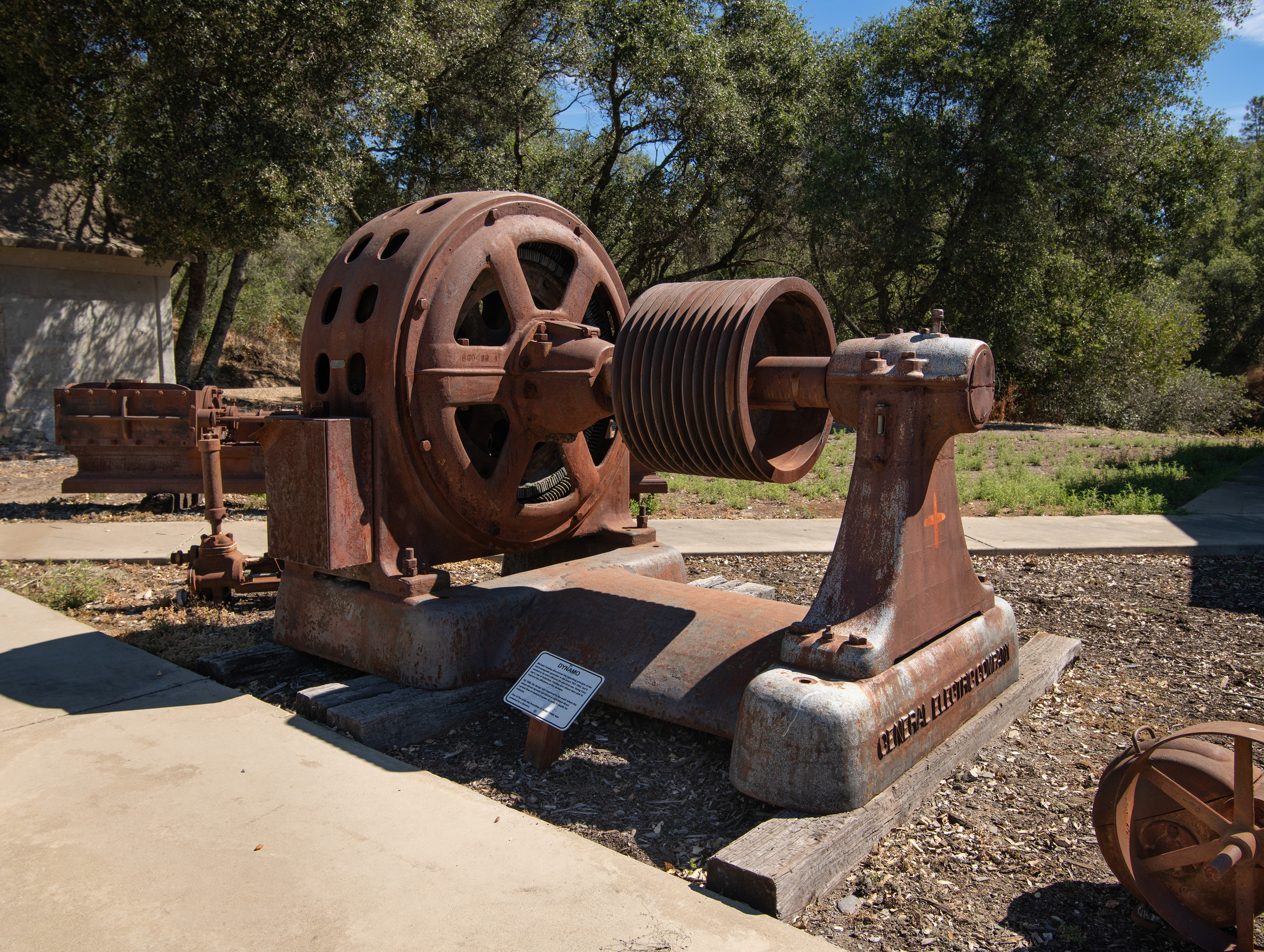 General Electric dynamo
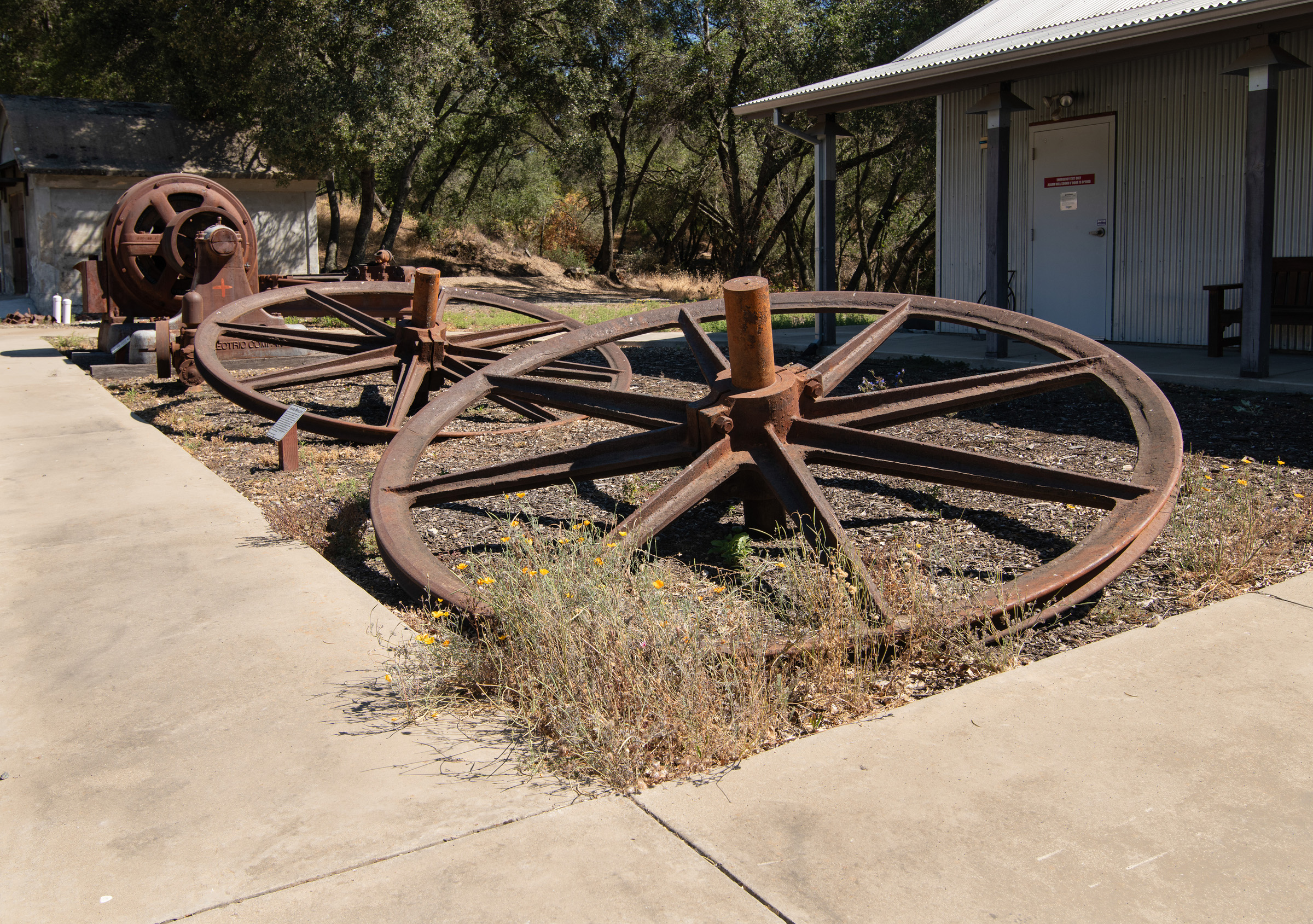 These 10-ft sheaves were at the top of the Kennedy Mine headframe
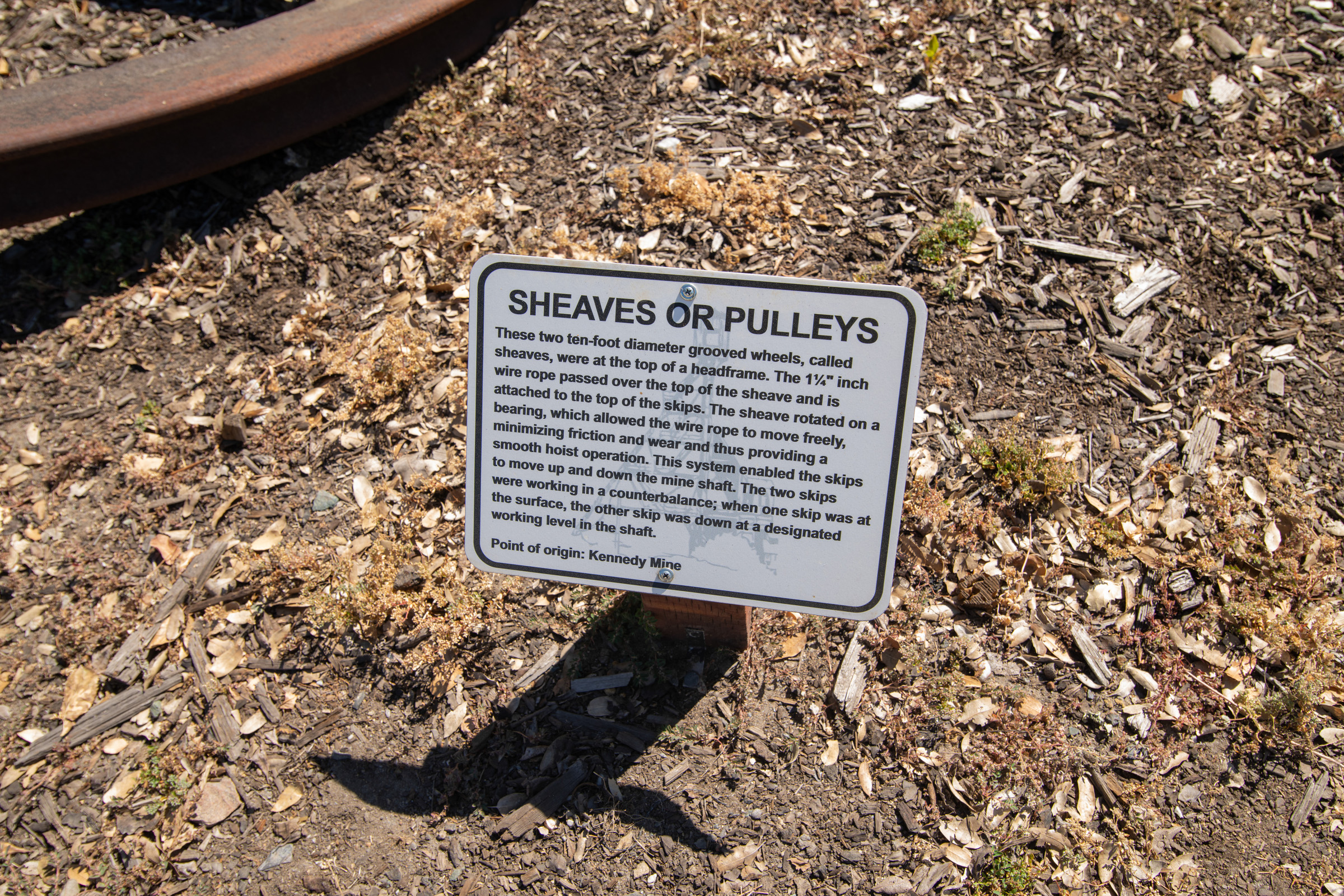
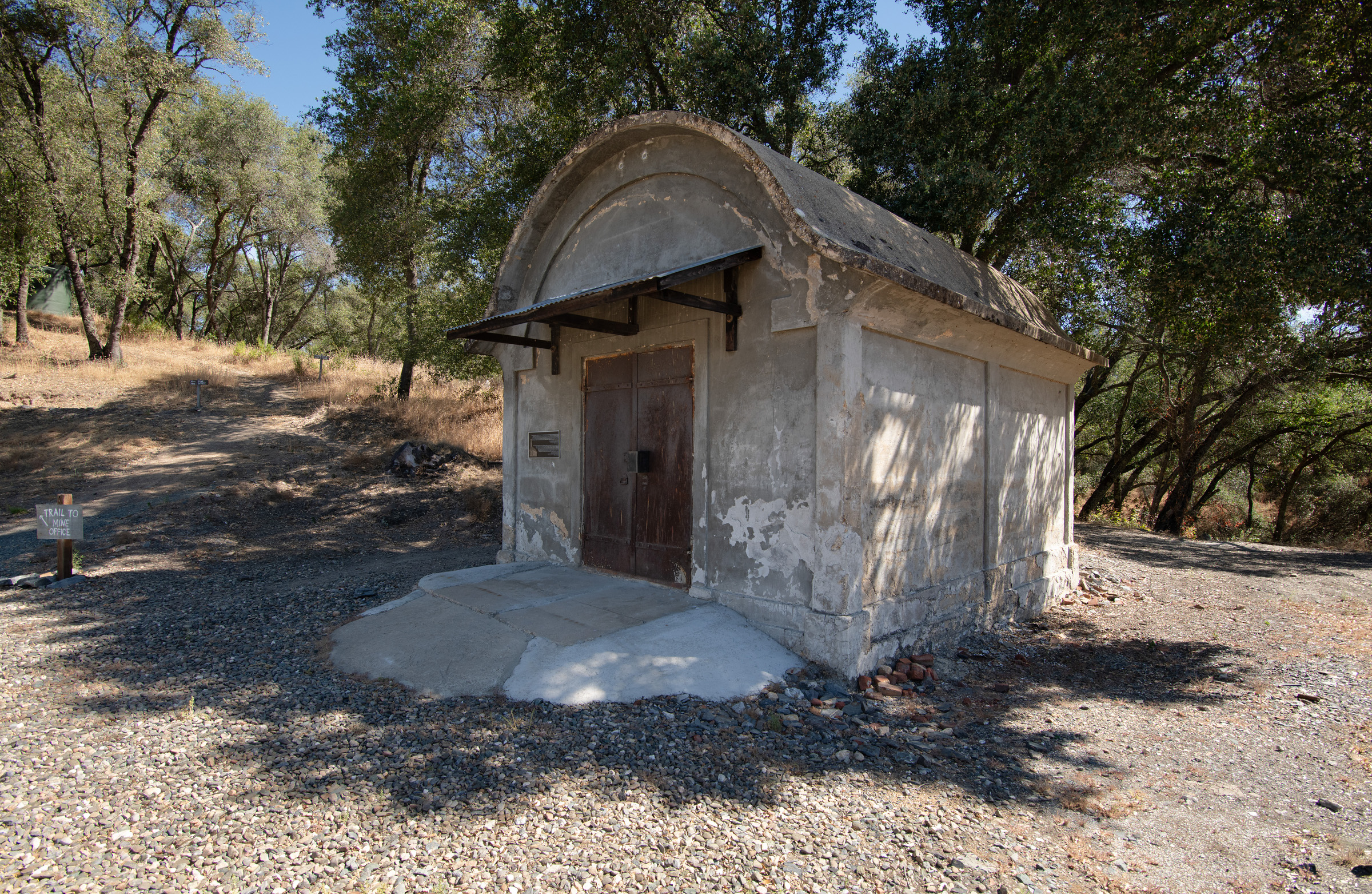 Oil and lubricant storage building, constructed by immigrant Serbian workers
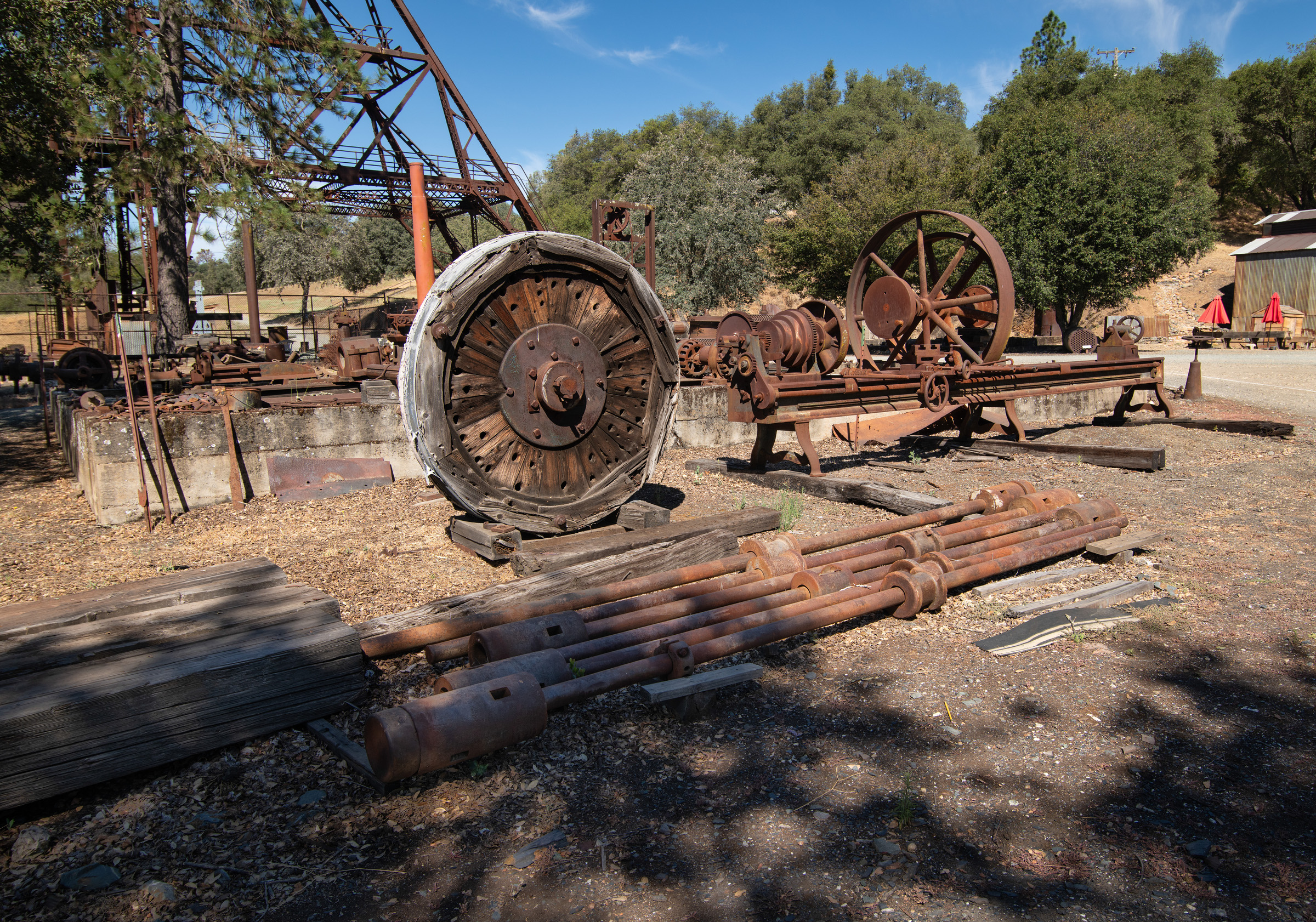 Original machine shop and blacksmith site
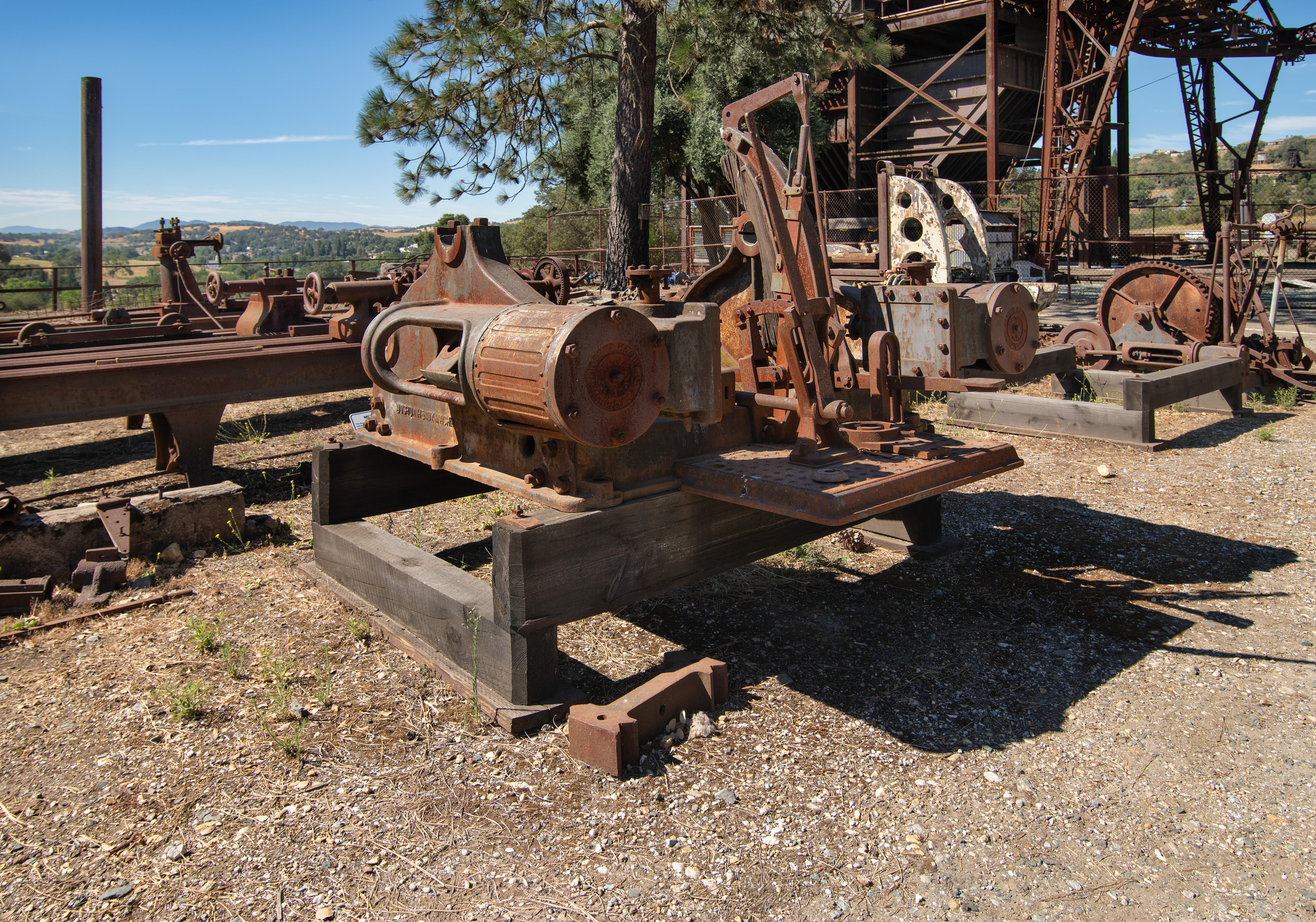 Remains of a Joshua Hendy steam-powered hoist
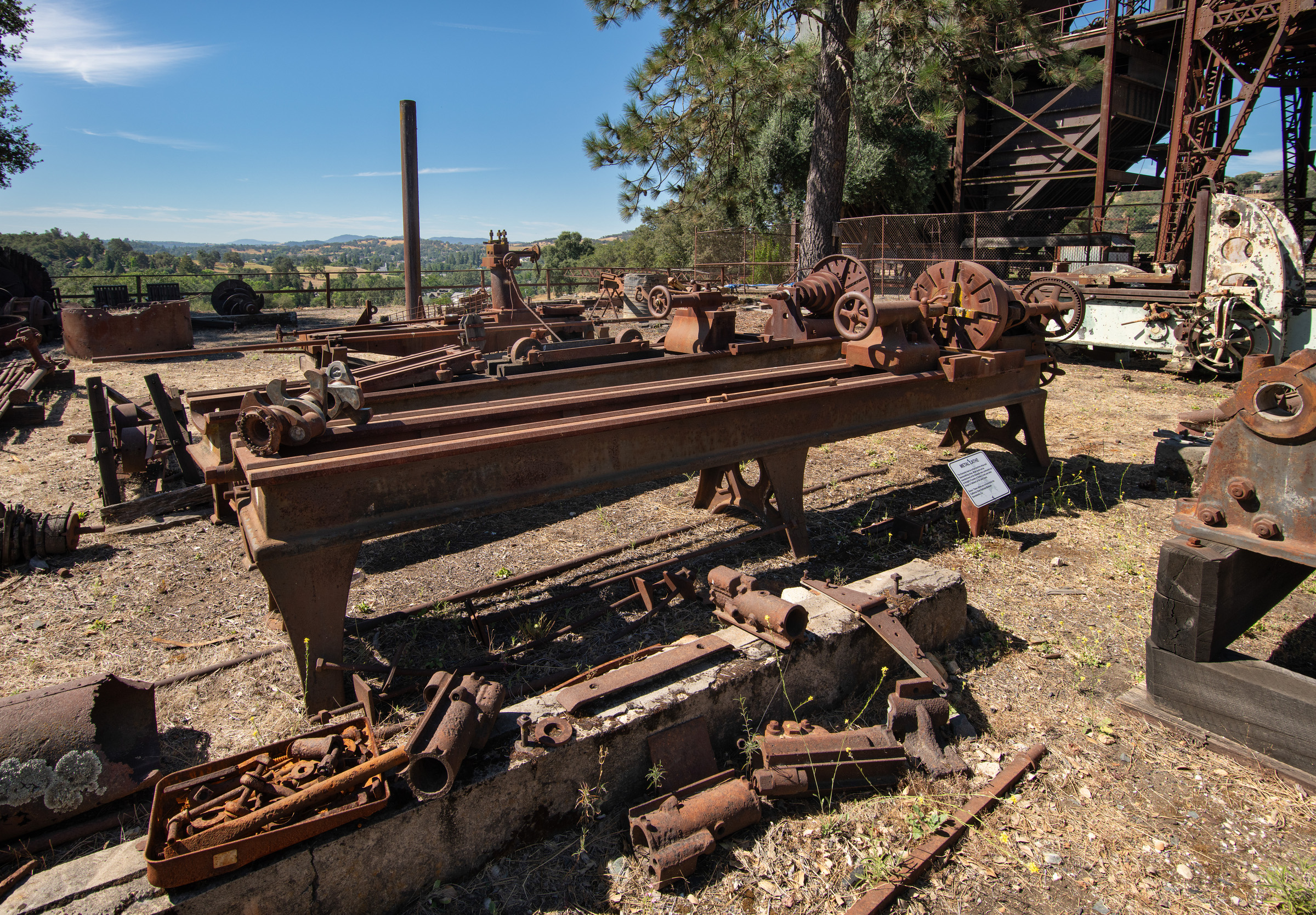 Metal lathes
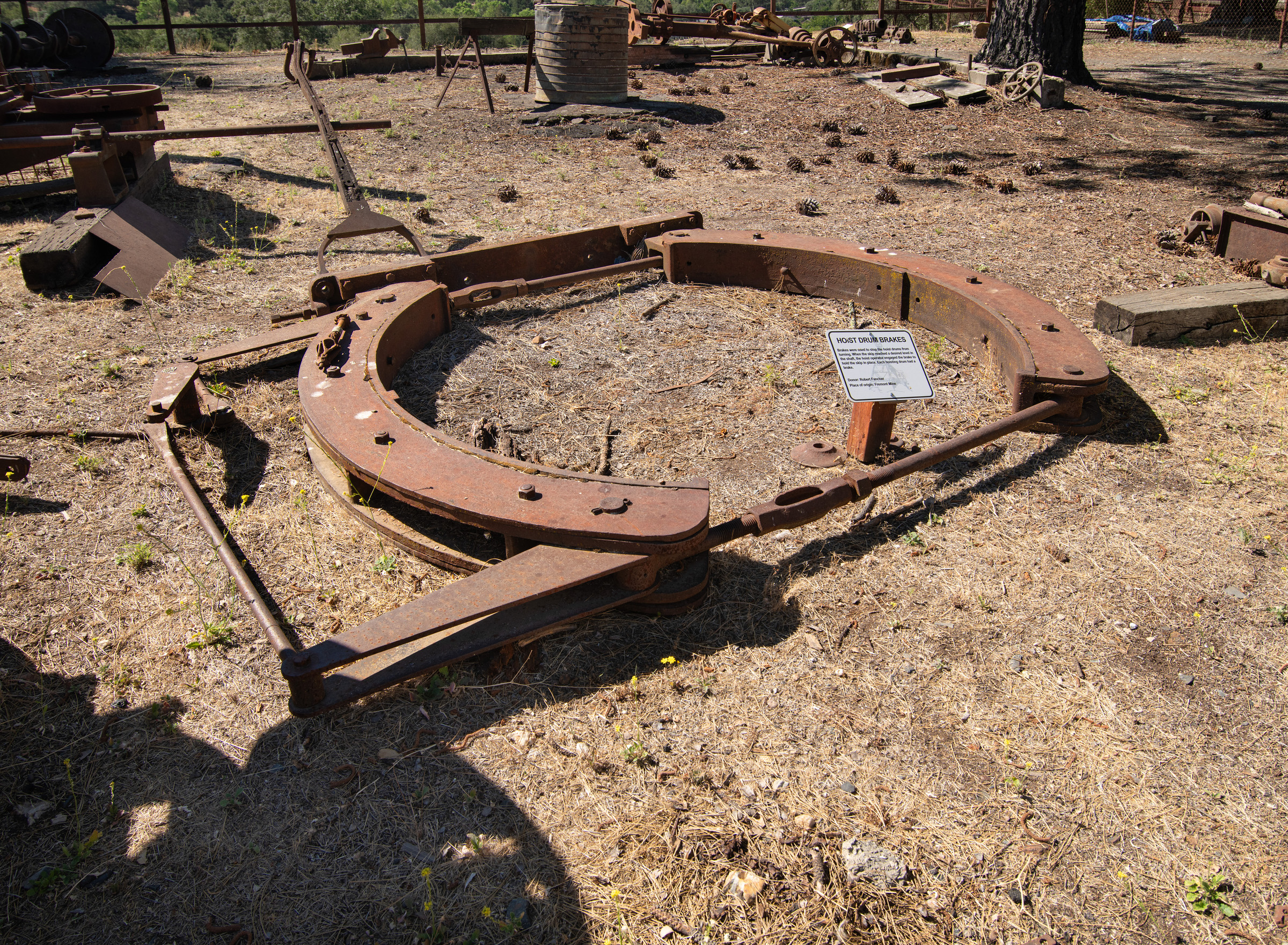 Hoist drum brake from the Fremont Mine
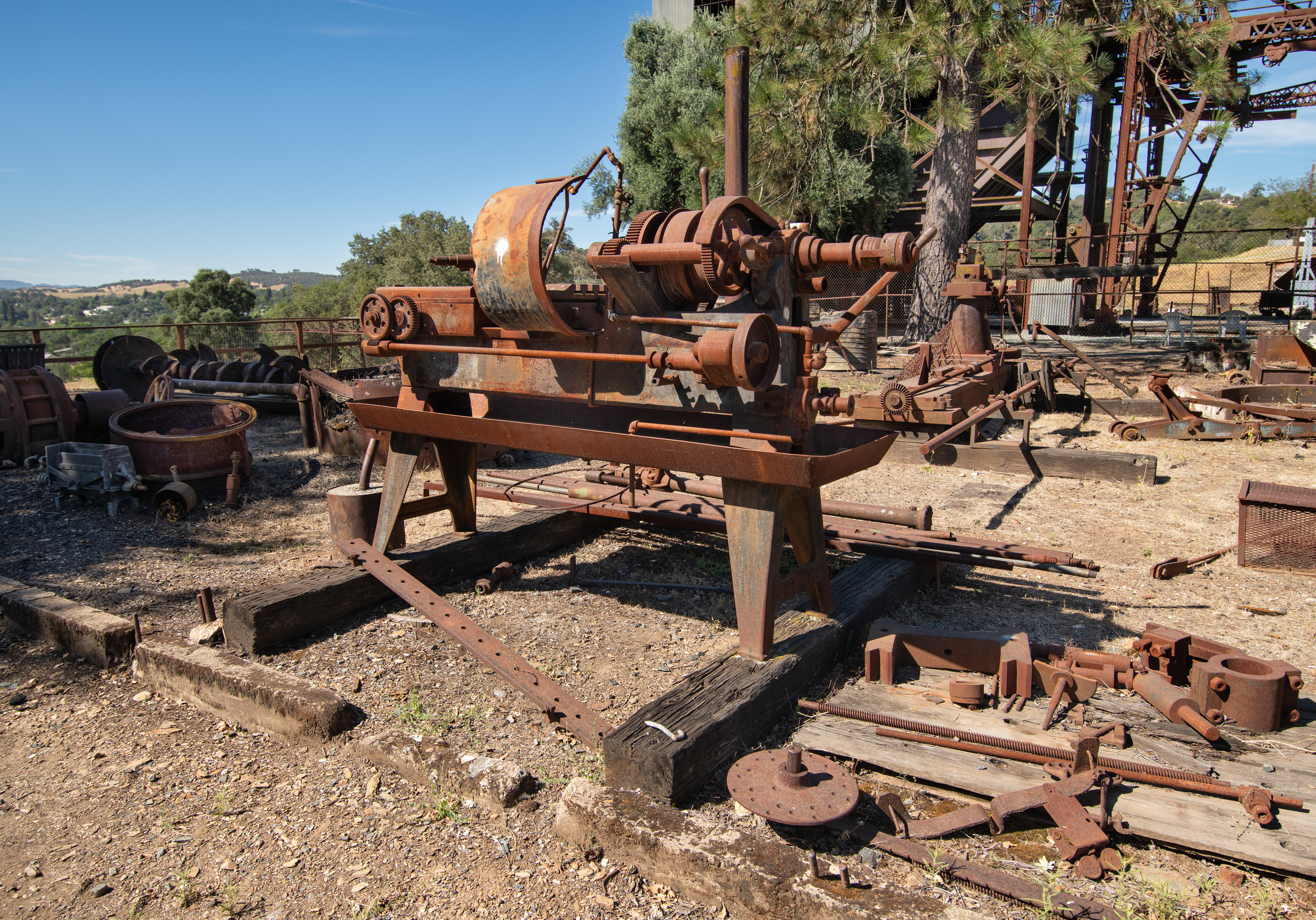
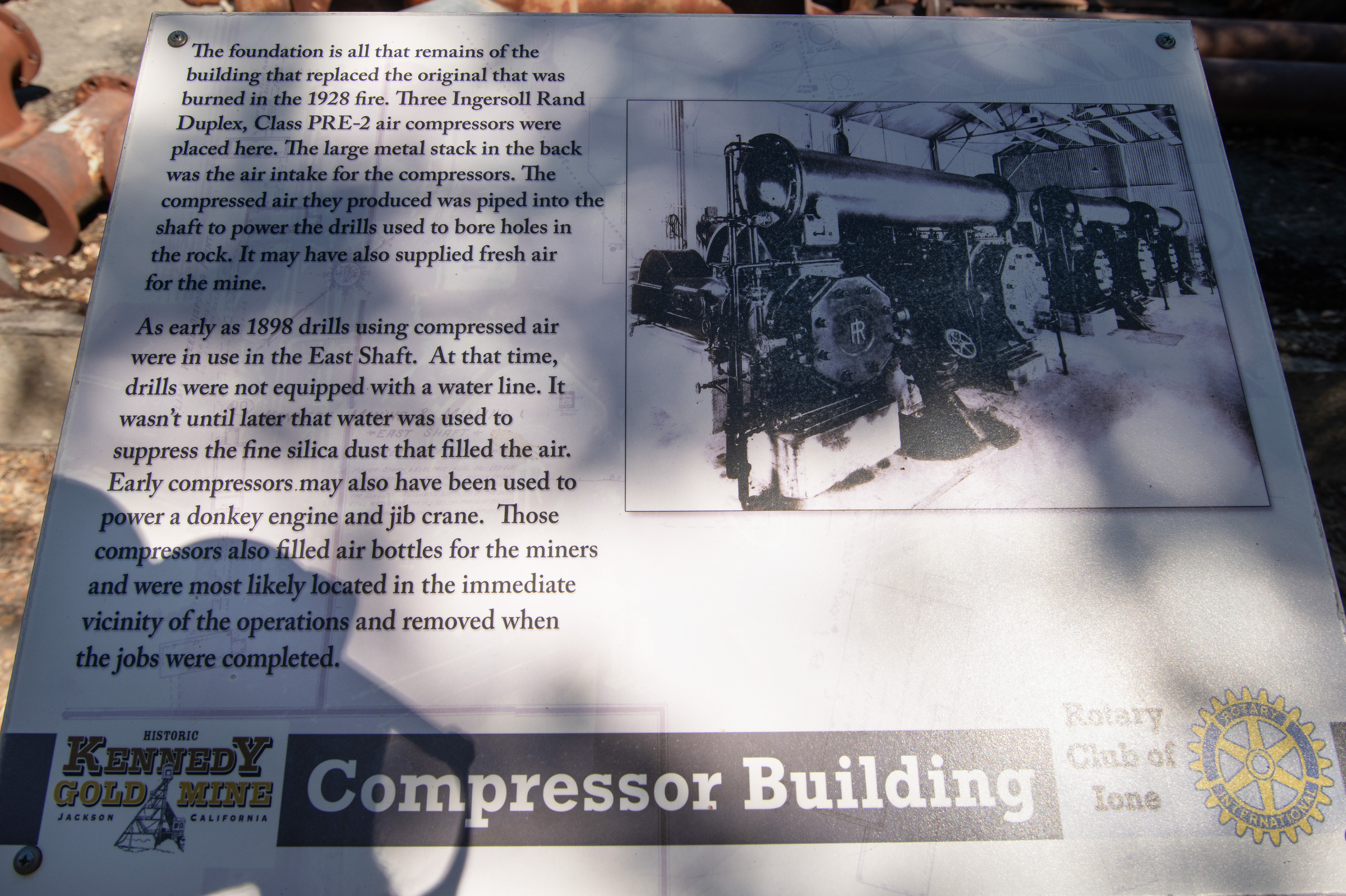
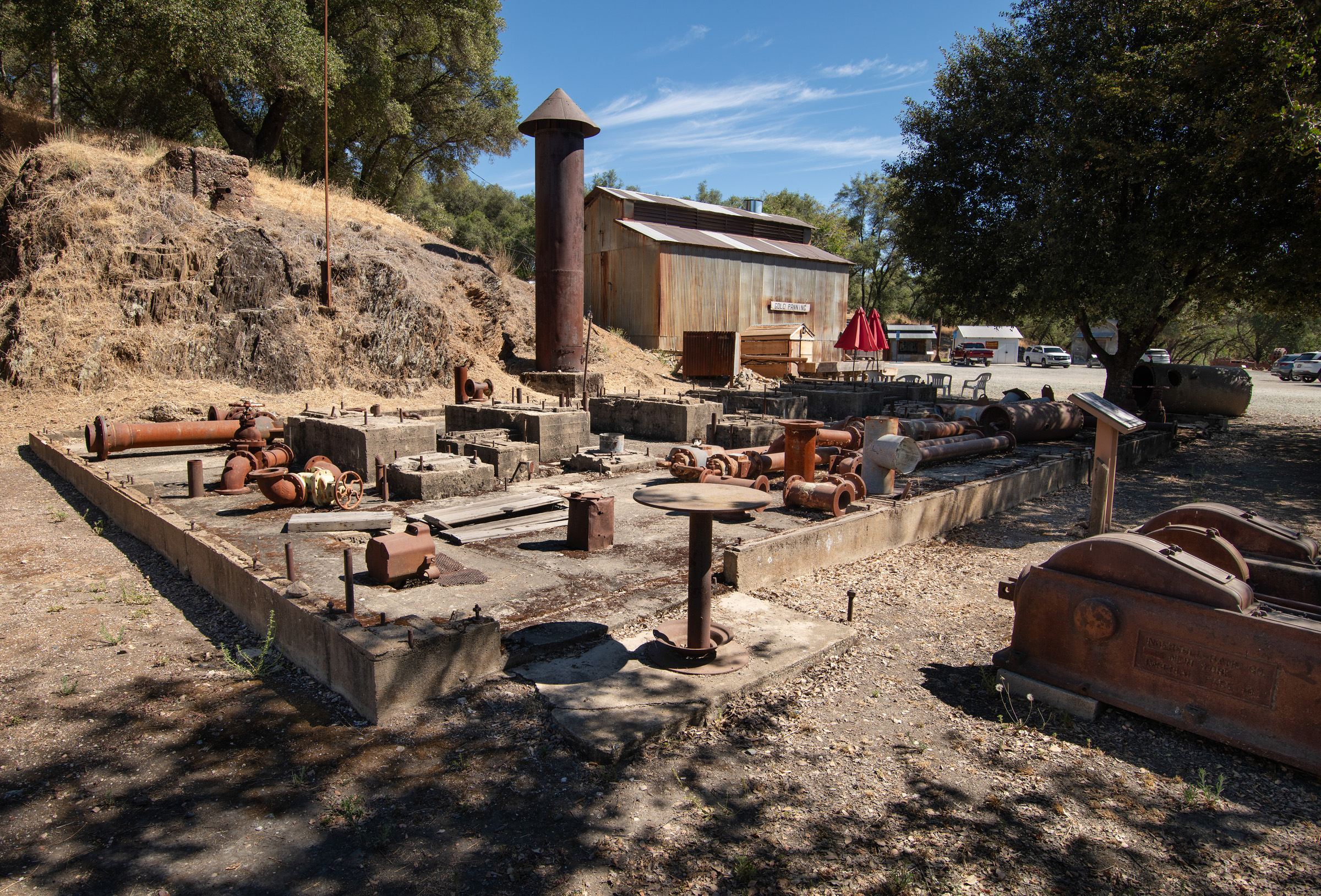 Compressor building site. The metal stack was the air intake.
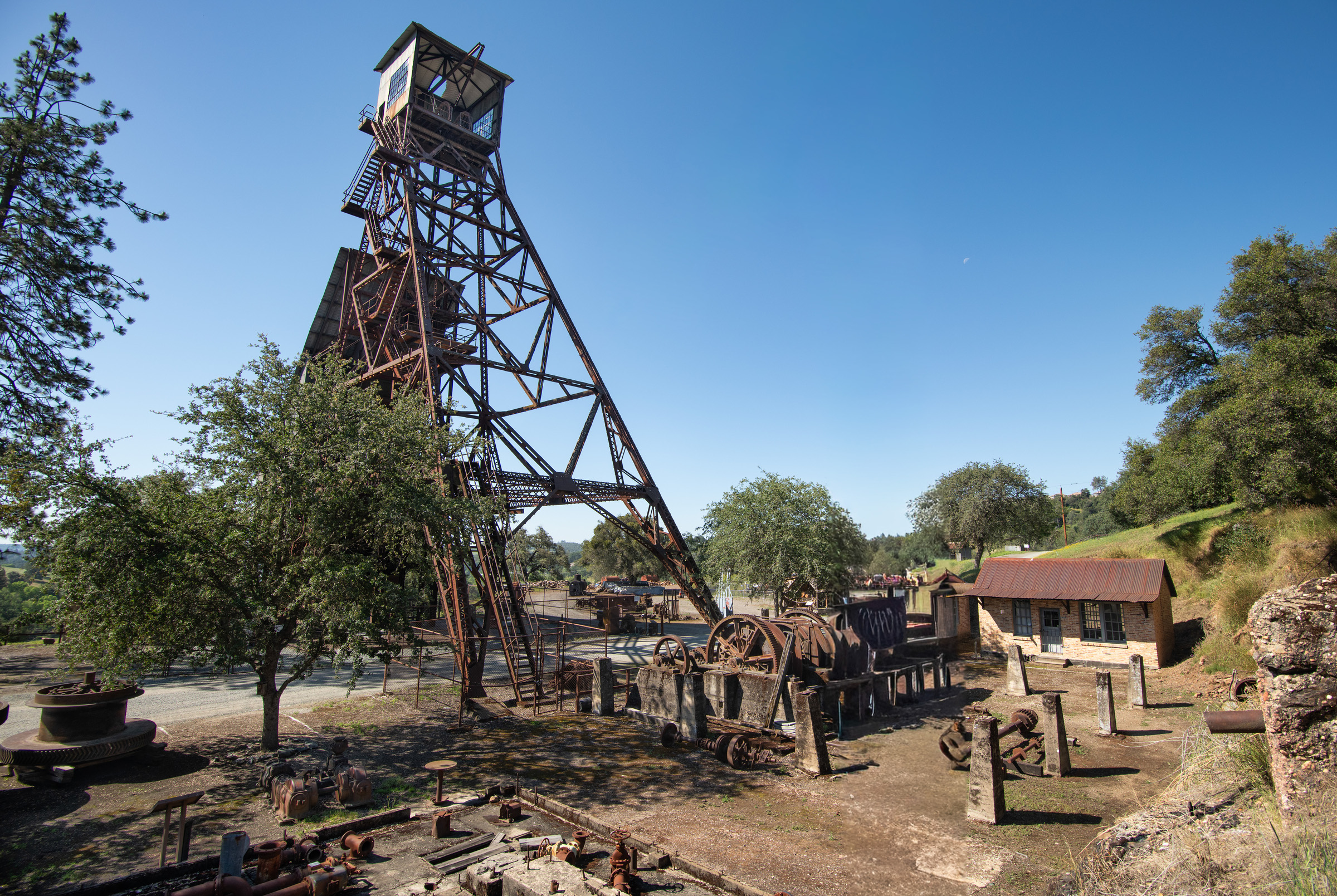 Auxiliary hoist and Surface Foreman's office building
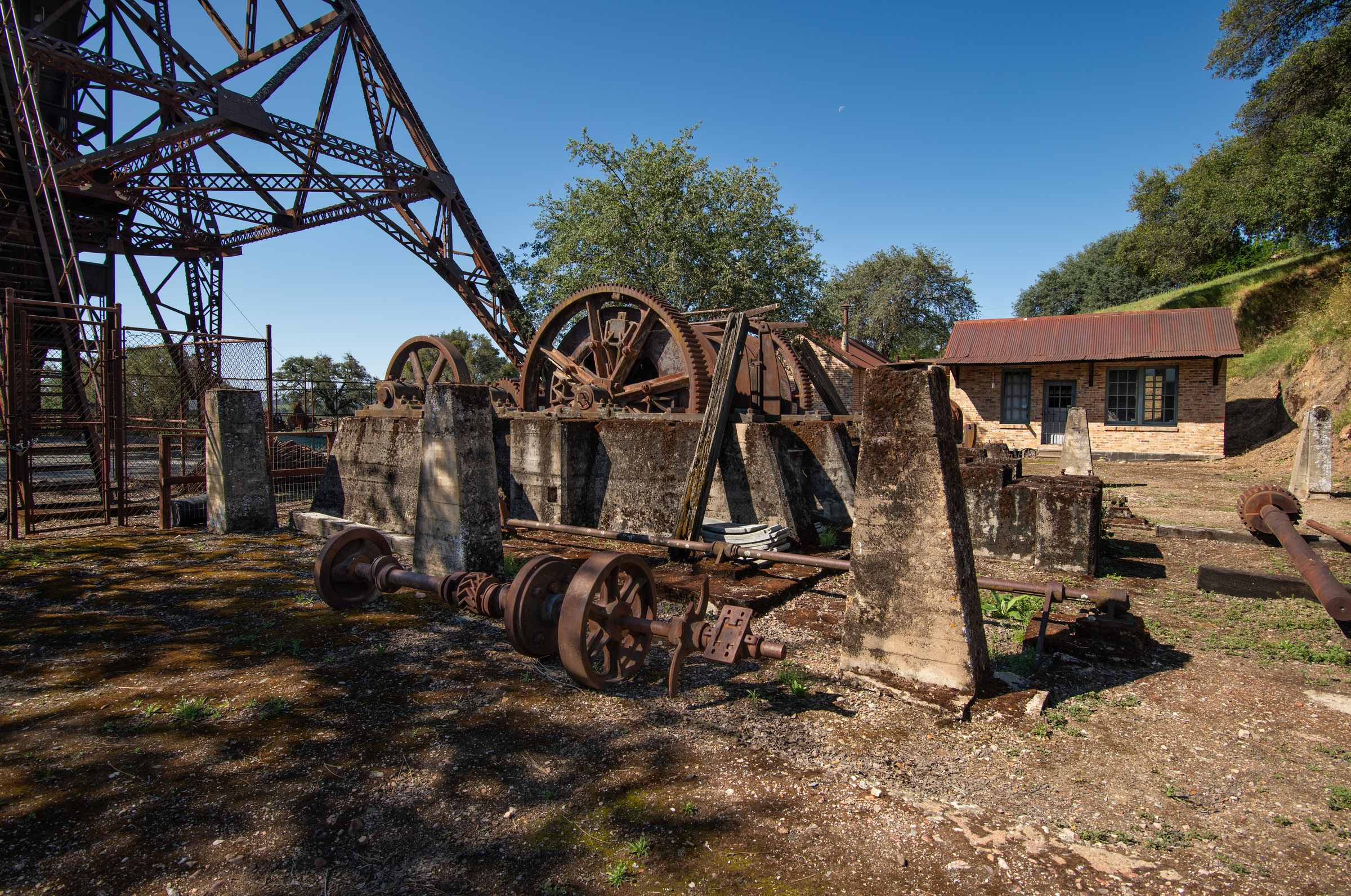 The auxiliary hoist was used as a backup to the main hoist
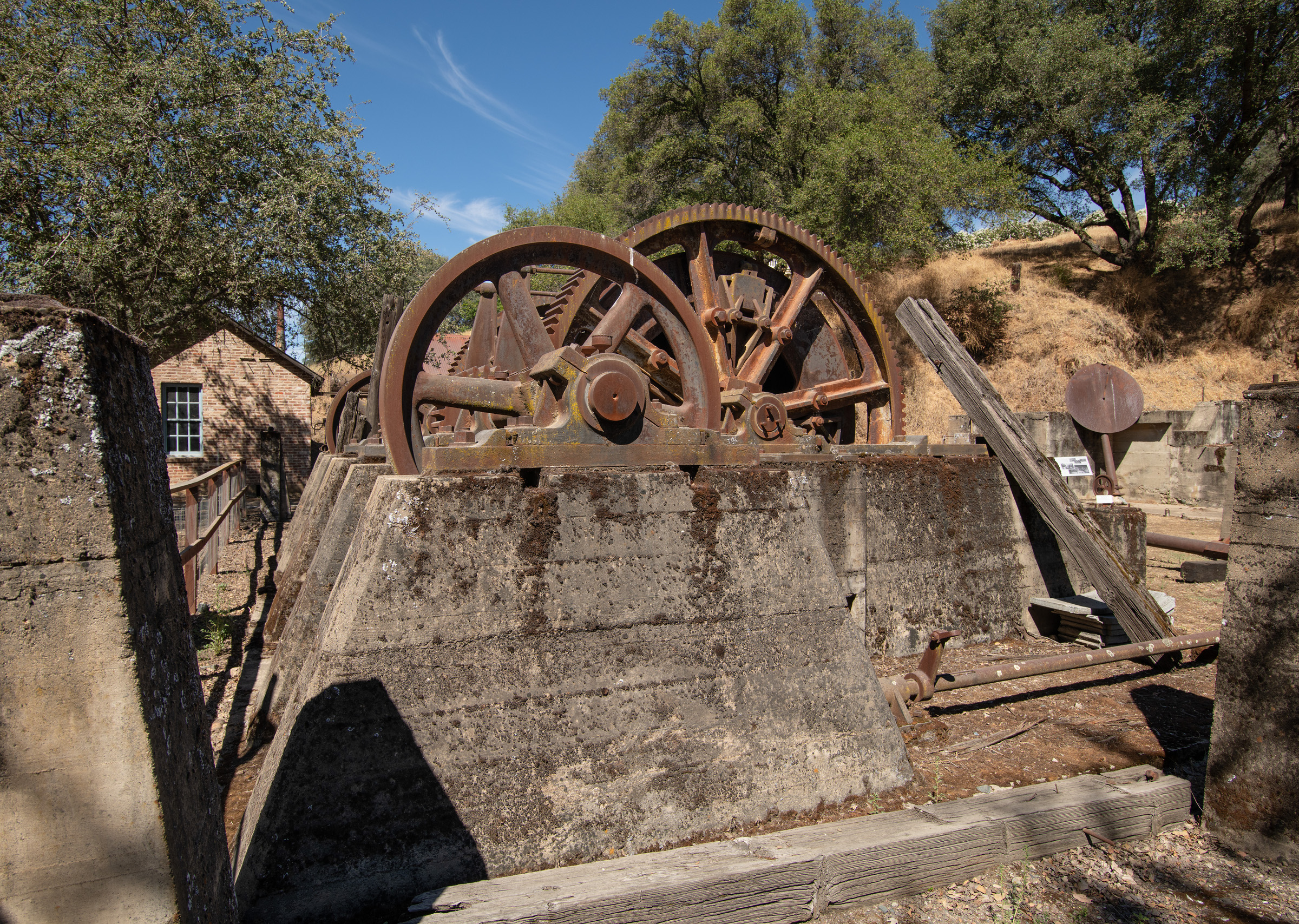 It was also used to change the wire rope when necessary
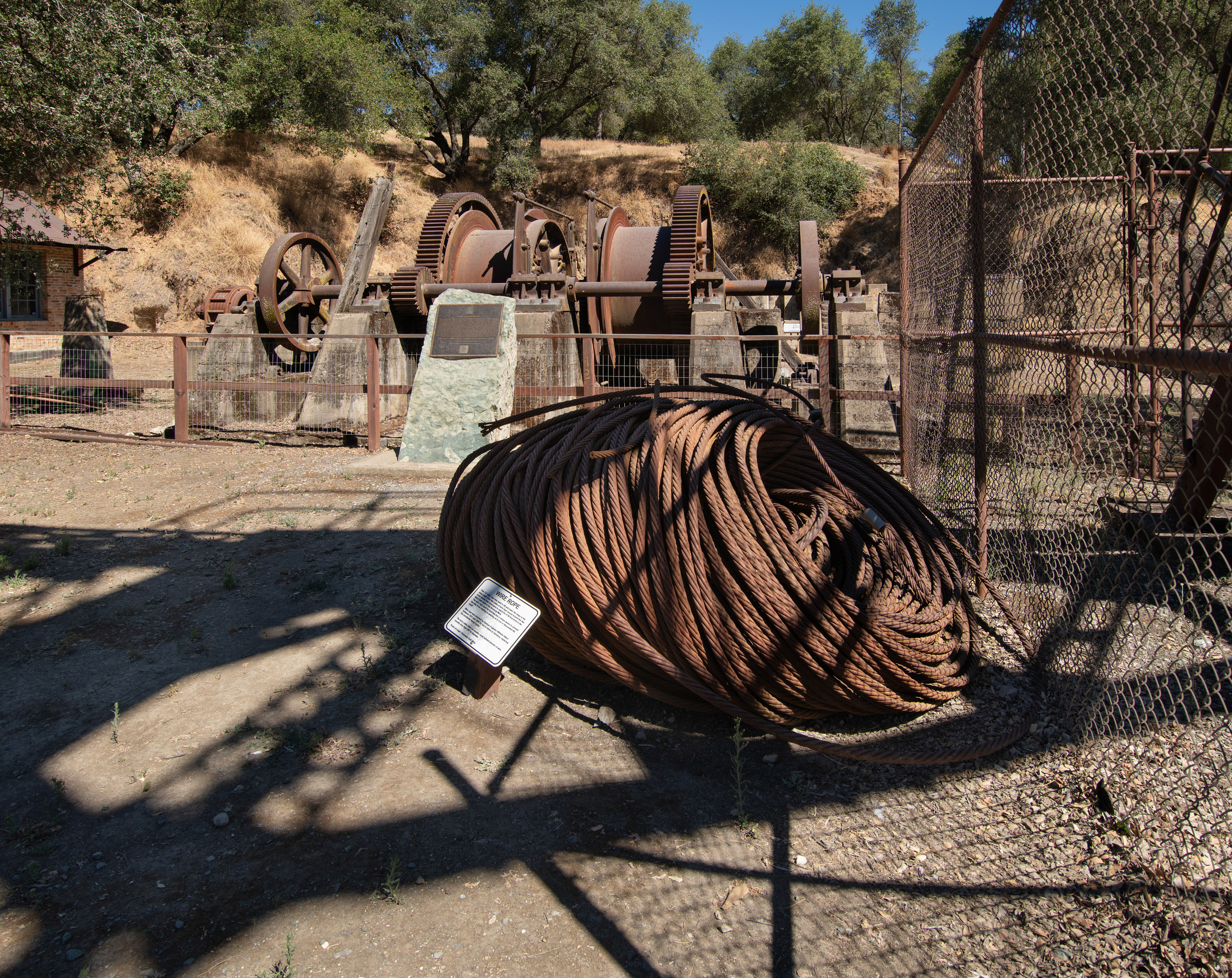 The hoist used 1 1/4" wire rope
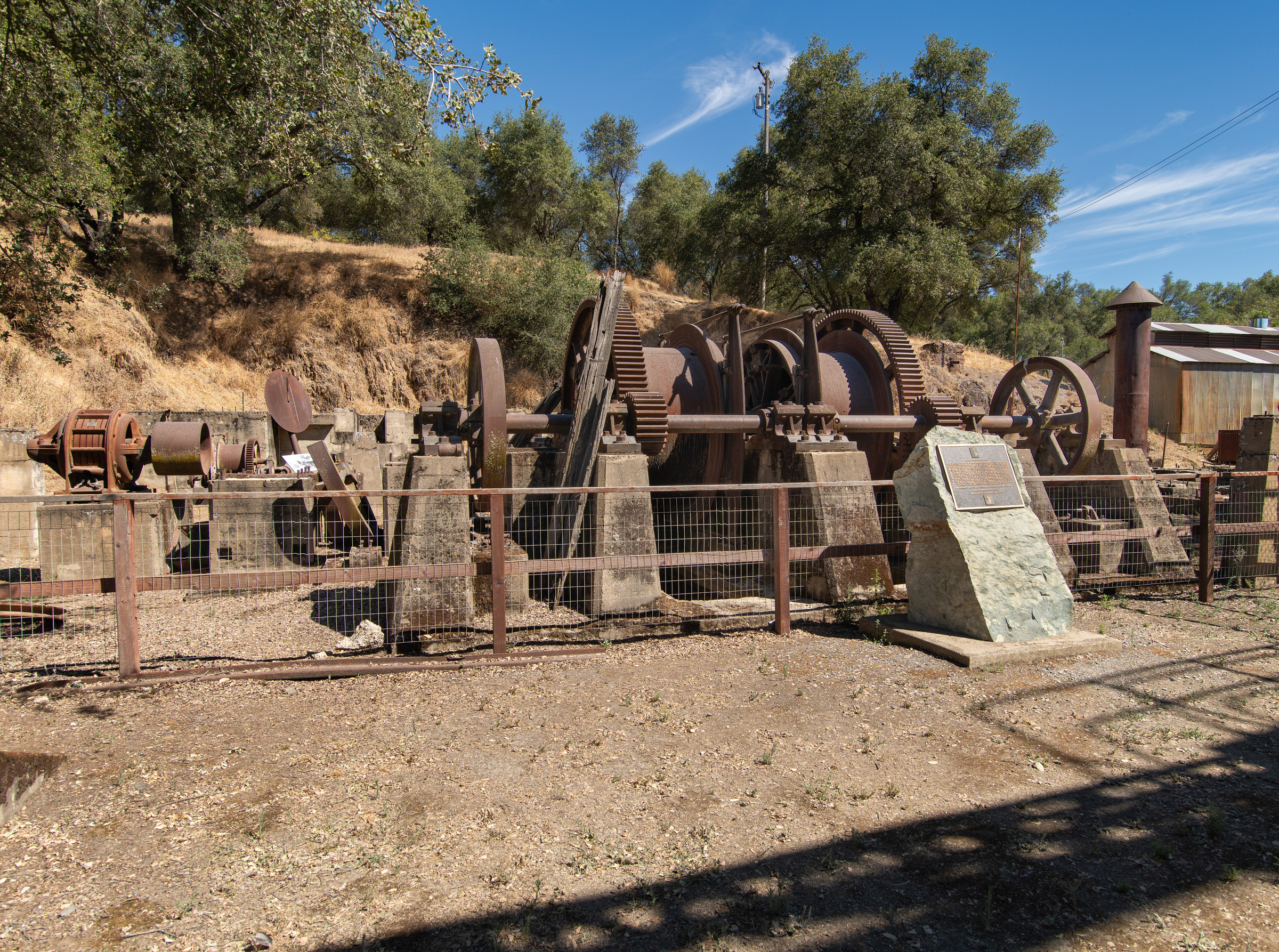 The main hoist, now gone, was mounted behind the auxiliary hoist
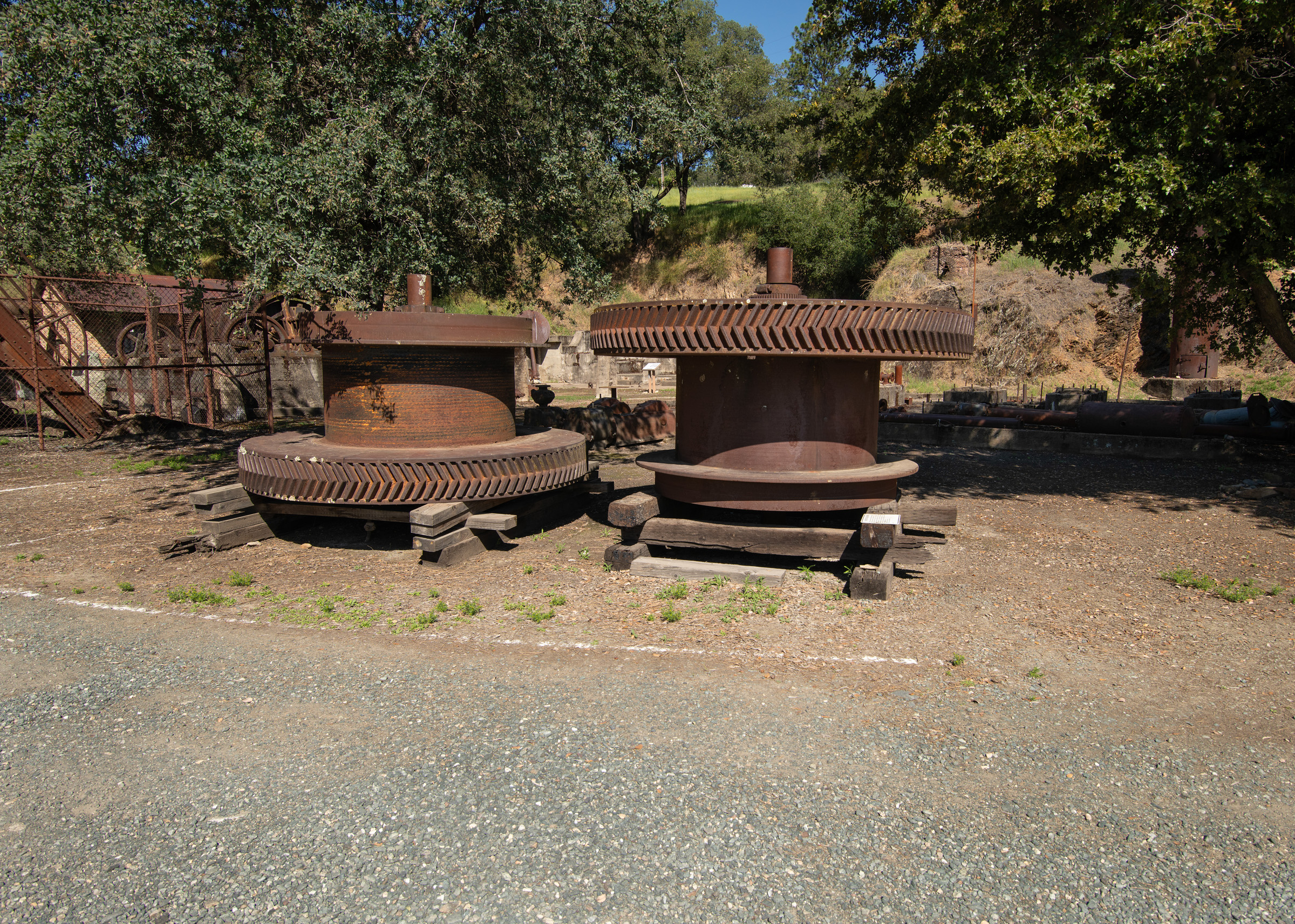 Hoist drums
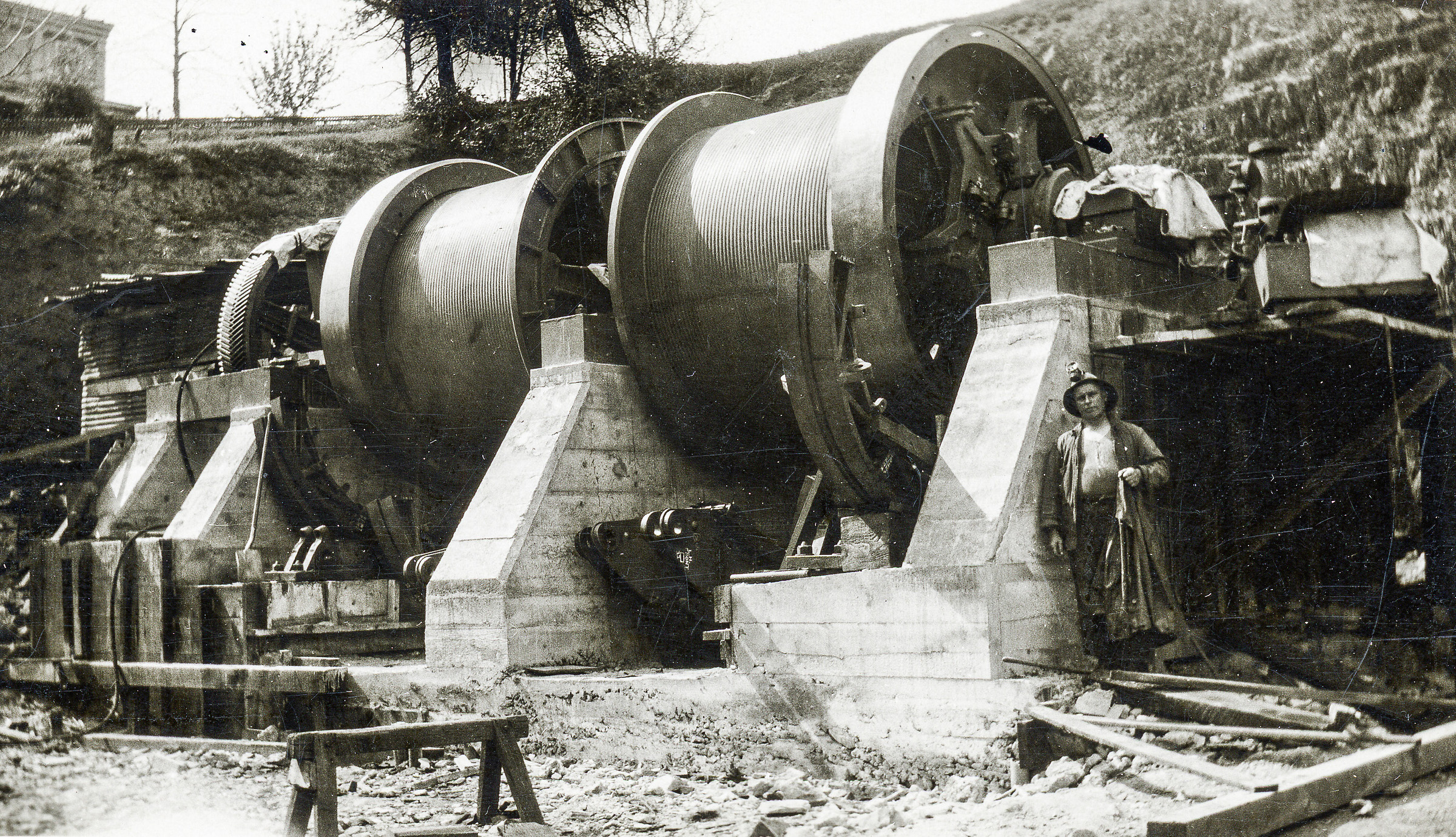 The main hoist was much larger than the auxiliary unit
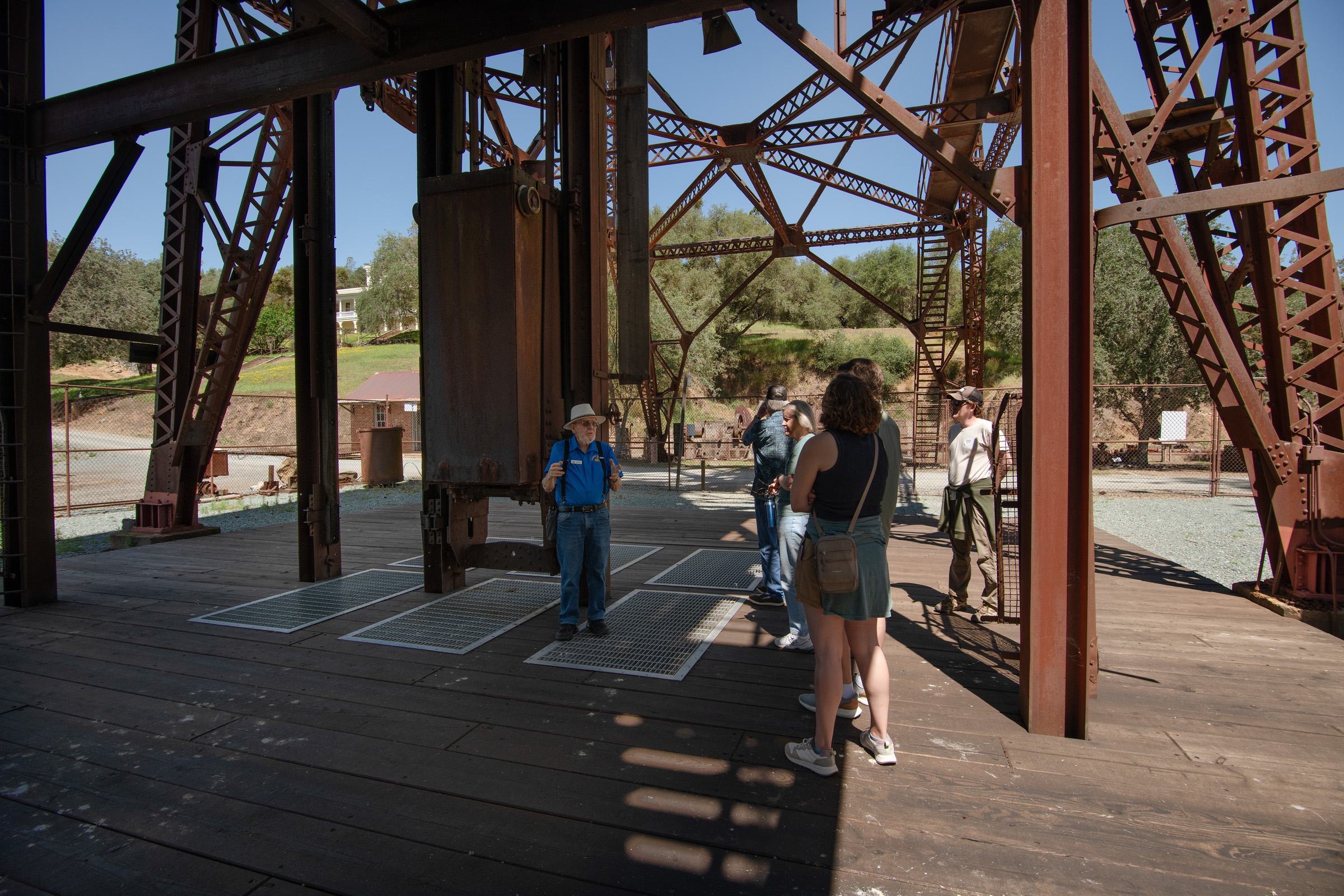 Kennedy Mine Foundation co-founder Frank Tortorich leading a guided tour, at the shaft
collar
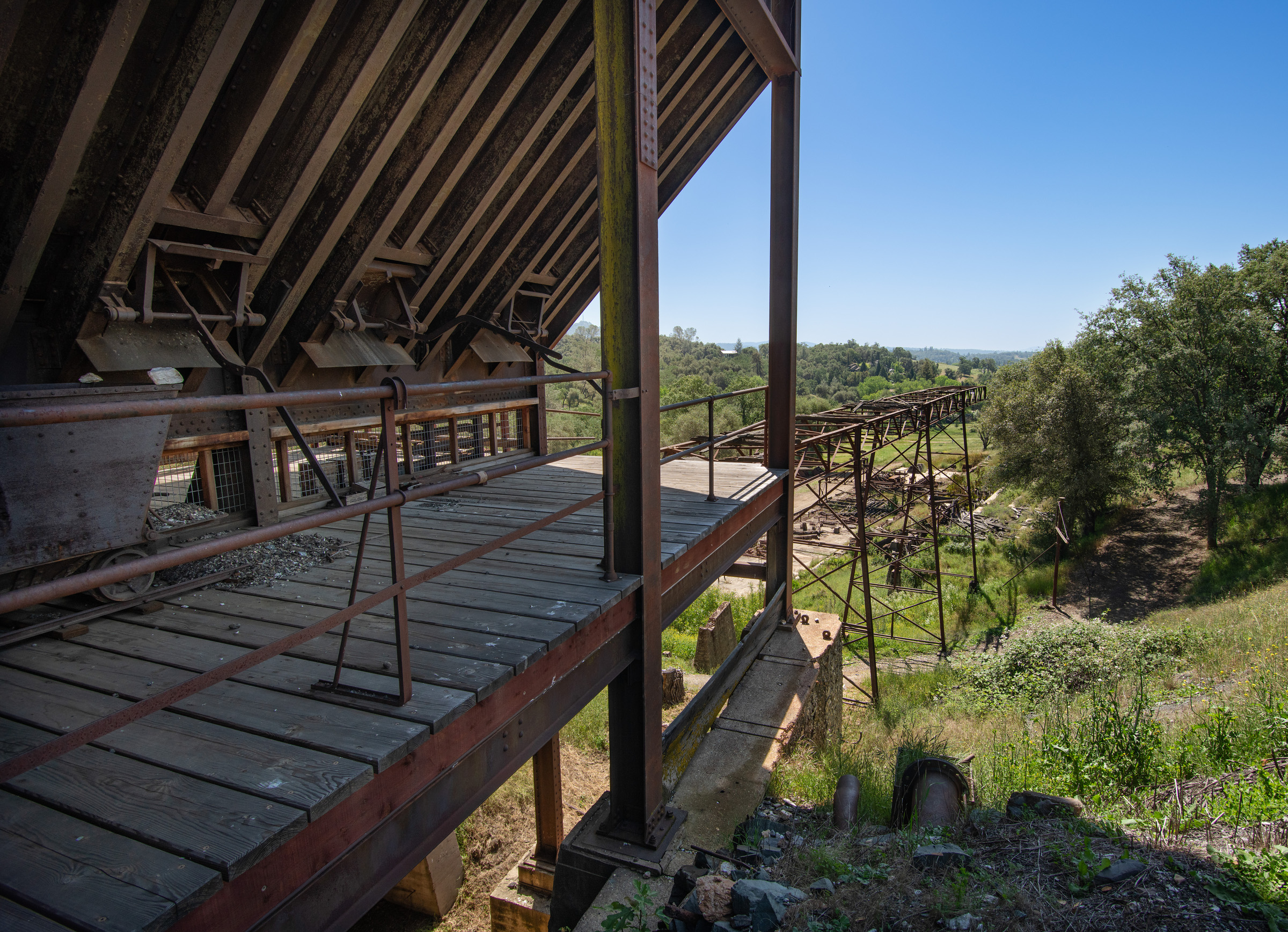 Ore was transported from the bin at the base of the headframe to the mill on a trestle
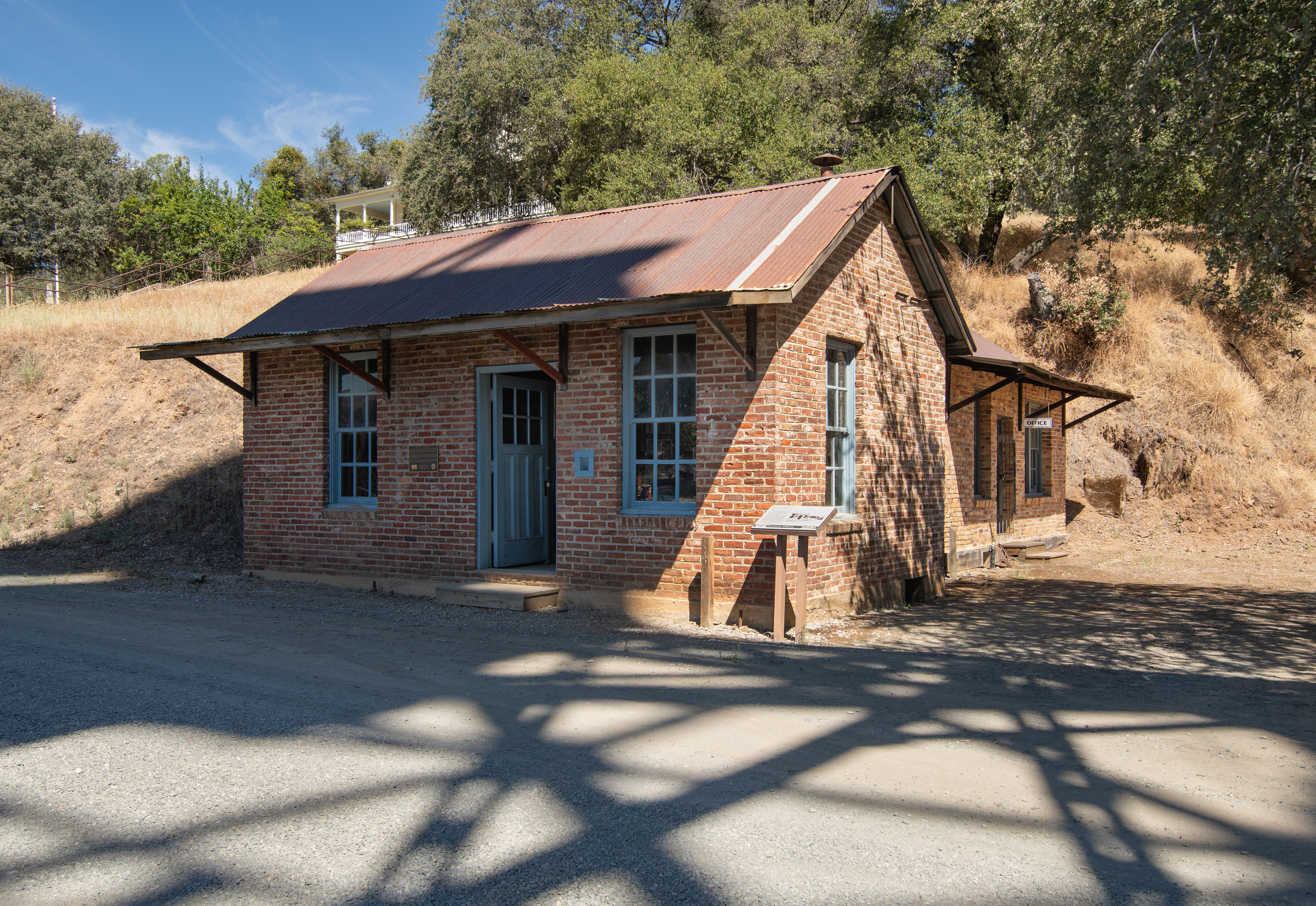 Underground Foreman's office
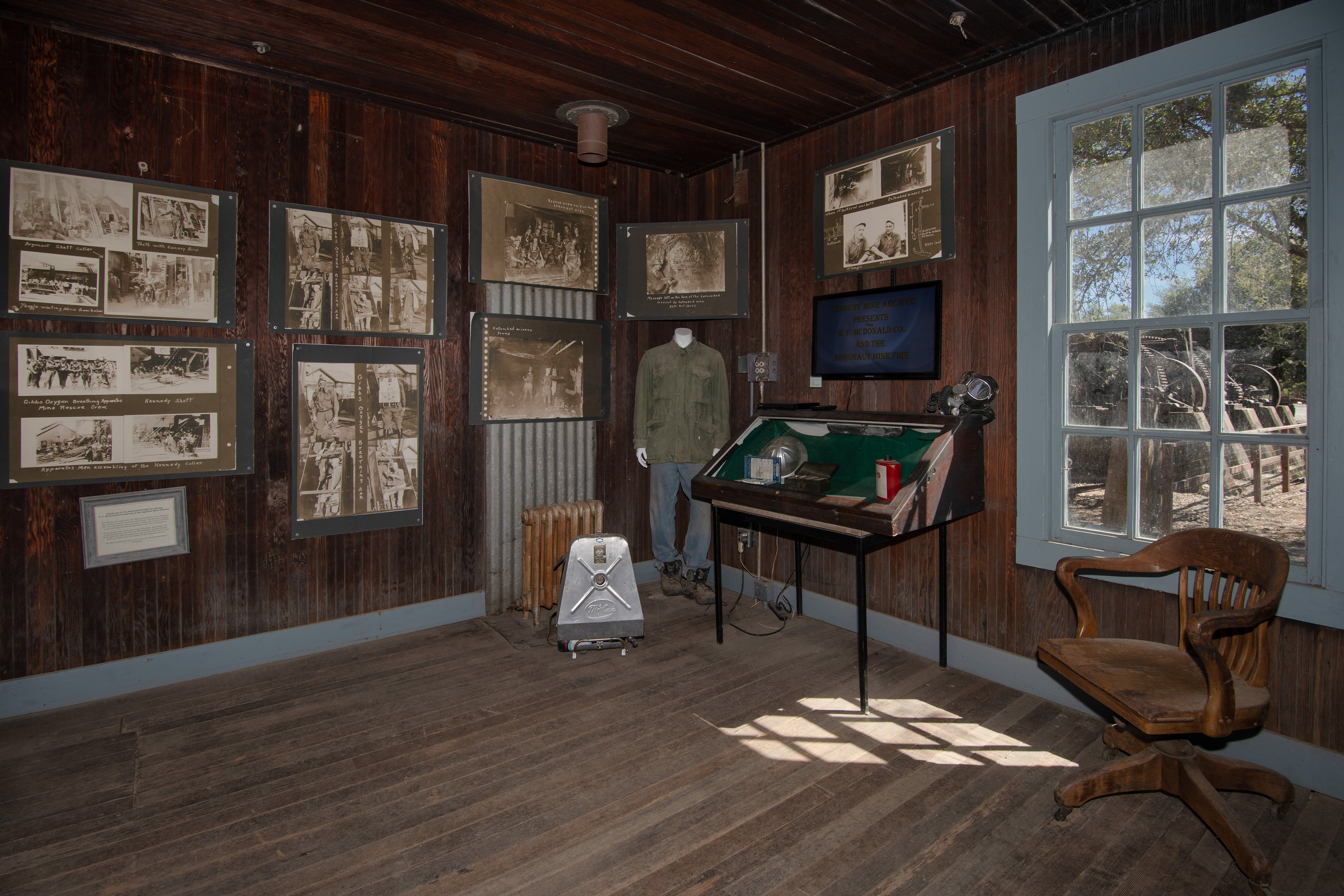 The building now houses a display on the 1922 Argonaut fire rescue/recovery operation
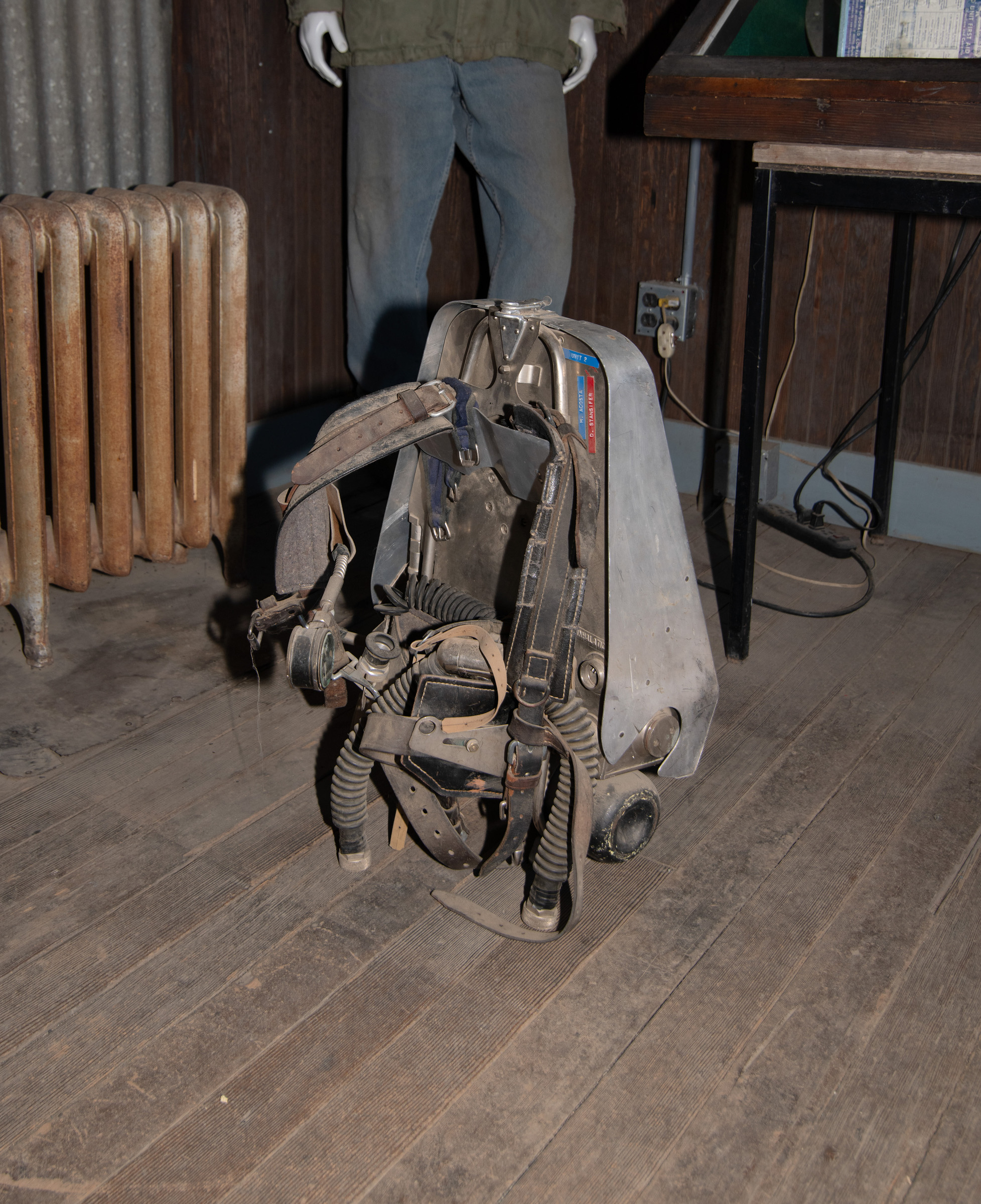 Gibbs Self-Contained Breathing Apparatus used in mine rescue operations
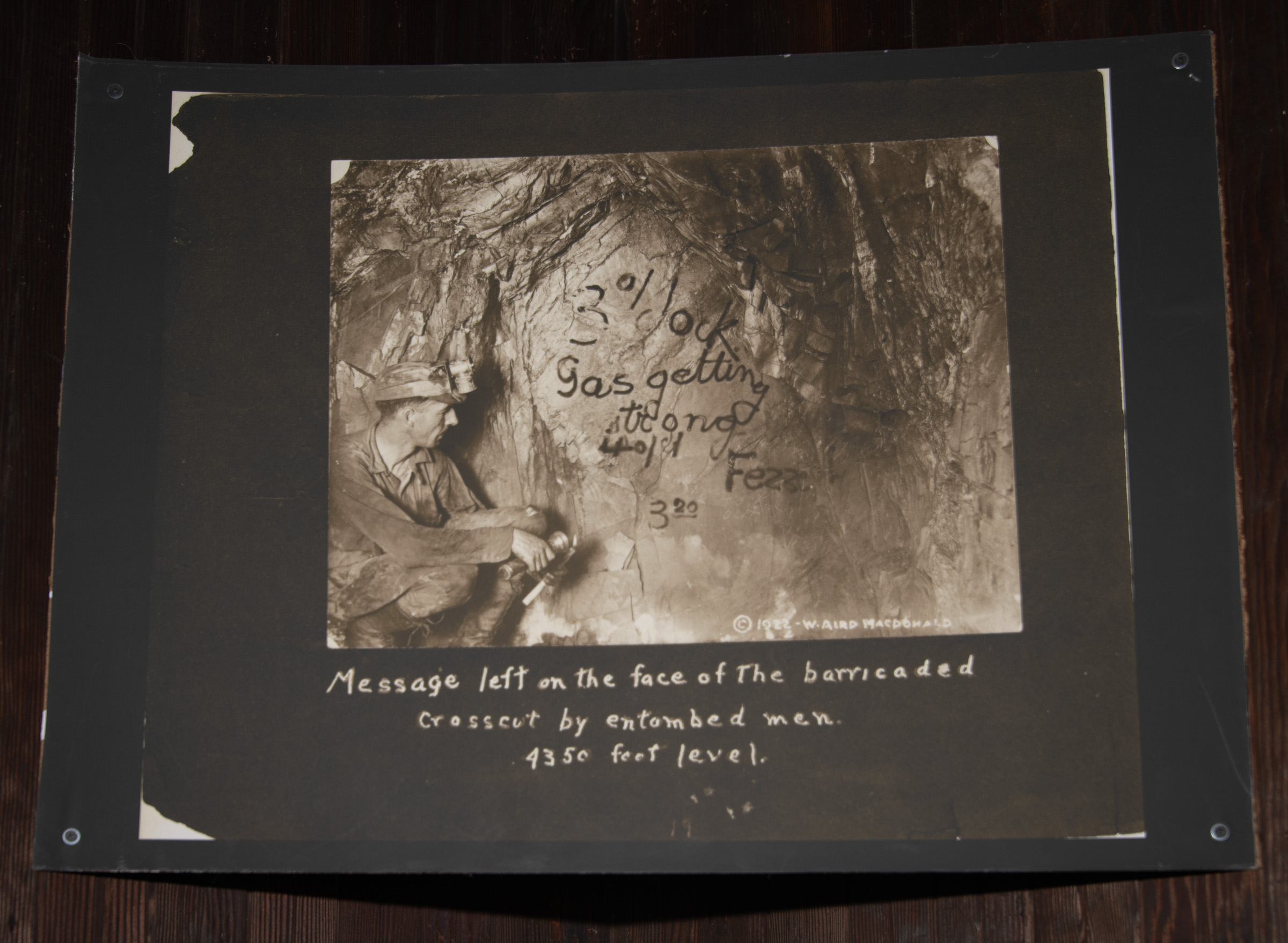 Historical photograph of last message left by a trapped Argonaut miner
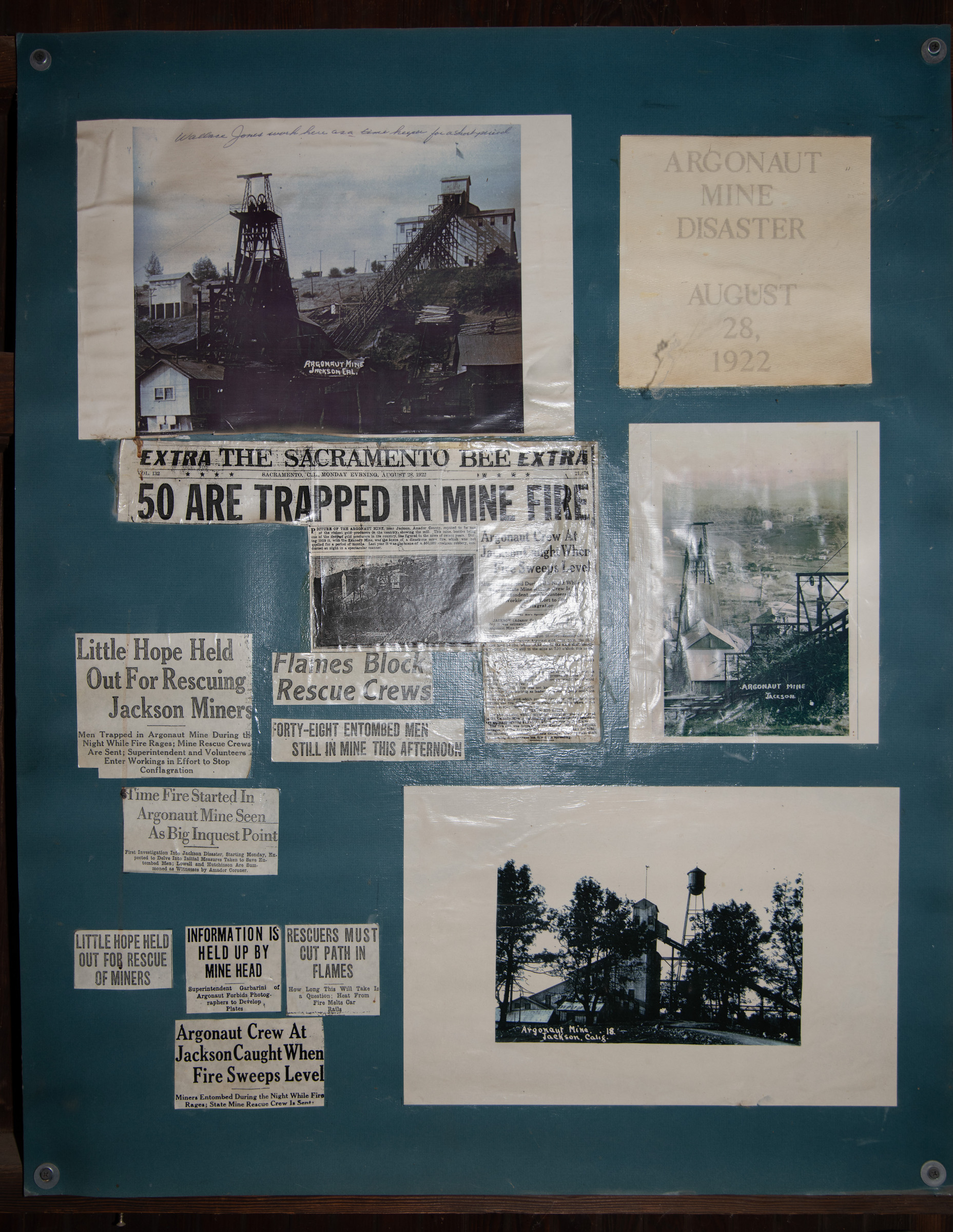 The display contains numerous press clippings from 1922
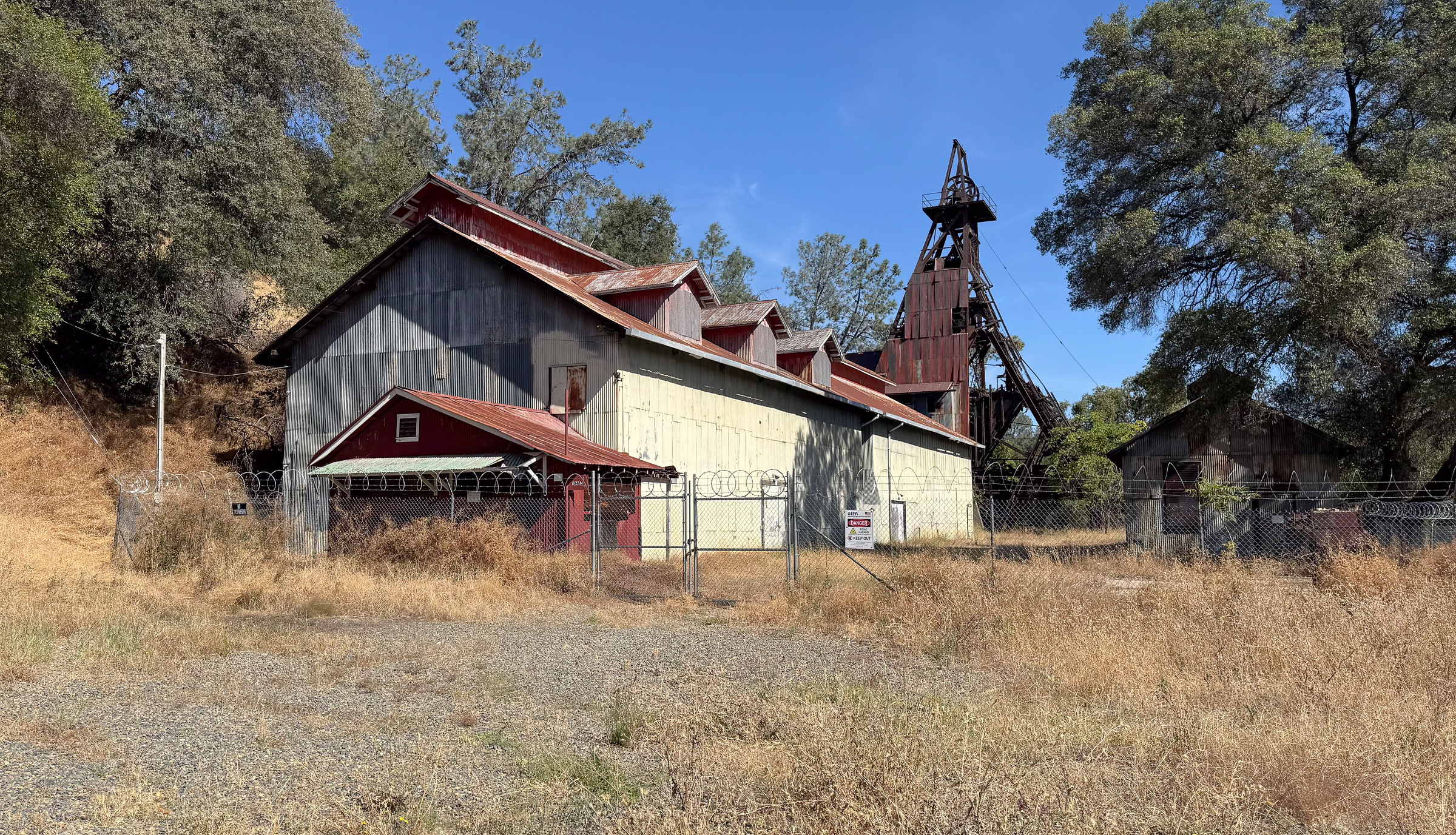 Site of the 1922 disaster... the Argonaut Mine in 1926
 Steam donkey used at the sawmill
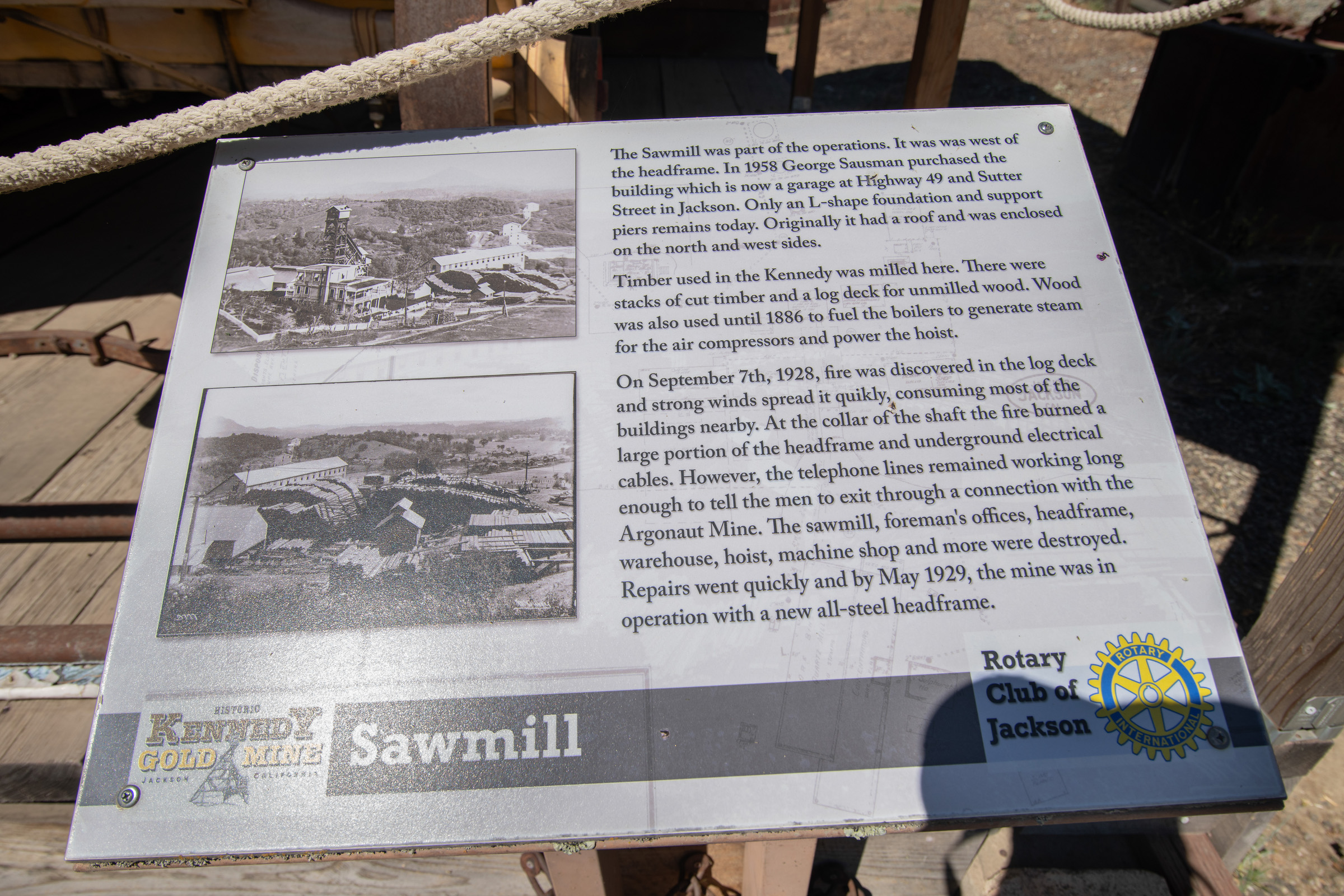 Note the huge pile of logs used to produce mine timbers
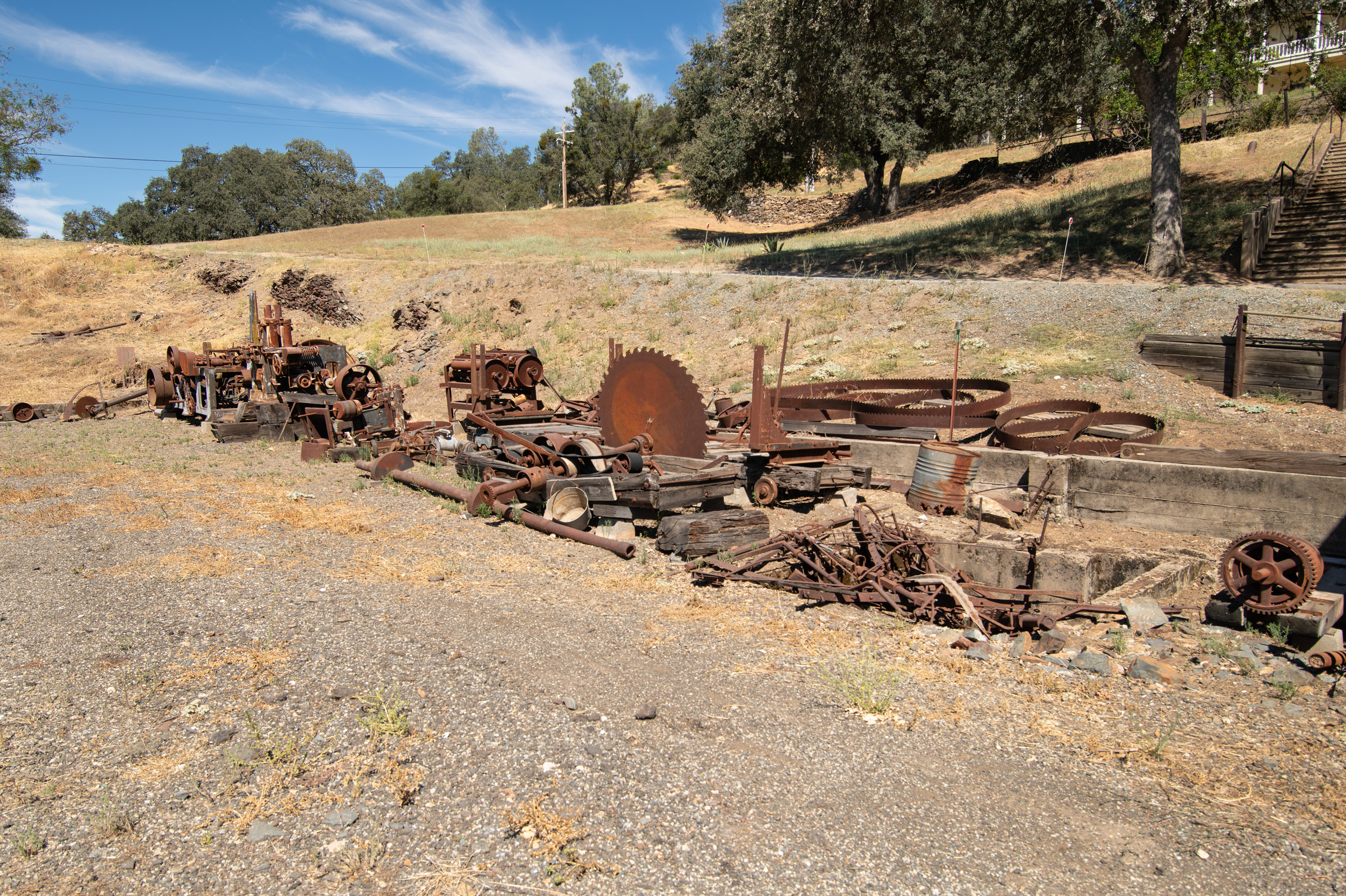 Remains of the sawmill
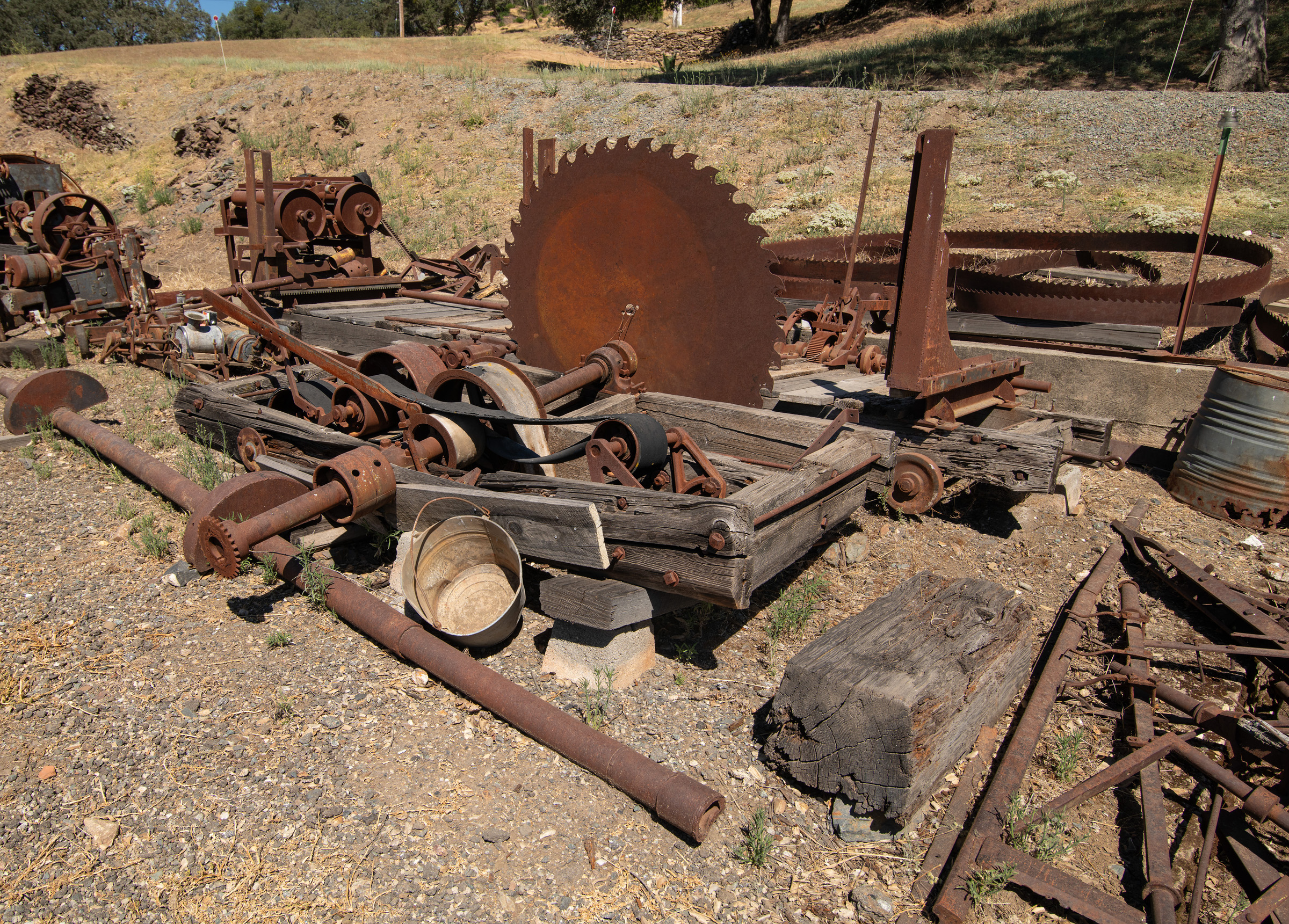
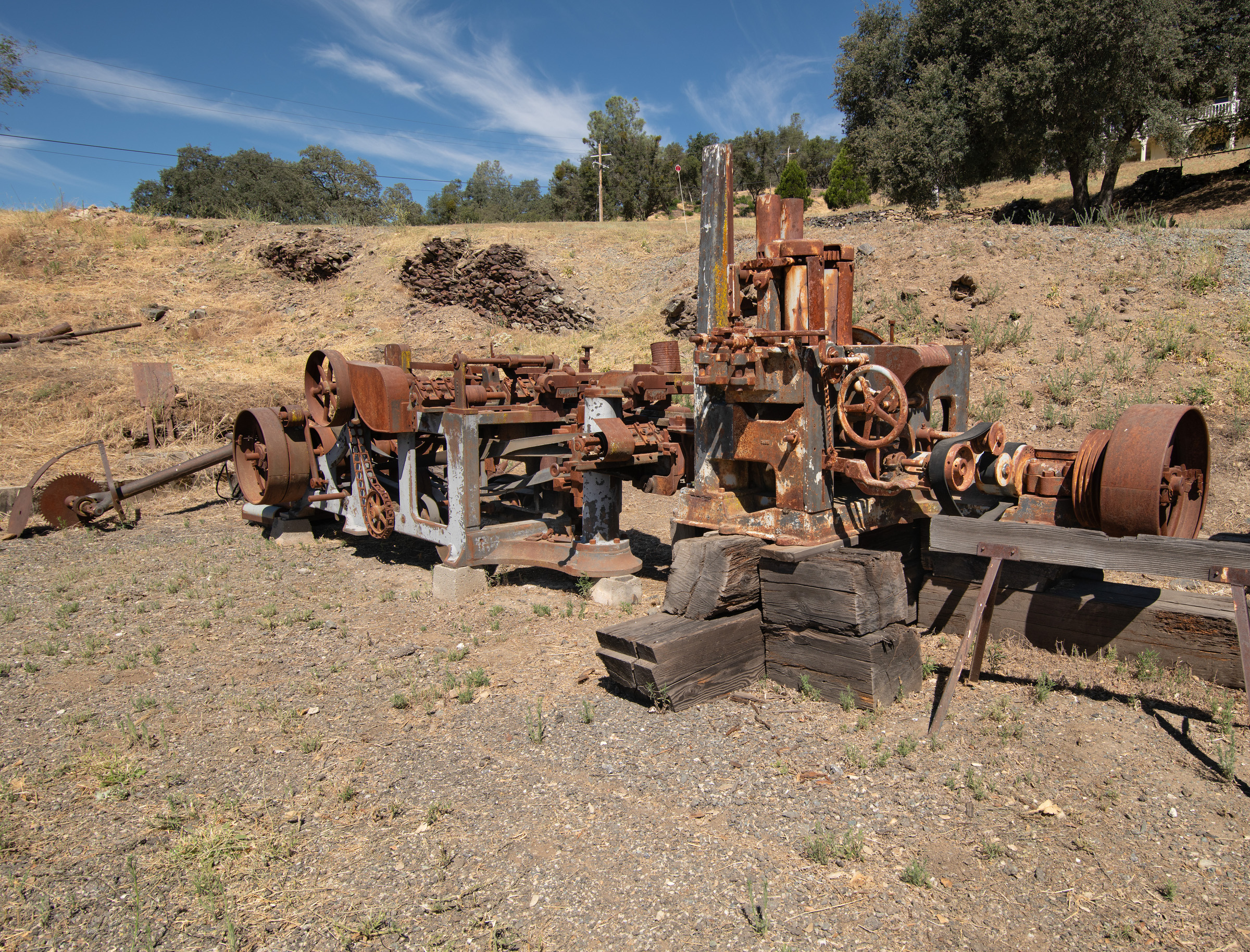 Sawmill machinery
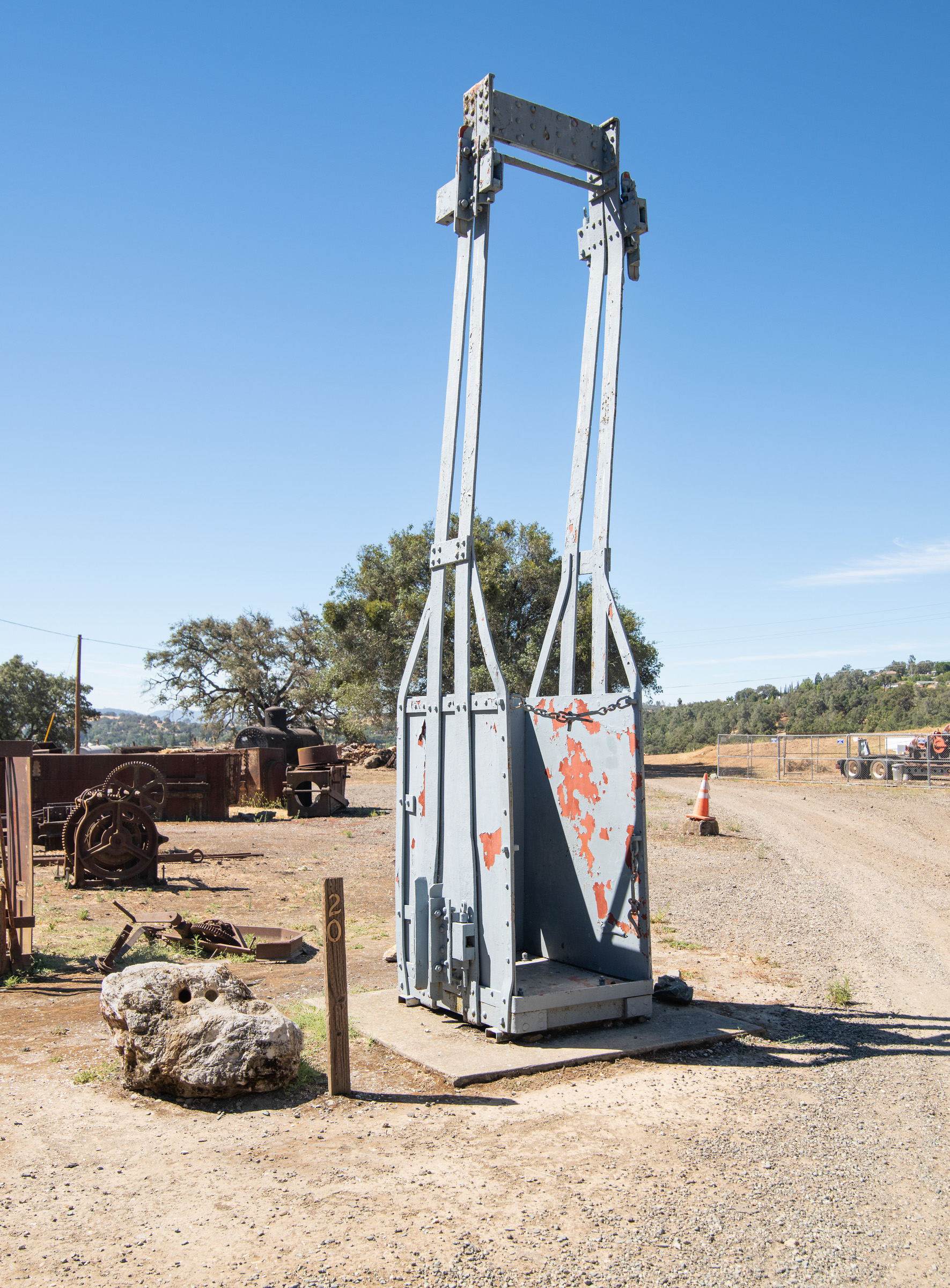 Equipment Skip, used to transport equipment, lumber, and mules into the mine
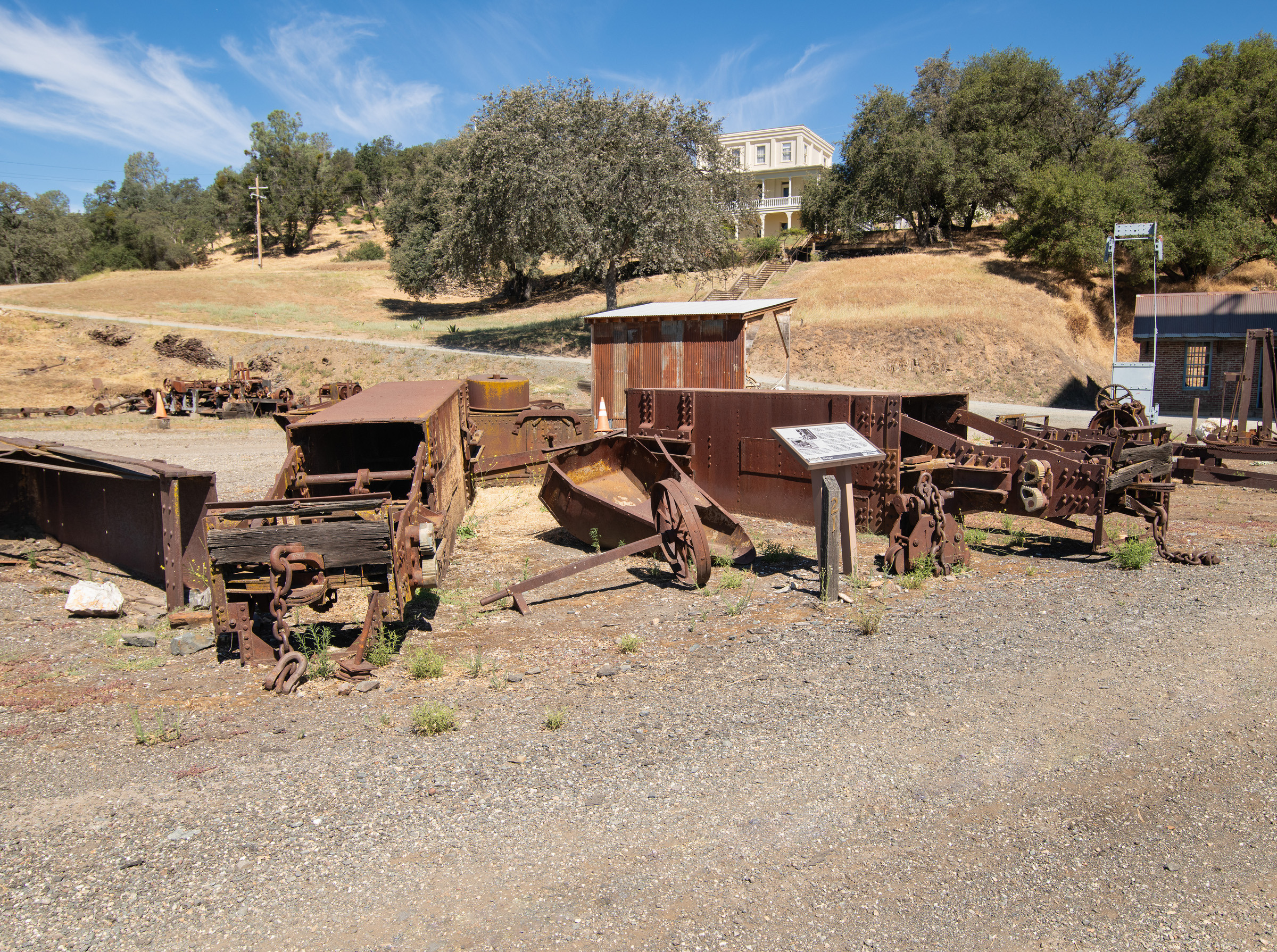 1100-gallon Water Skips, used to bail water from the mine sump
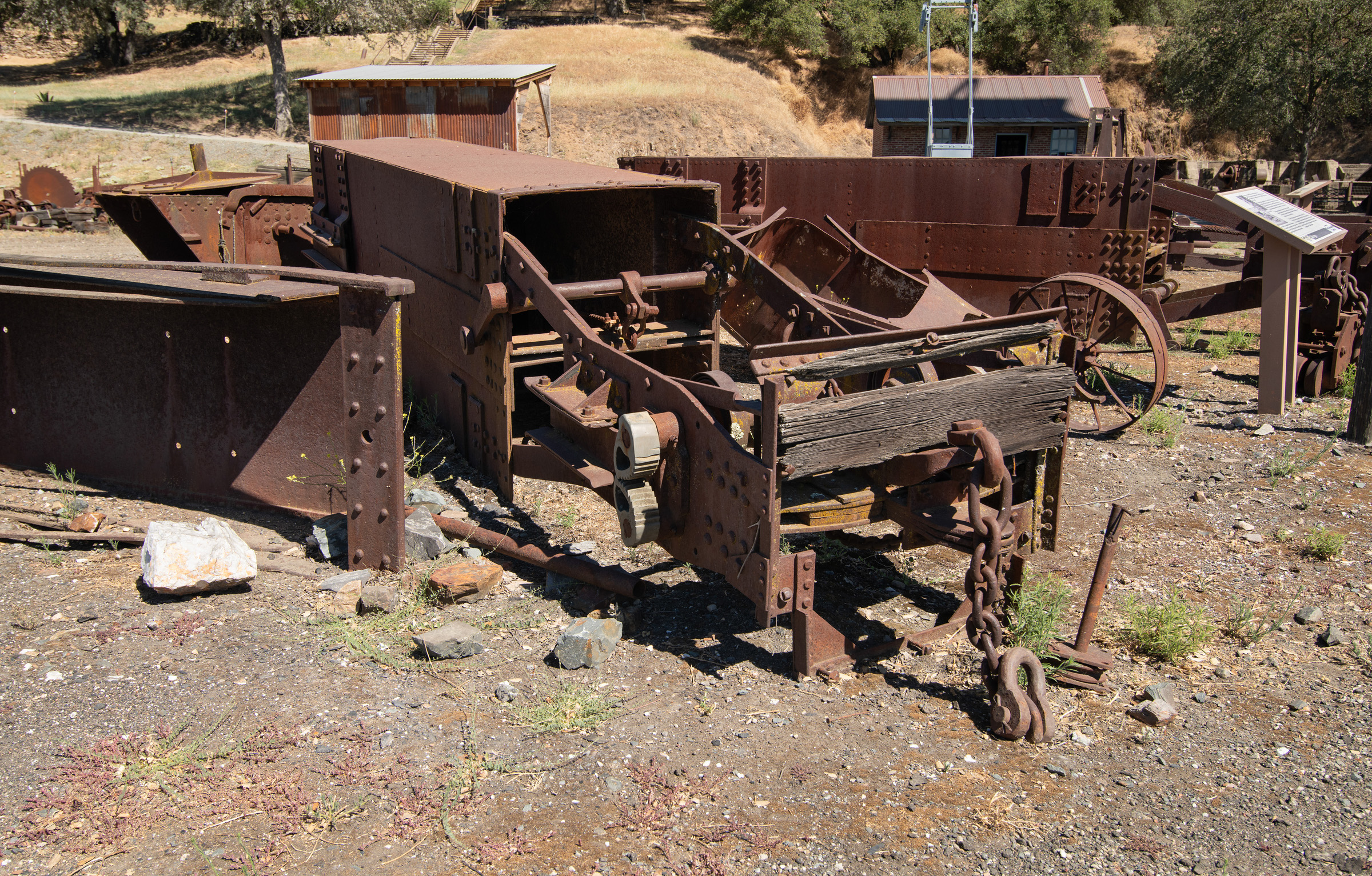 Up to 80,000 gallons of water was removed every night
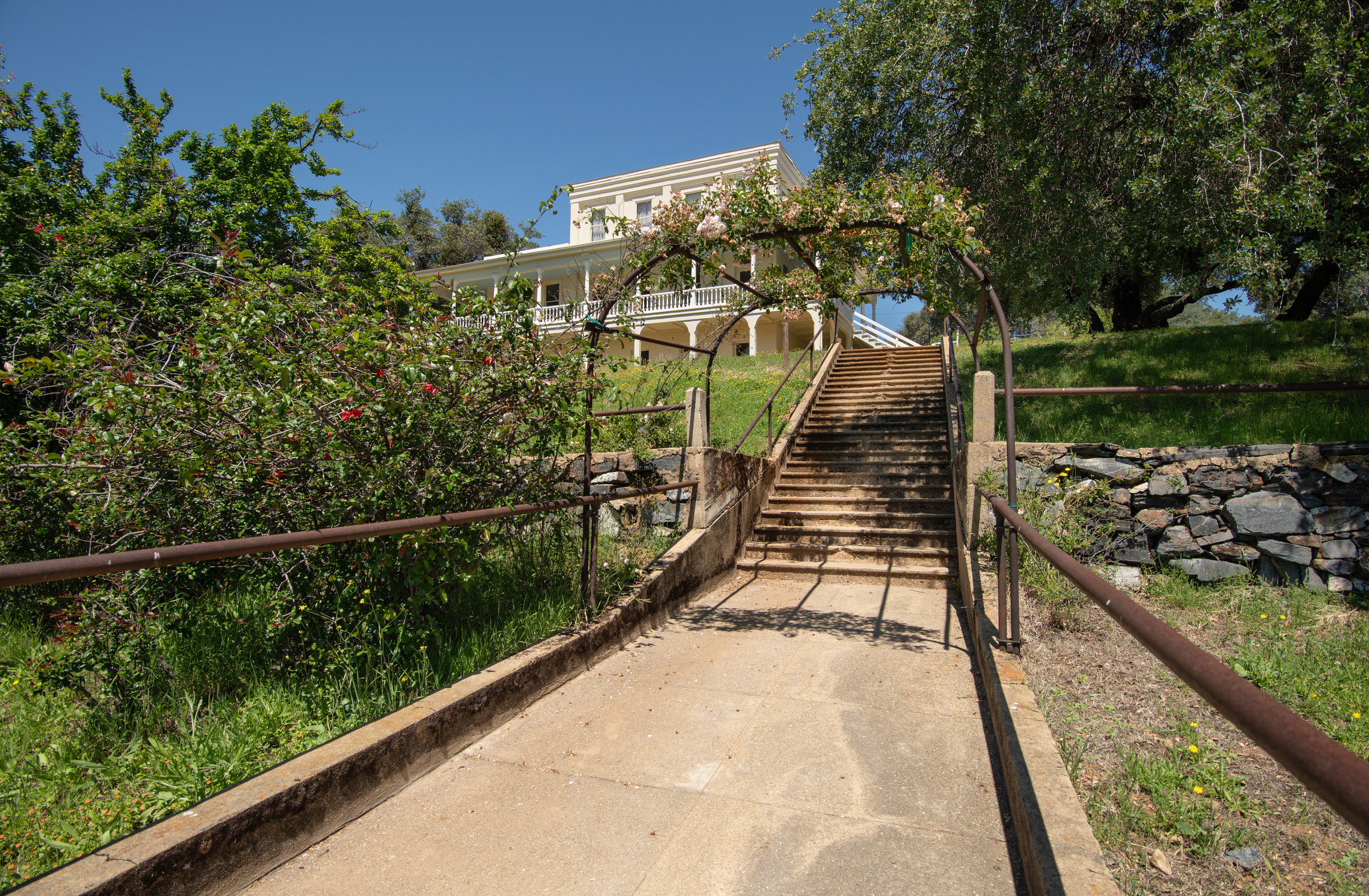 Entrance to the Mine Office building
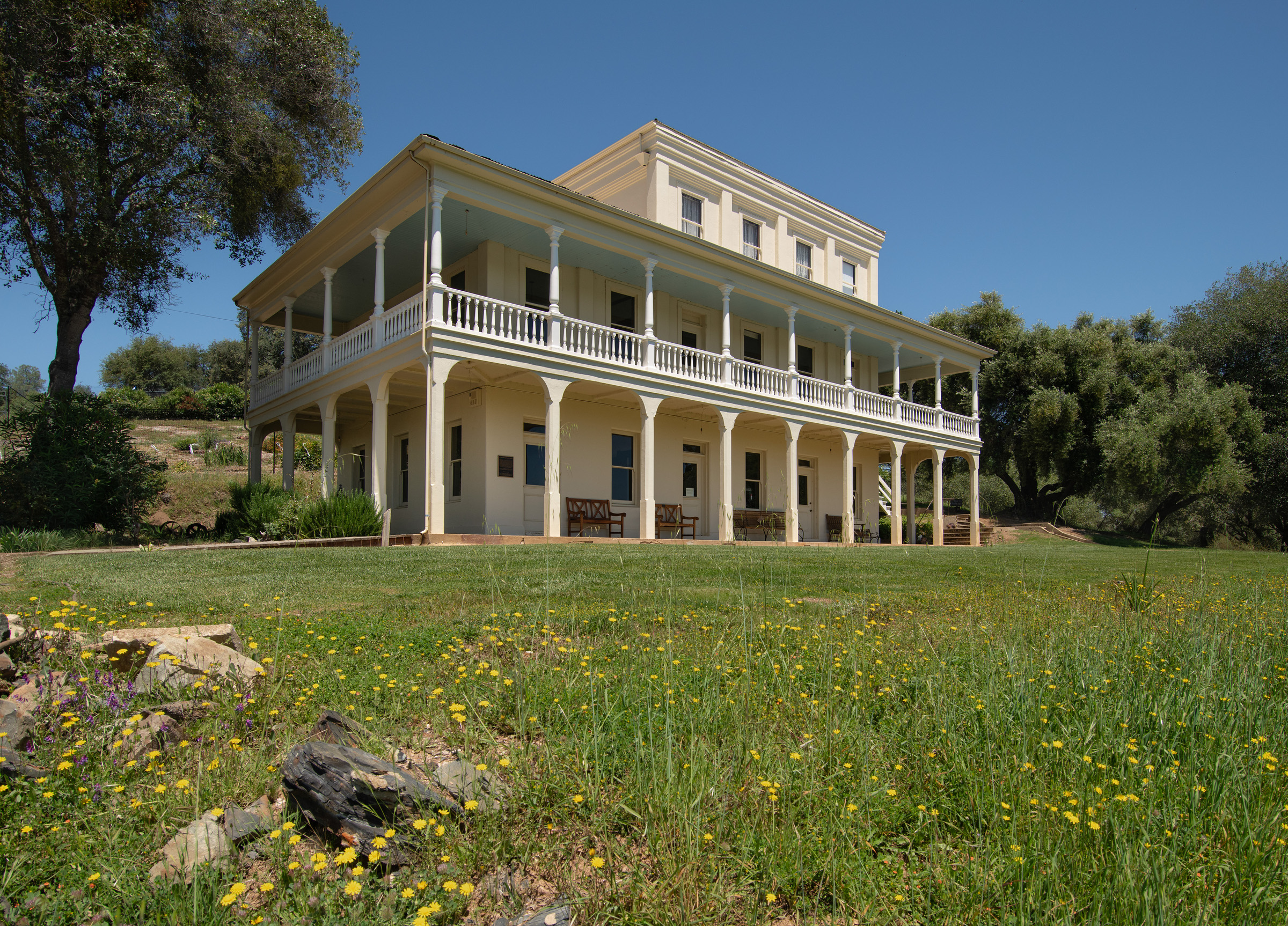 The 1908 Office Building was constructed with concrete
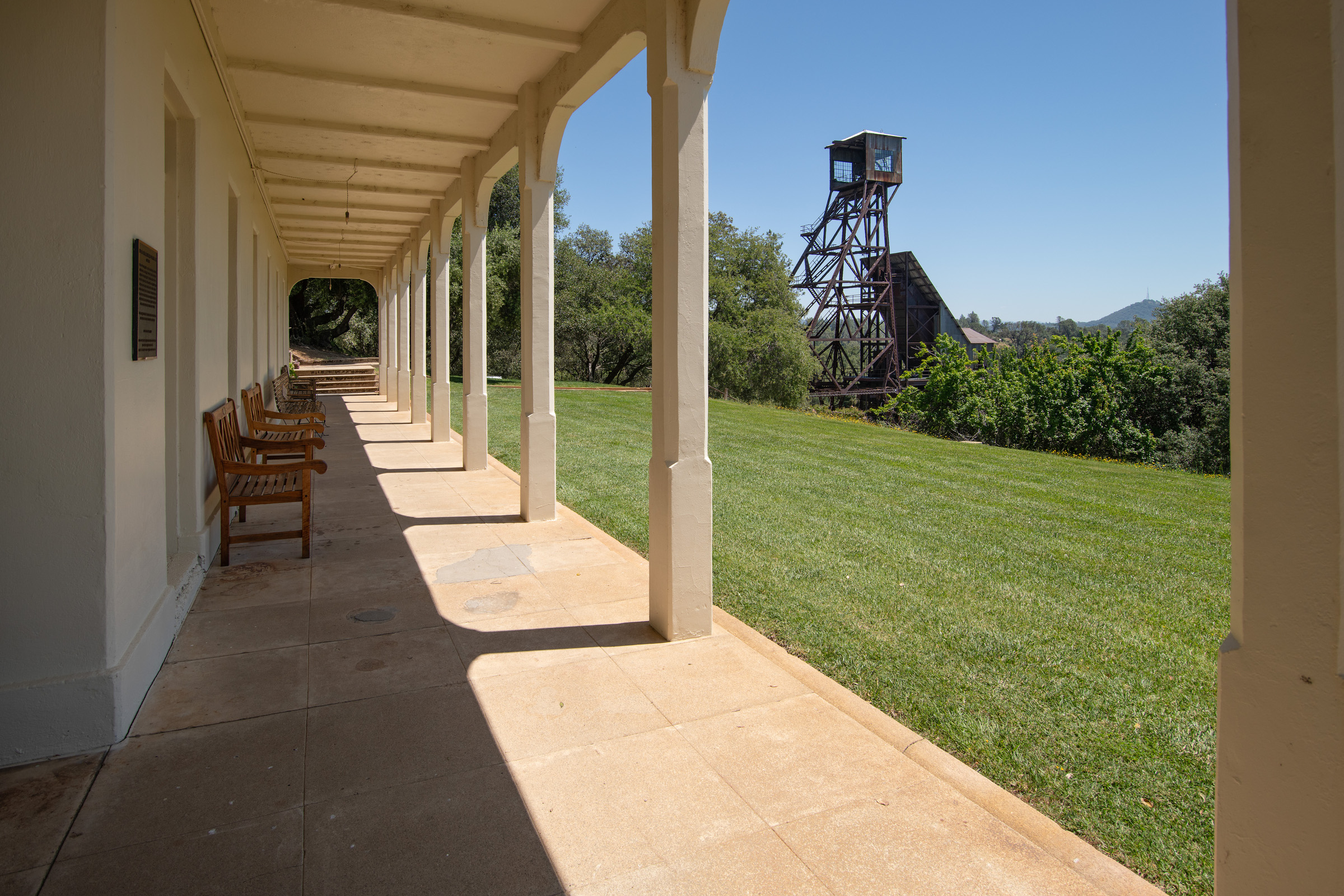 First floor veranda. The building has been beautifully restored
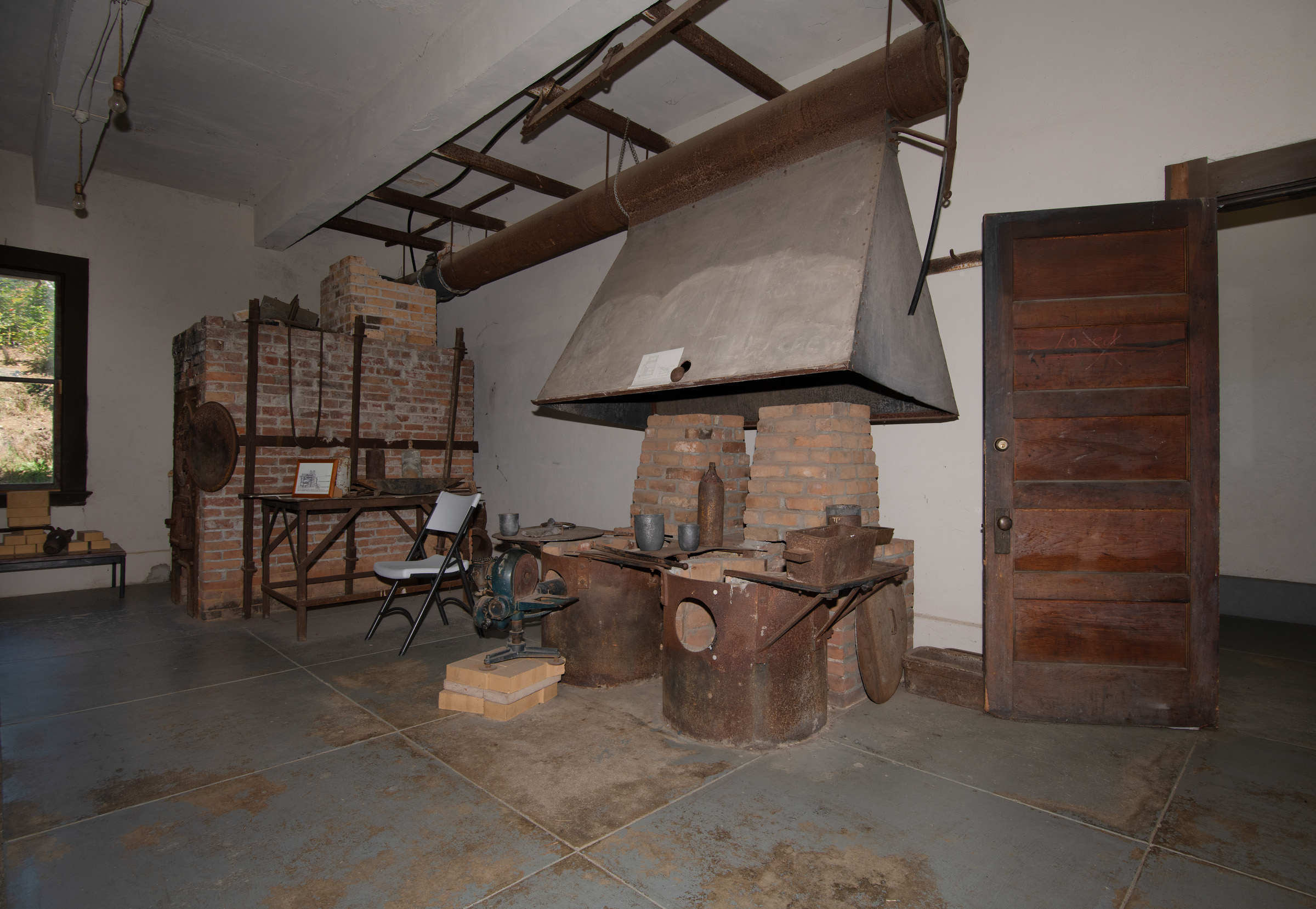 First floor retort room
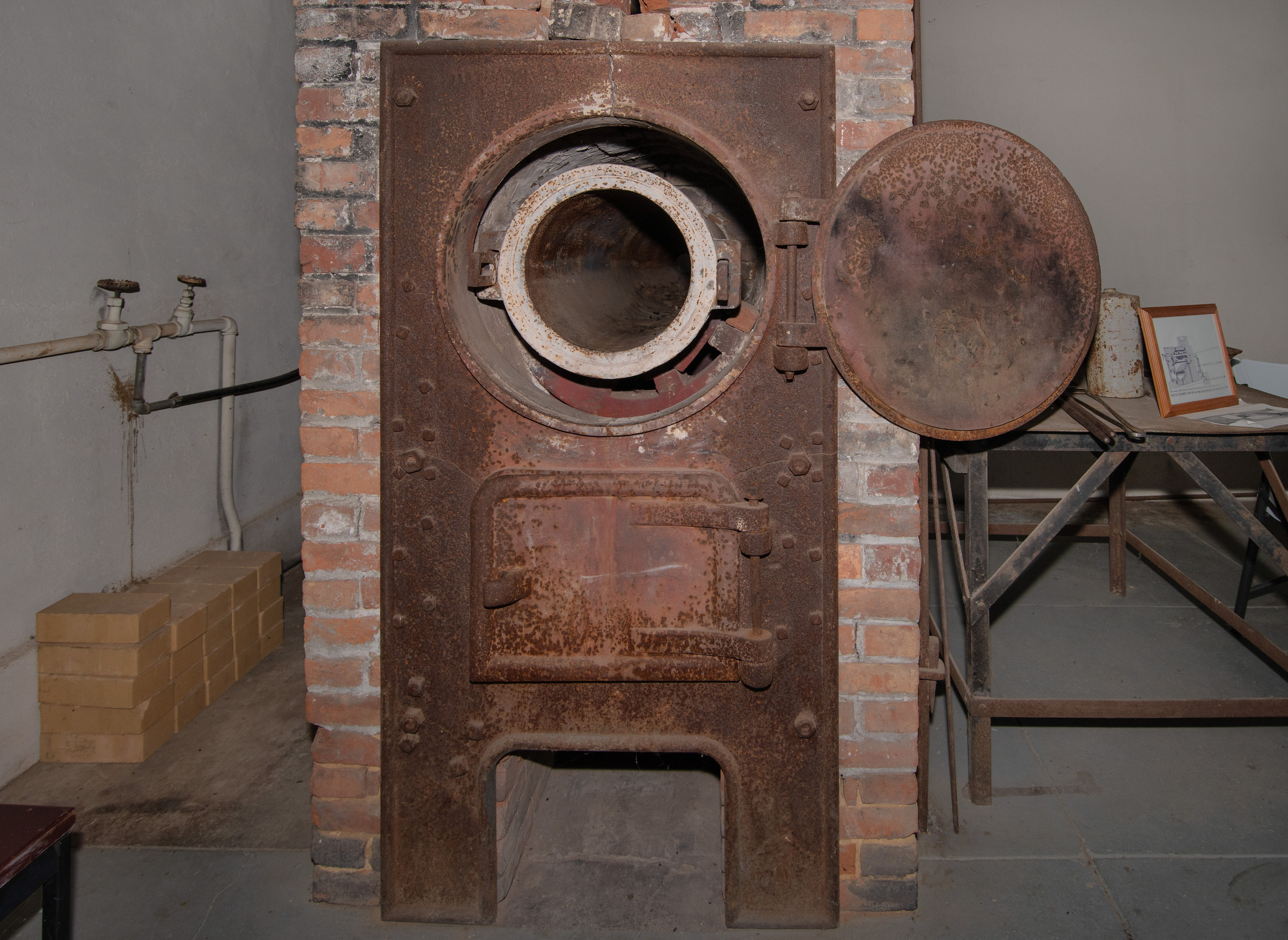
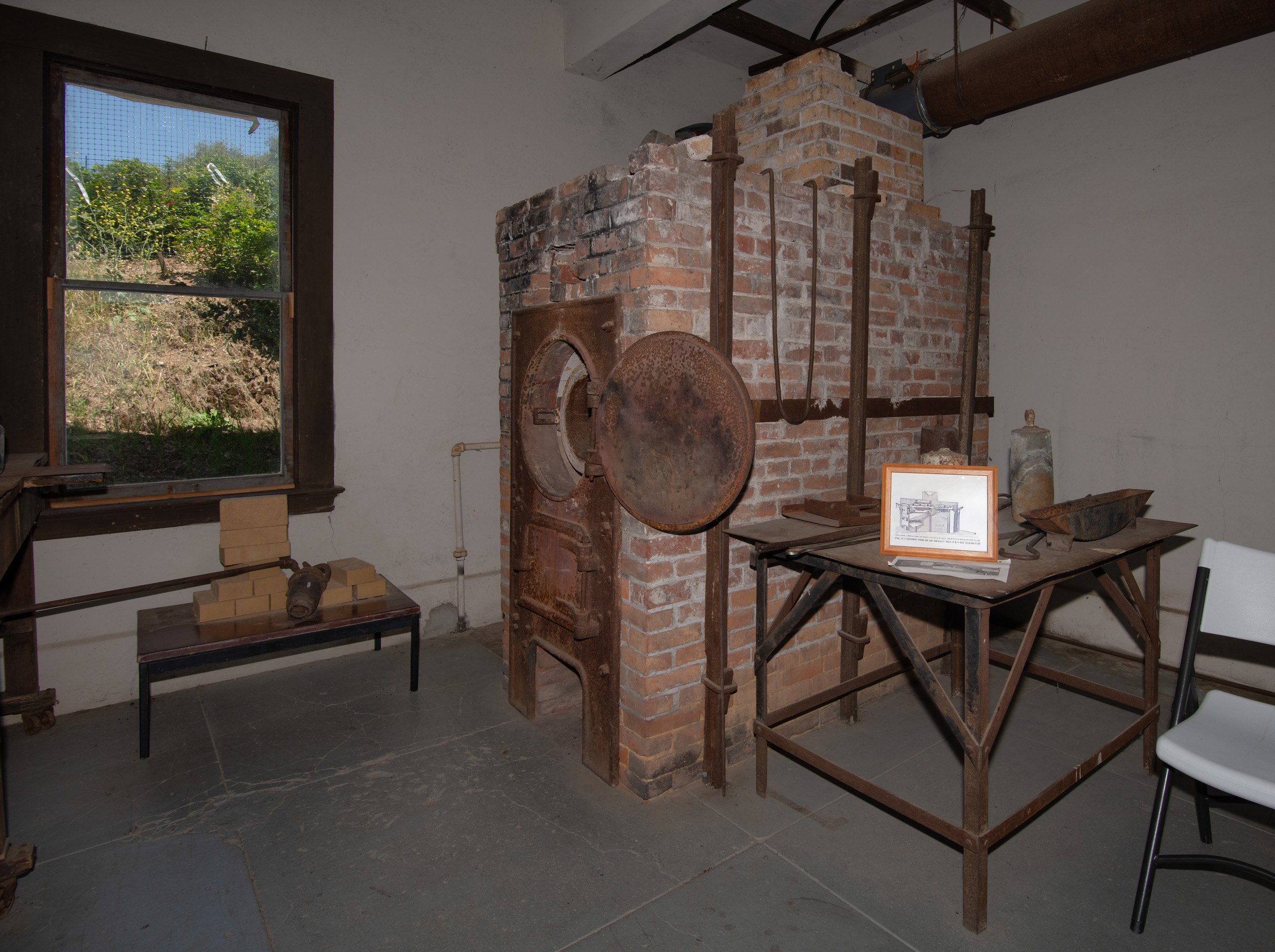 This retort furnace separated the mercury from the amalgam
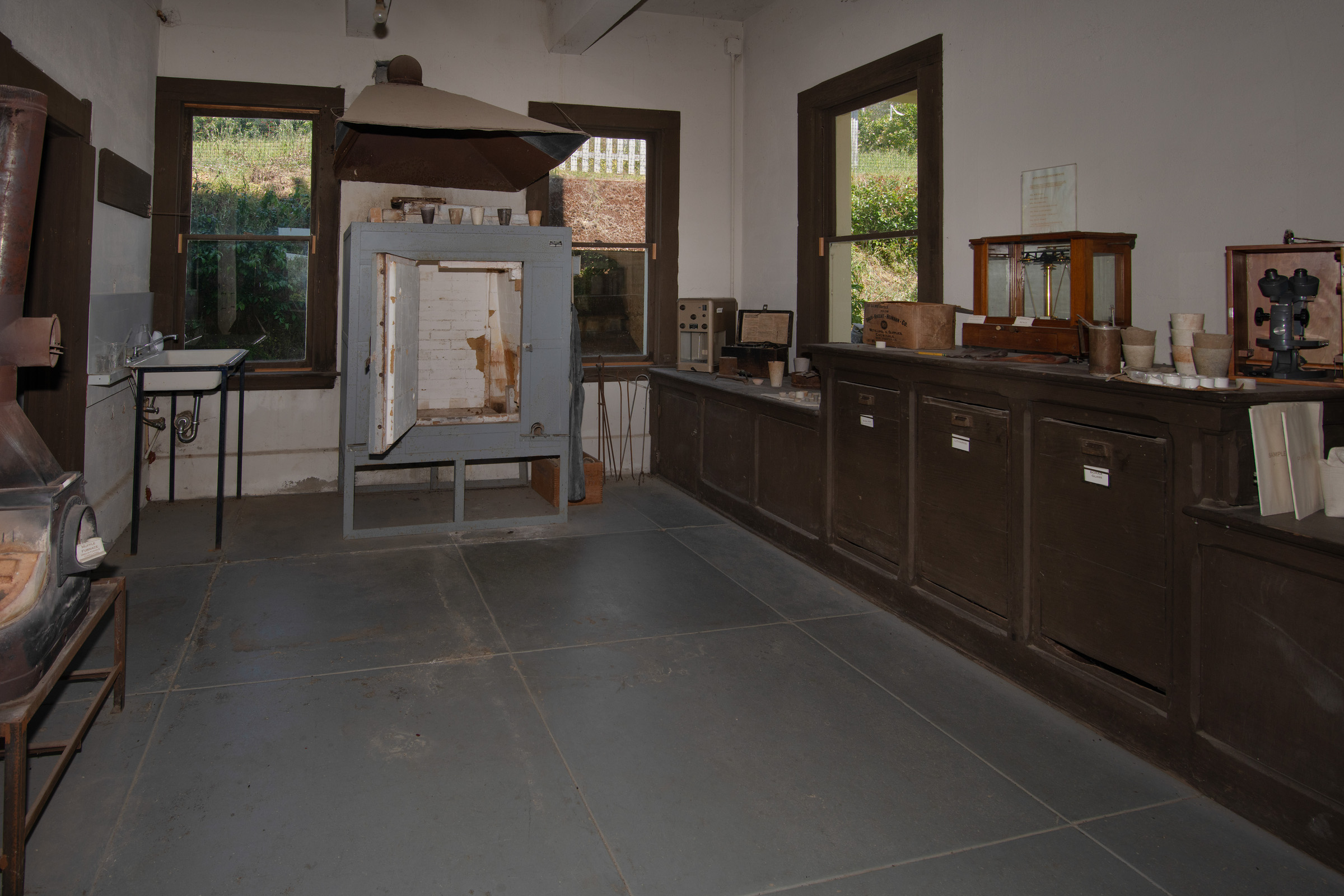 Just down the hall is the Assay Room
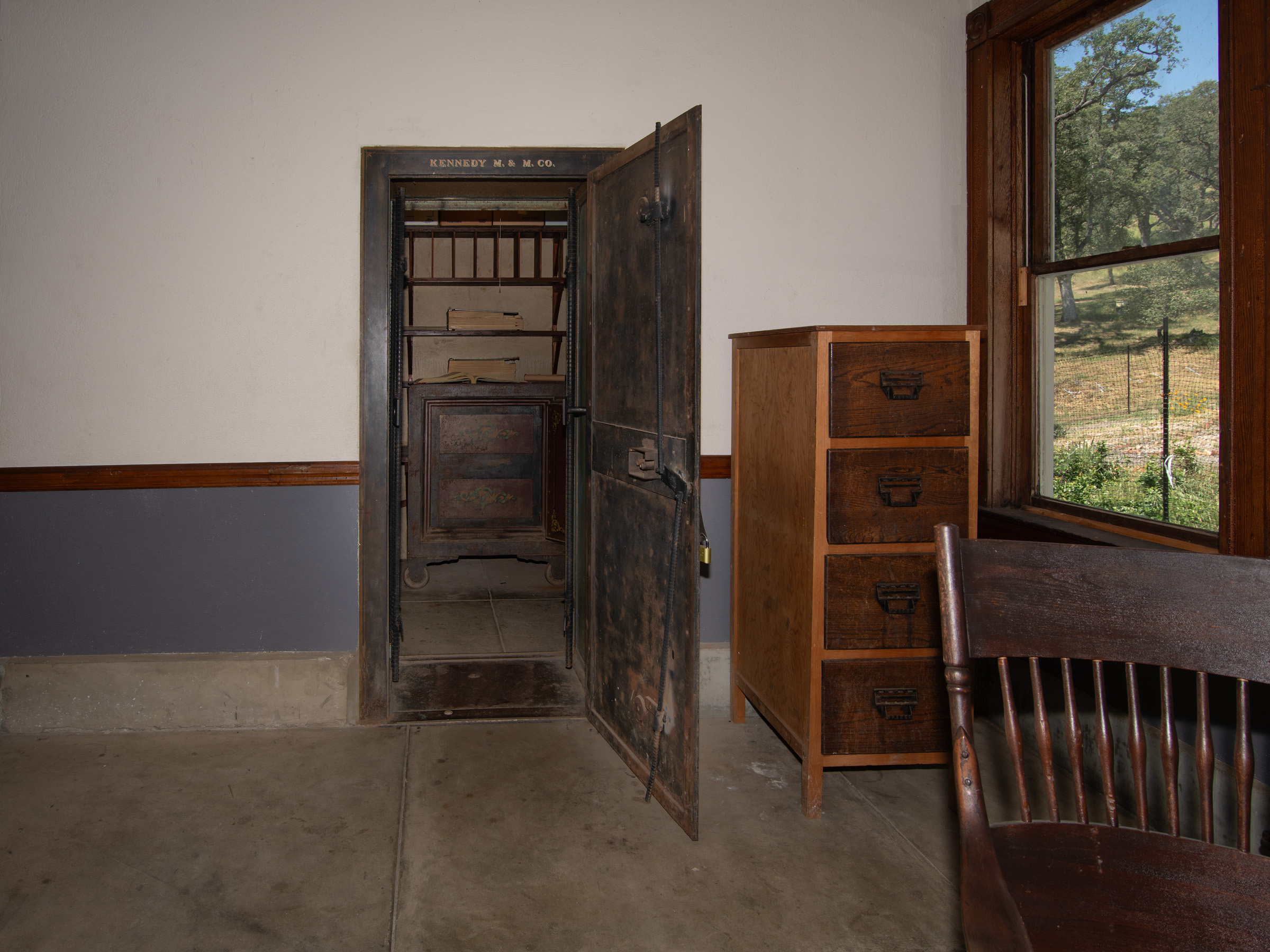 The finished bullion was stored in a safe, awaiting transport to the mint
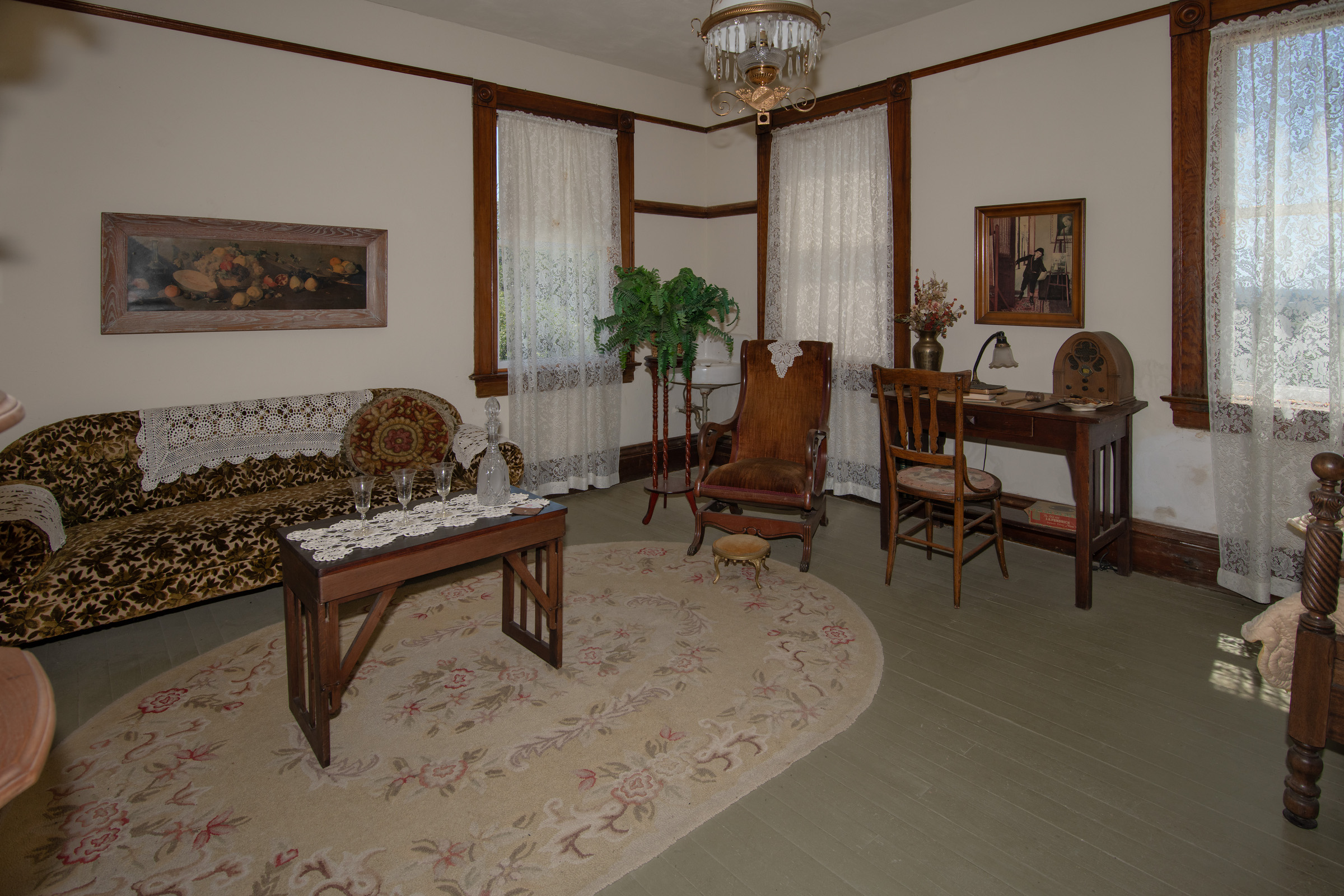
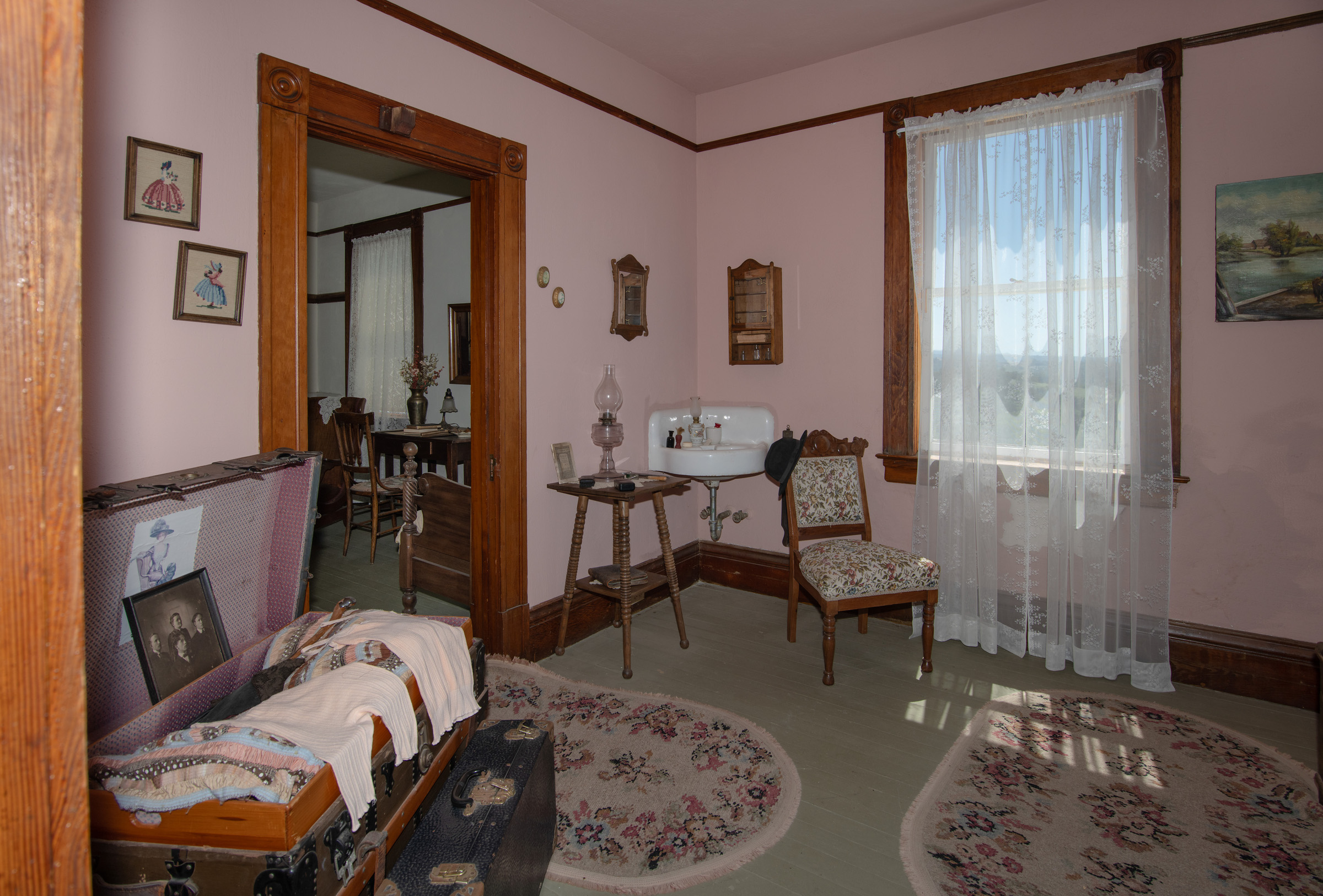 The third floor contained suites for visiting dignitaries
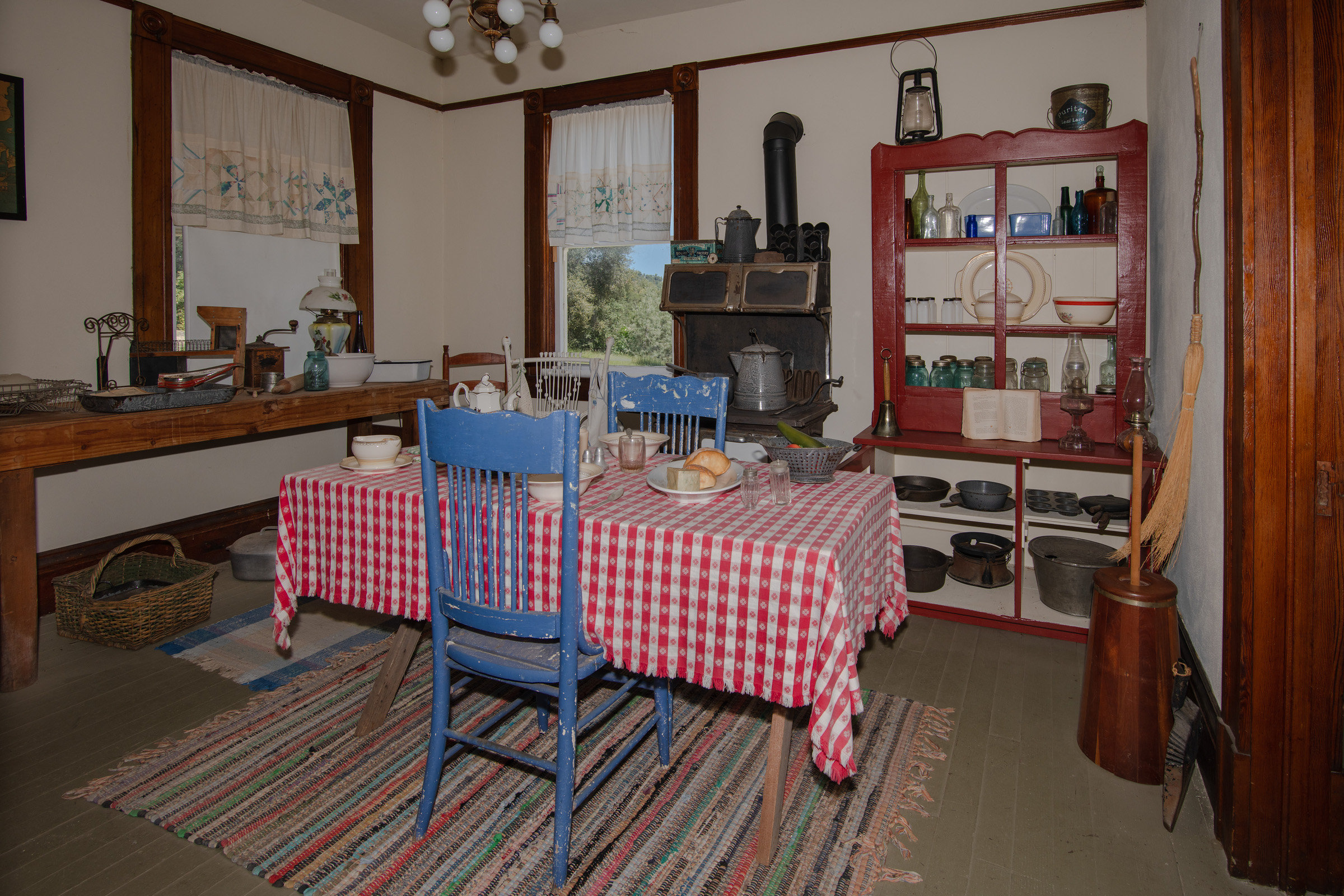 There was even a small kitchen/dining room
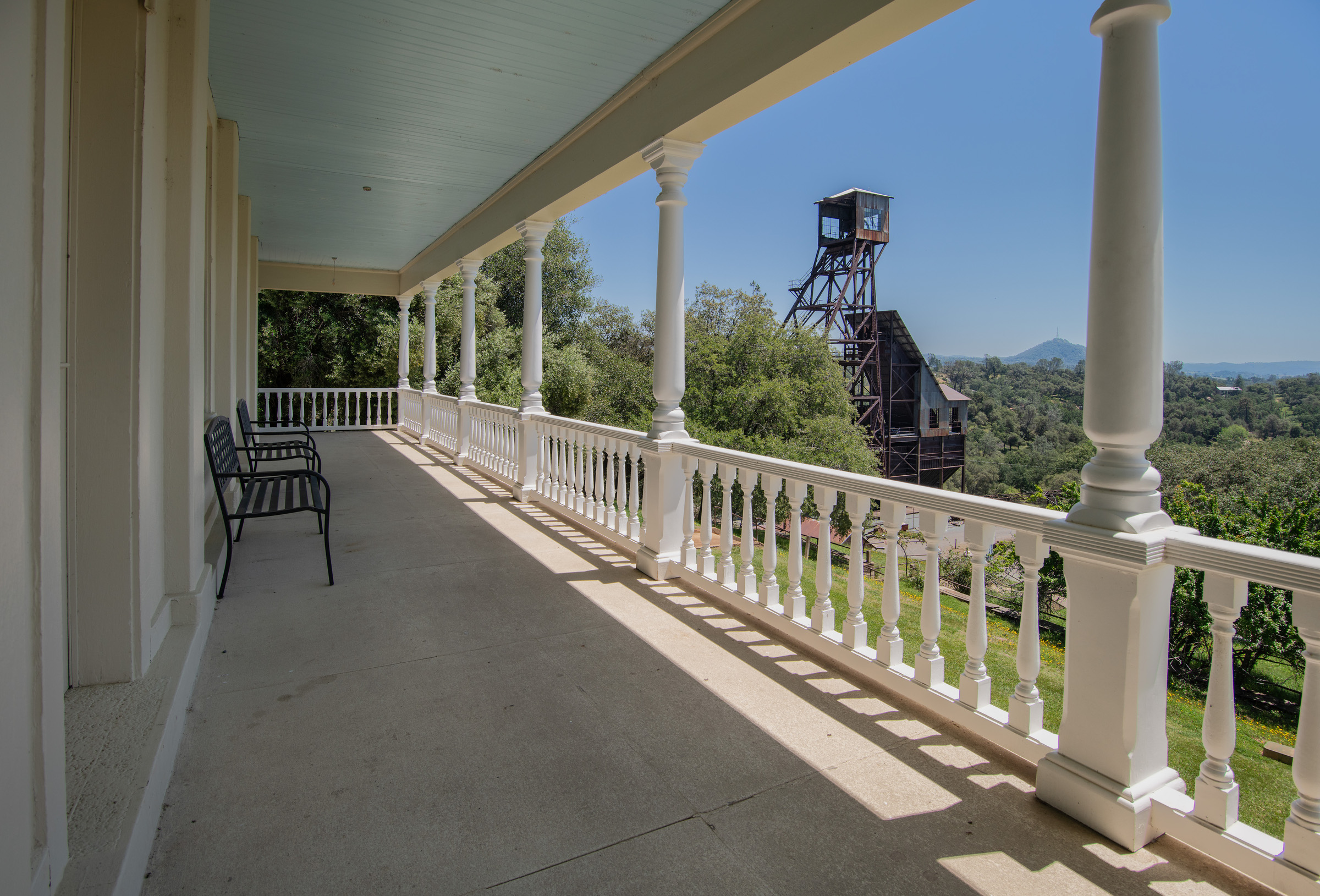 There is a nice view from the second floor balcony
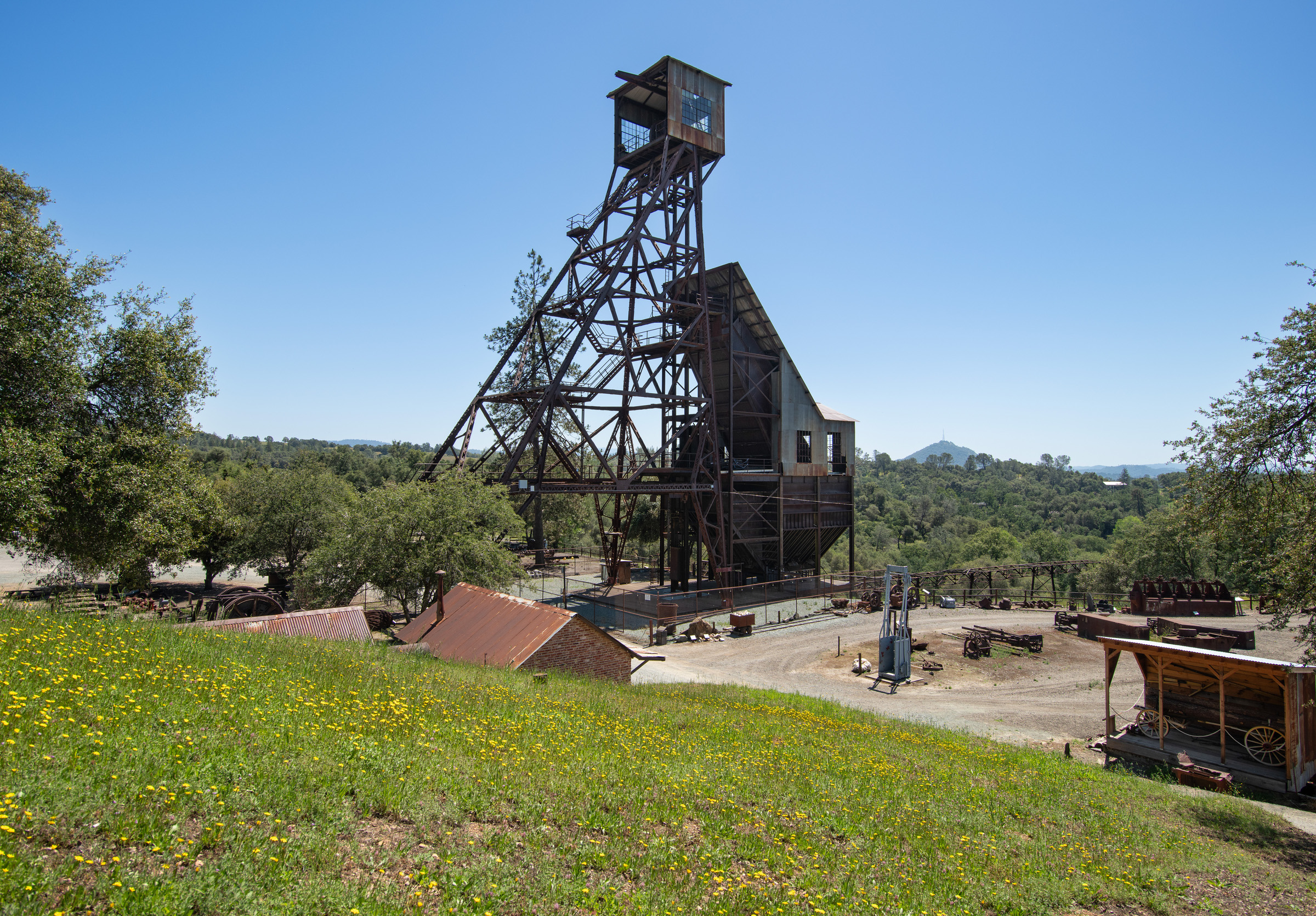 One of the best views of the headframe is from the Mine Office's lawn
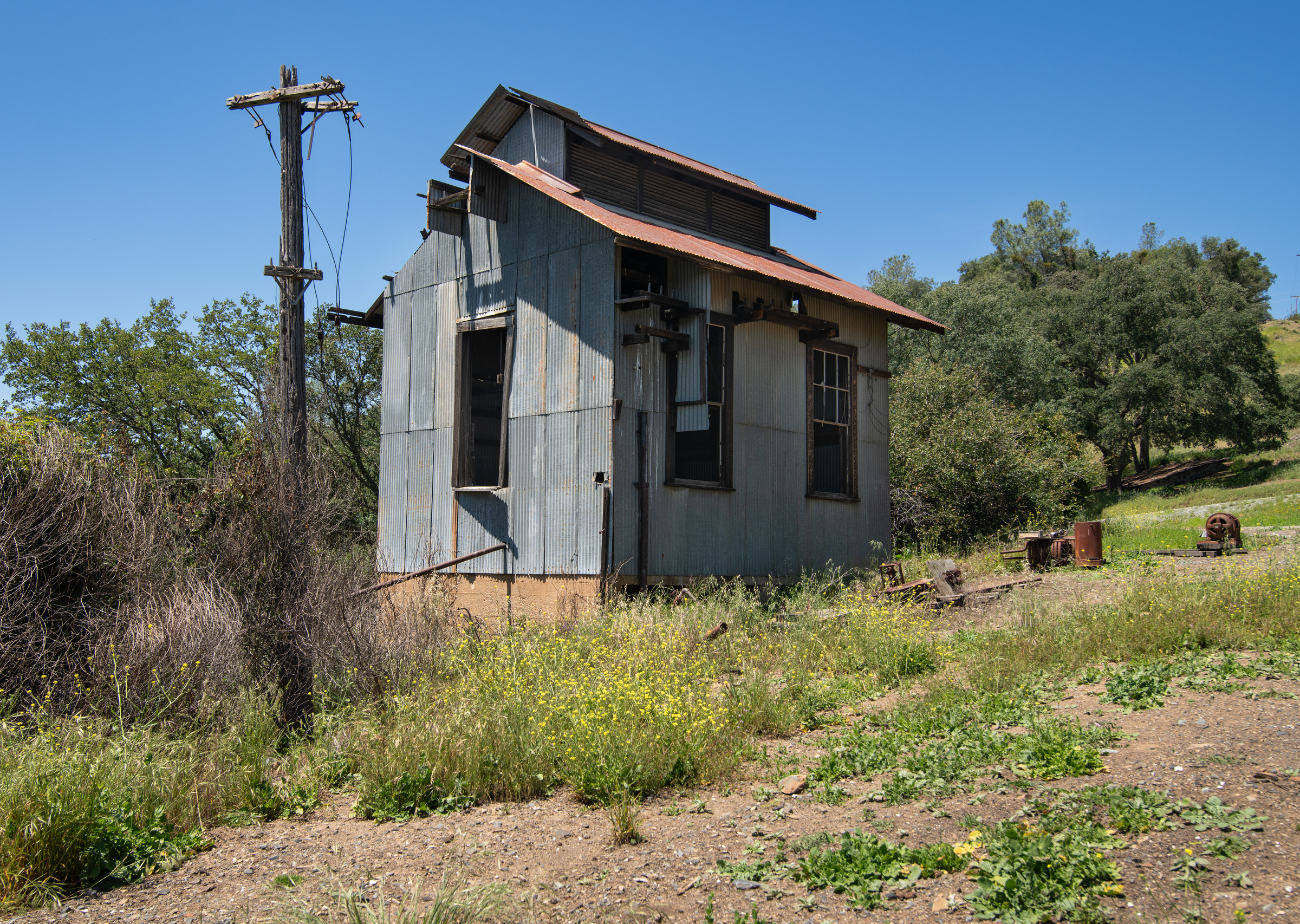 The Power House, dating to 1926
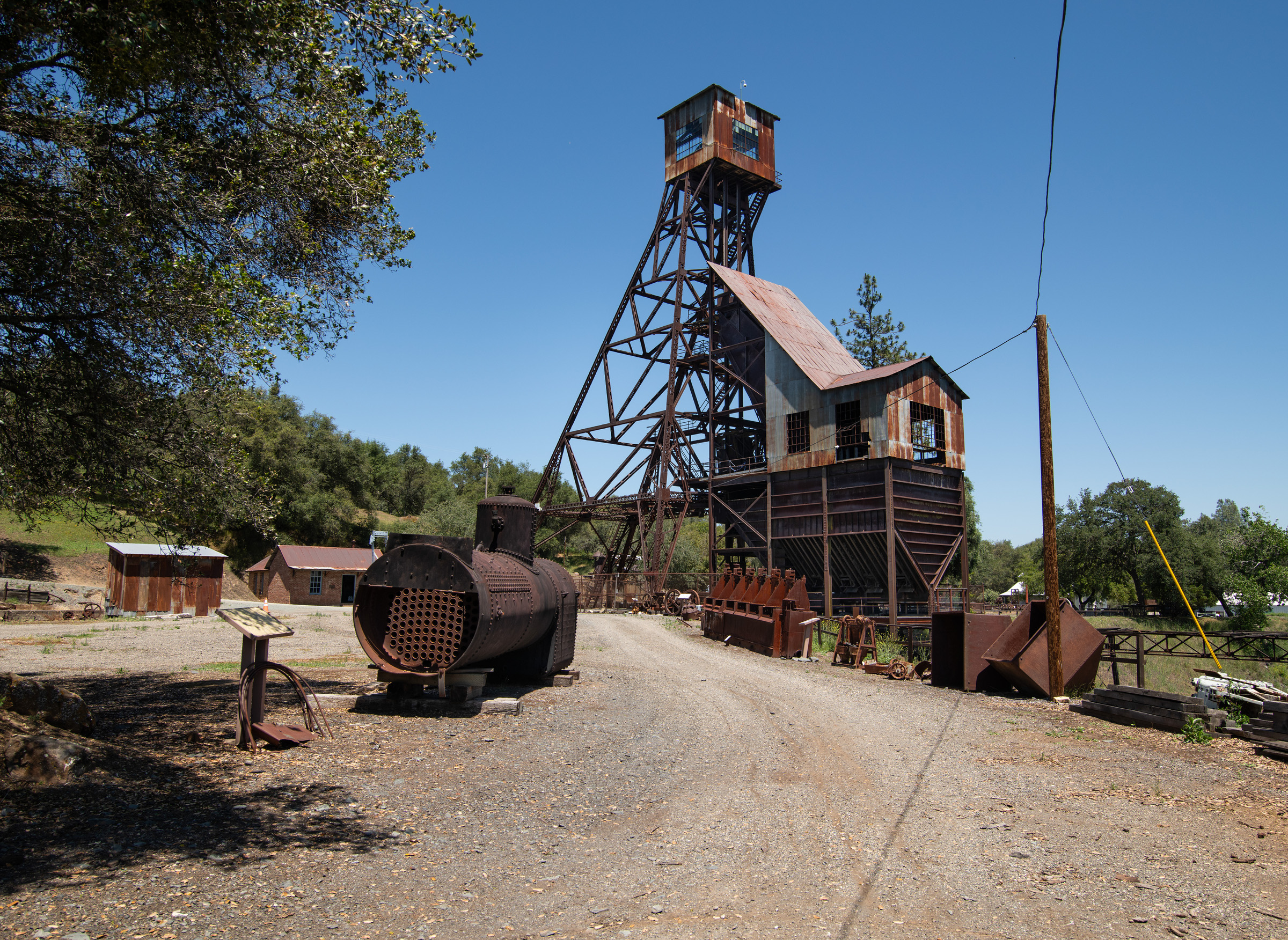 Boiler and floatation cells line the road below the headframe
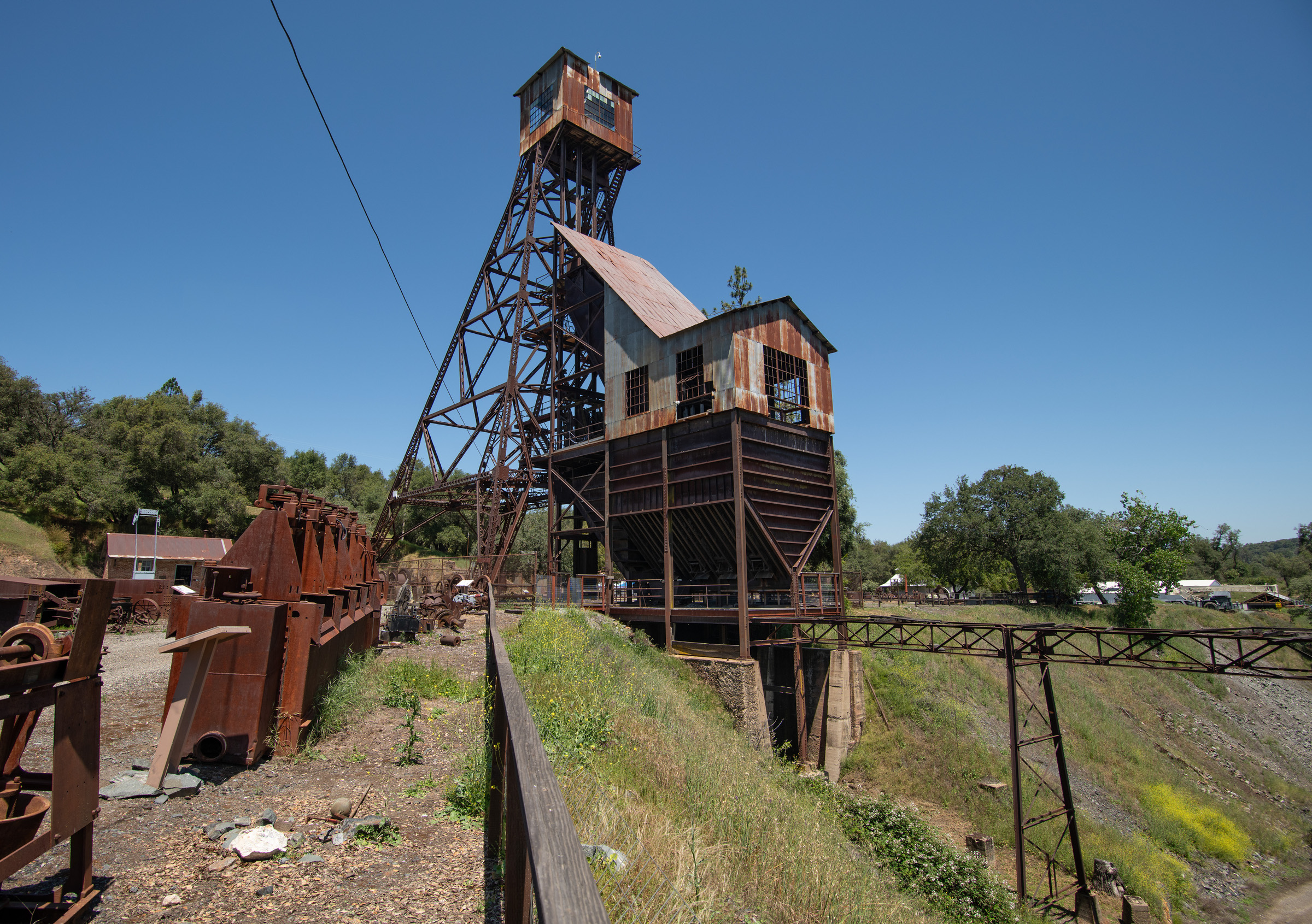 The entire hillside is covered with waste rock from the mine
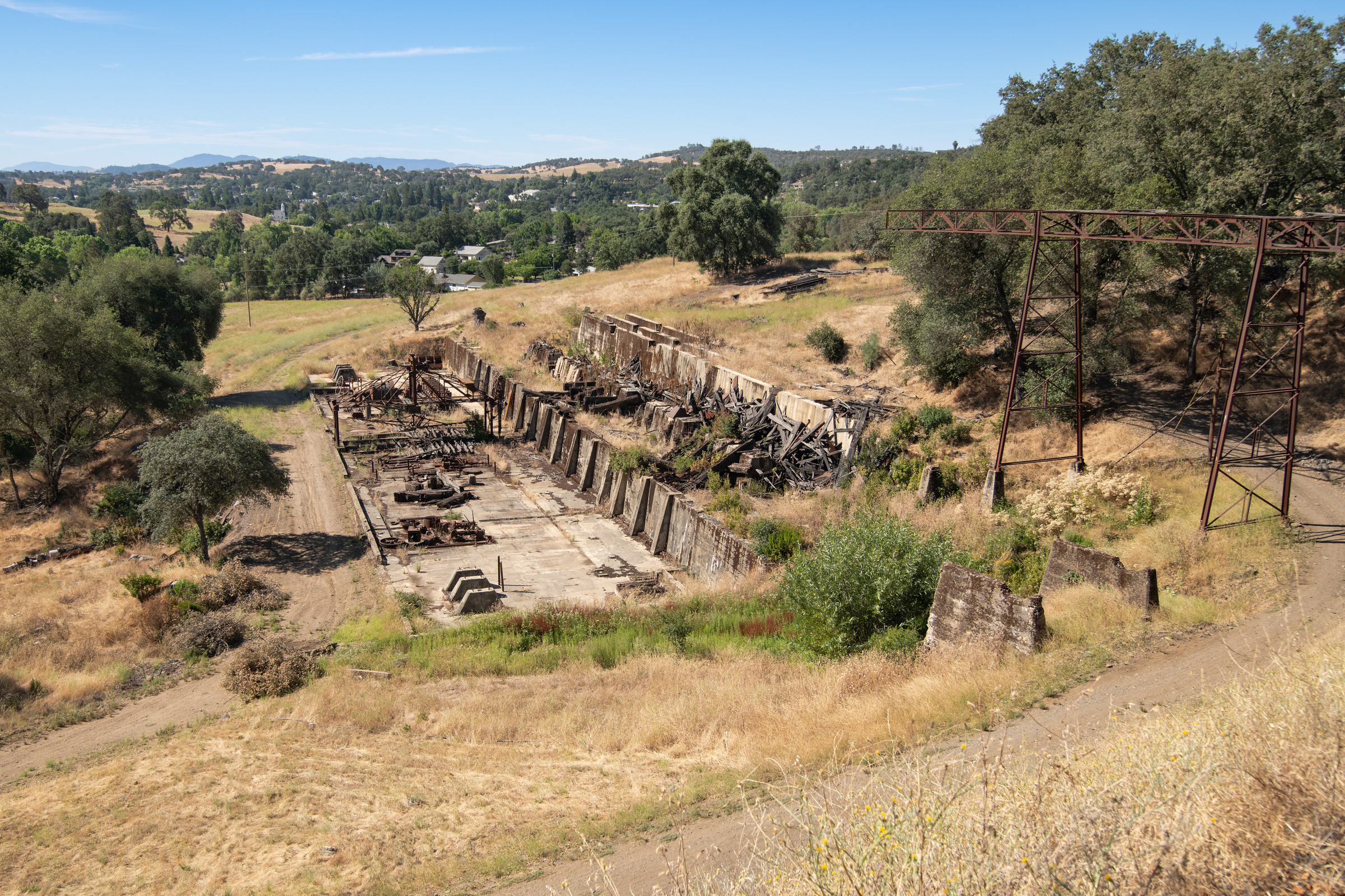 The ruins of the 100-stamp mill, which ran 24 hours a day.
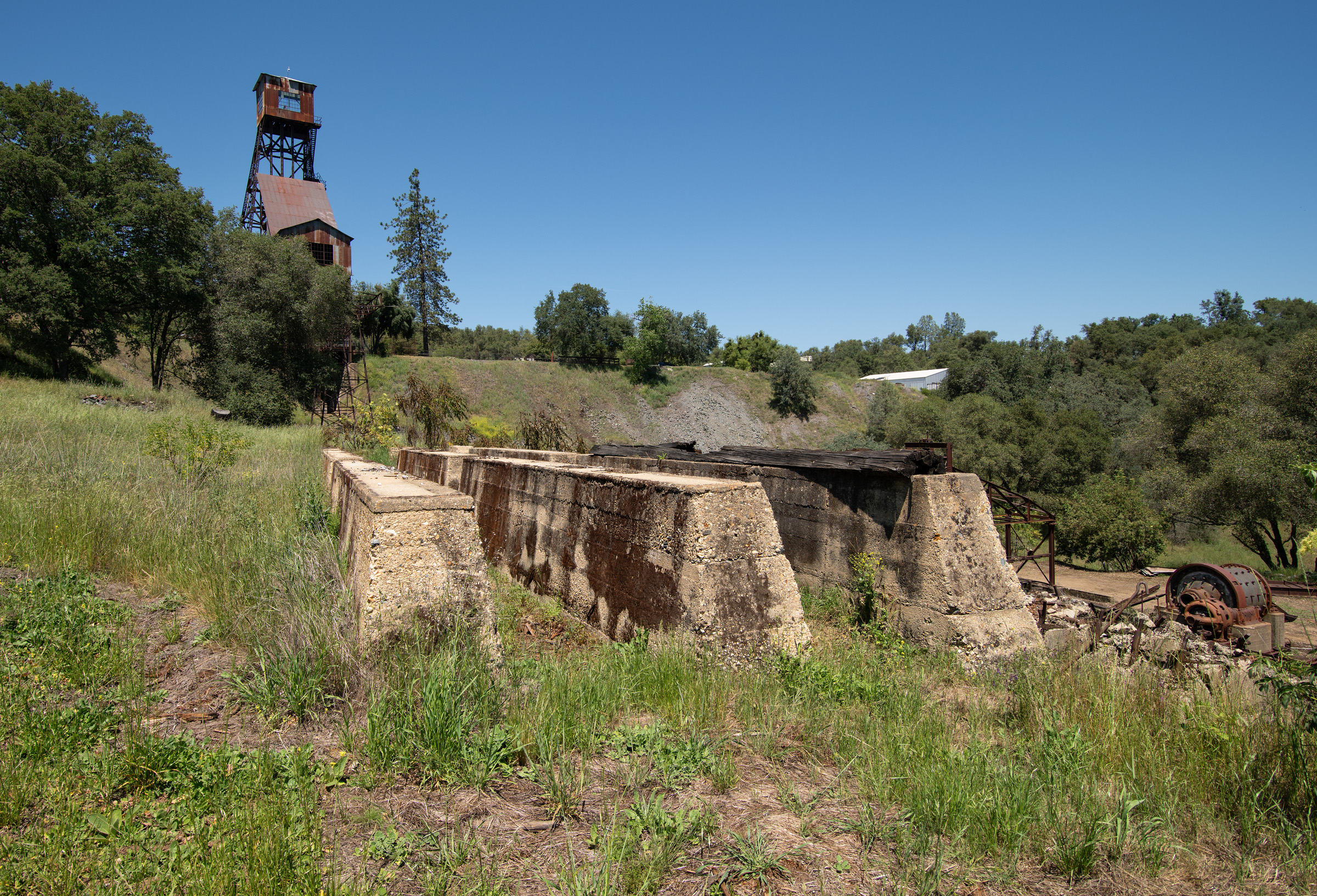 Ore bin foundations
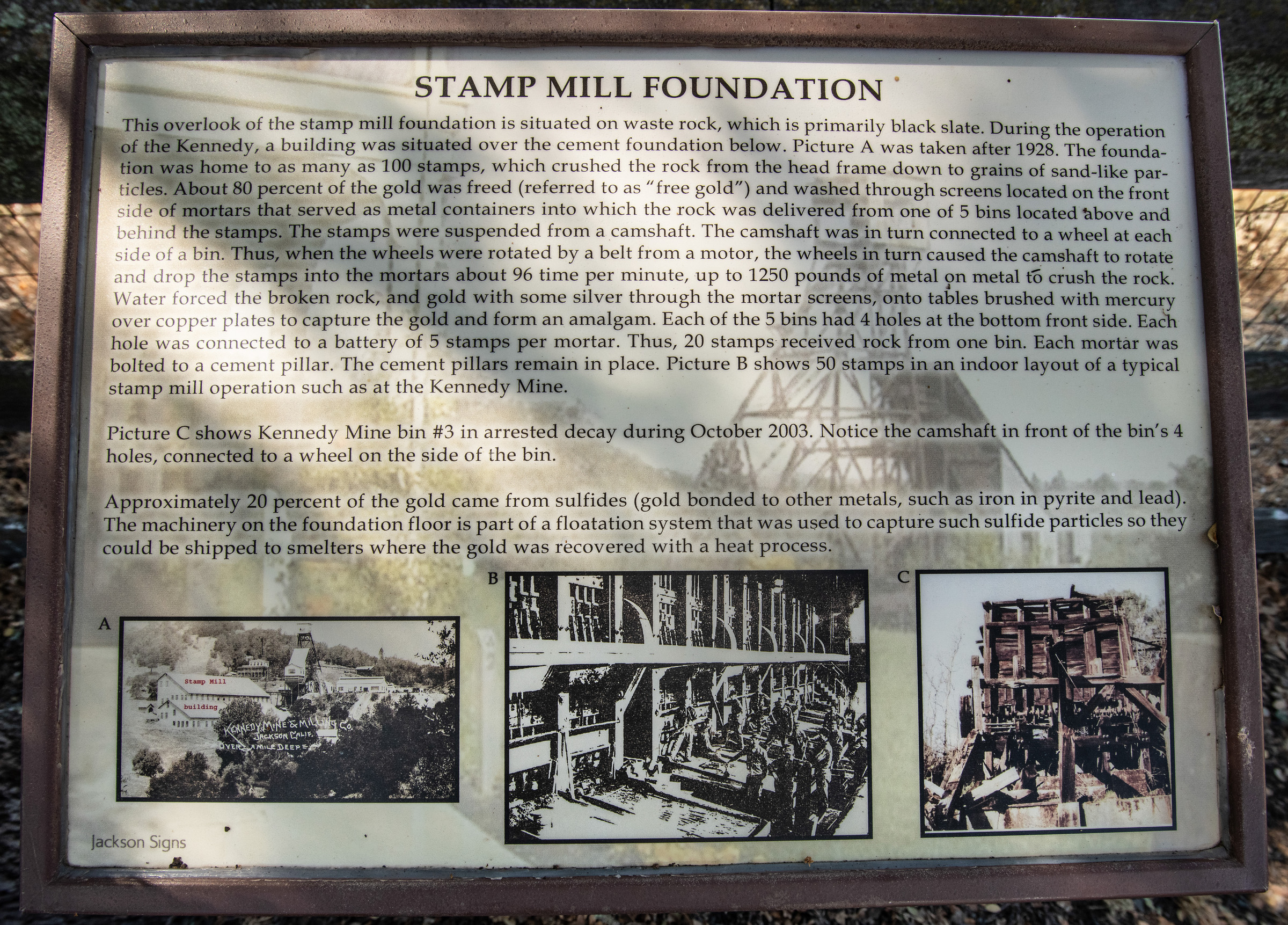
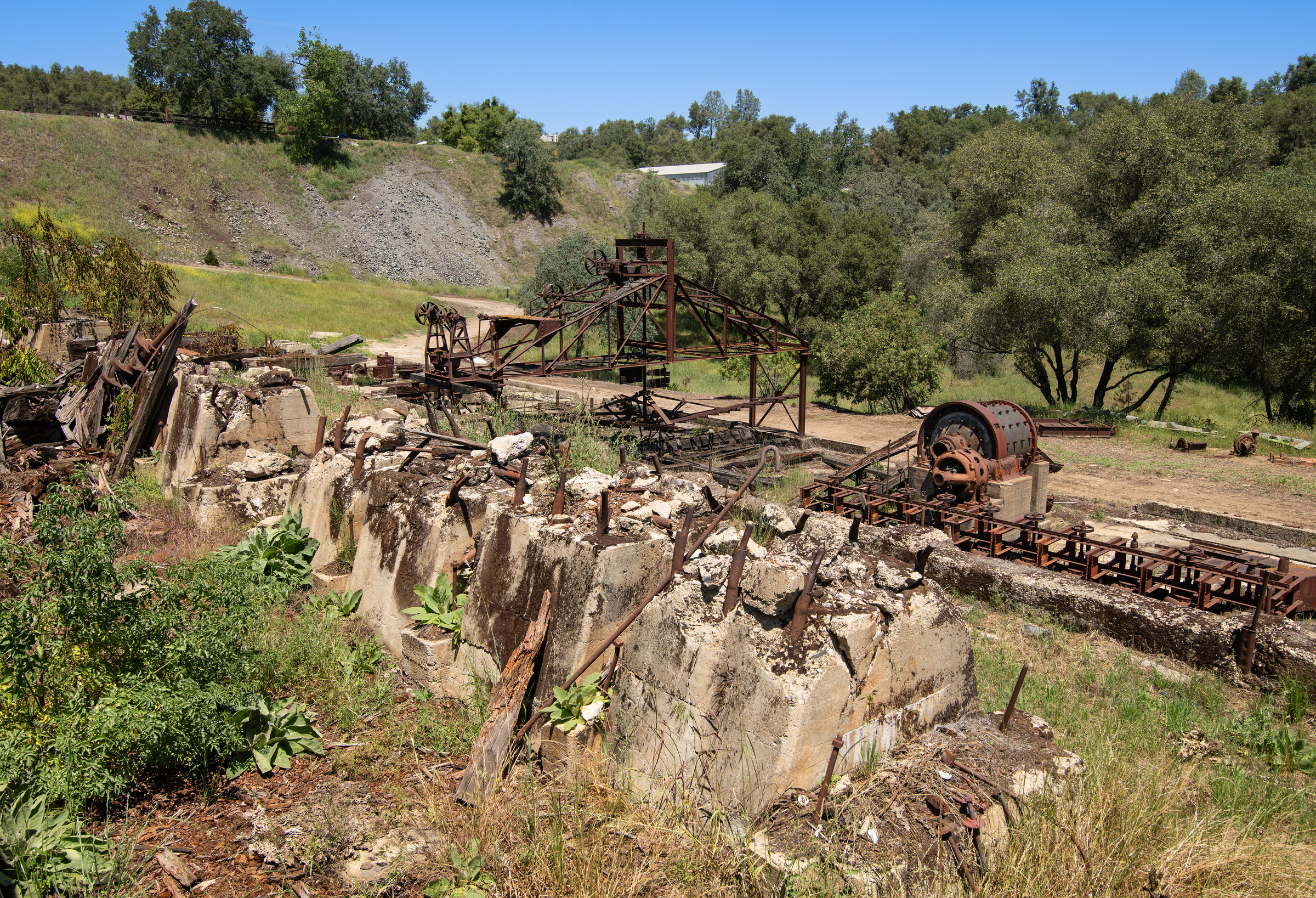 Stamp mill foundations
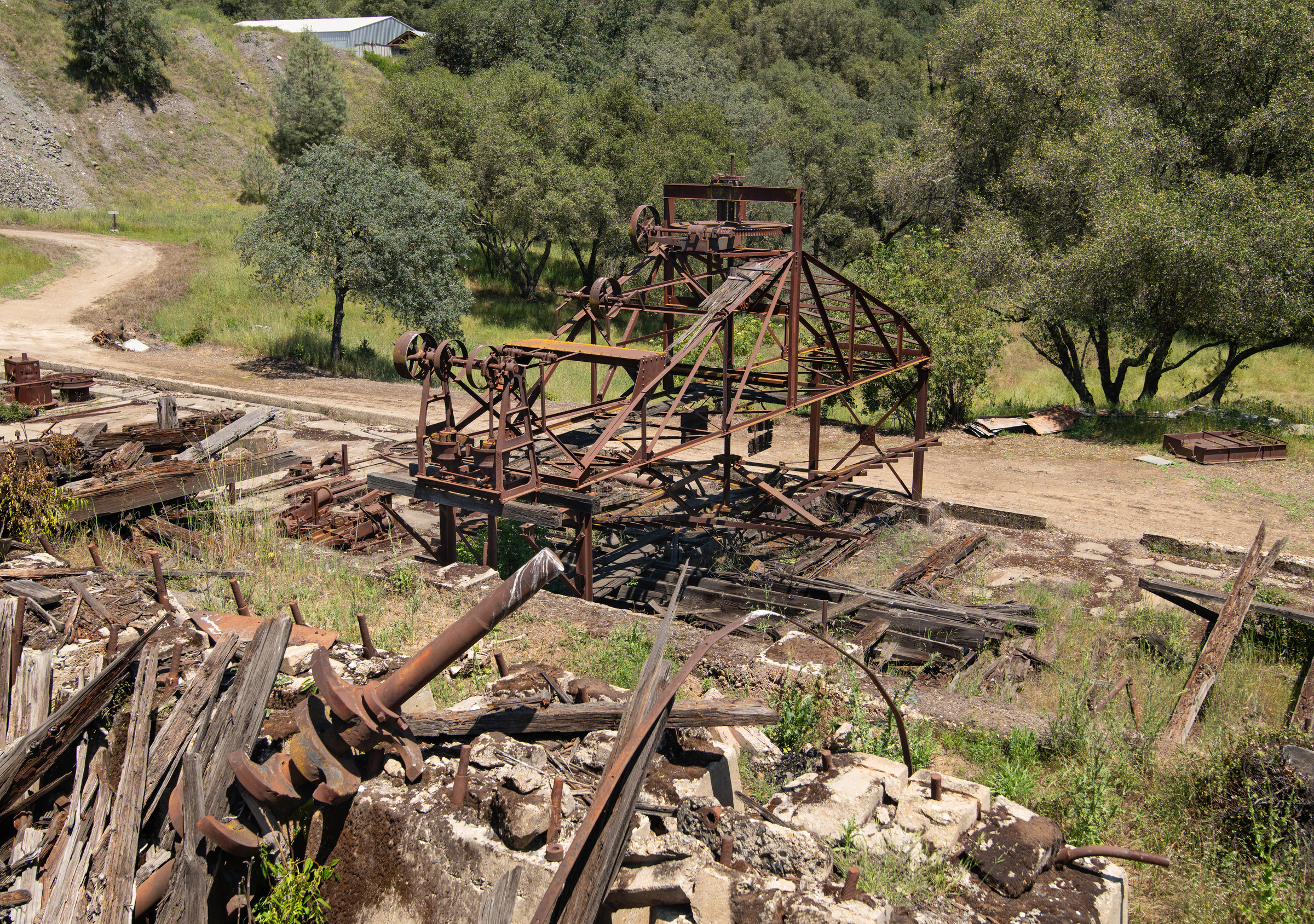 Classifier ruin
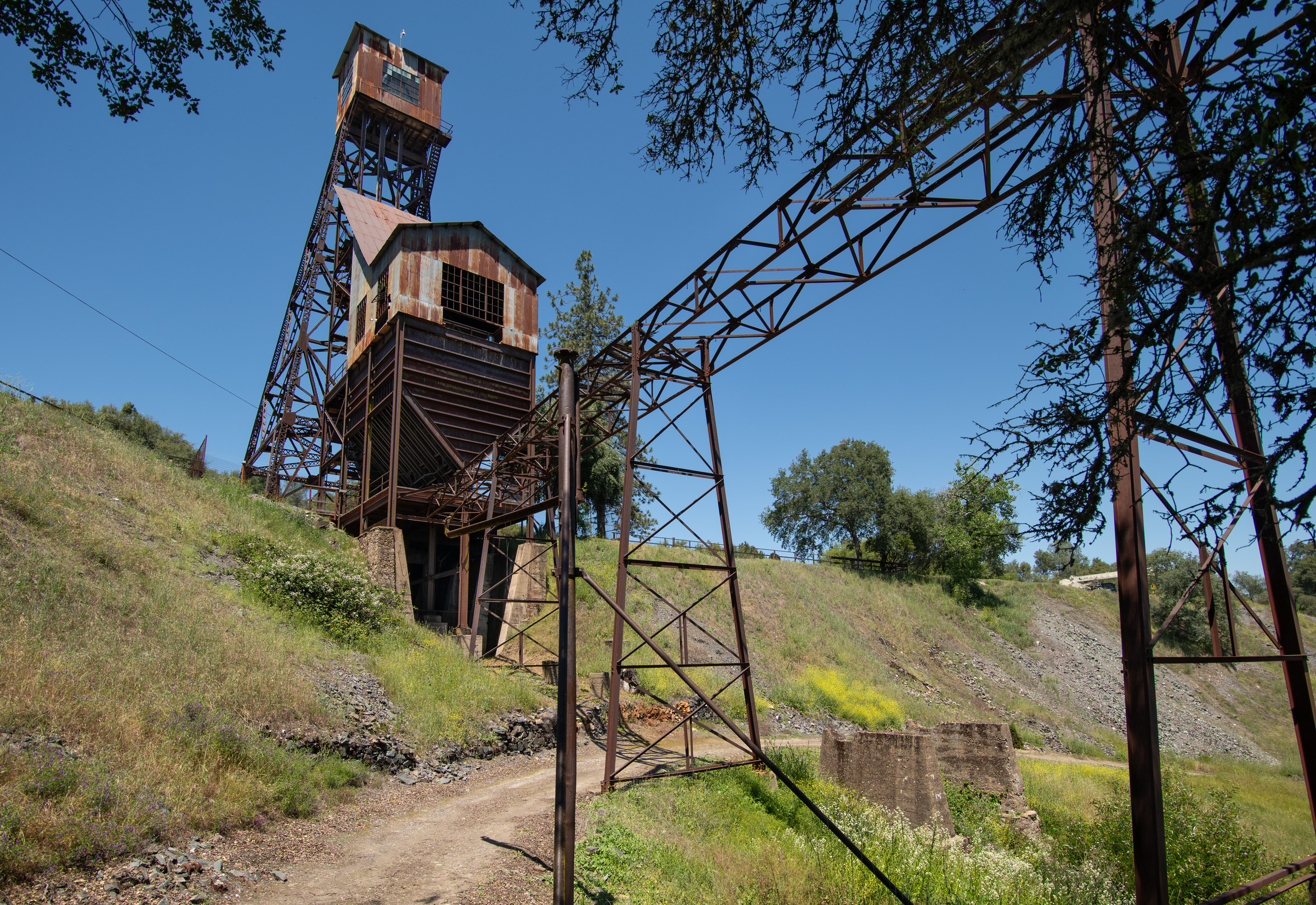 Heading down for a closer look at the mill
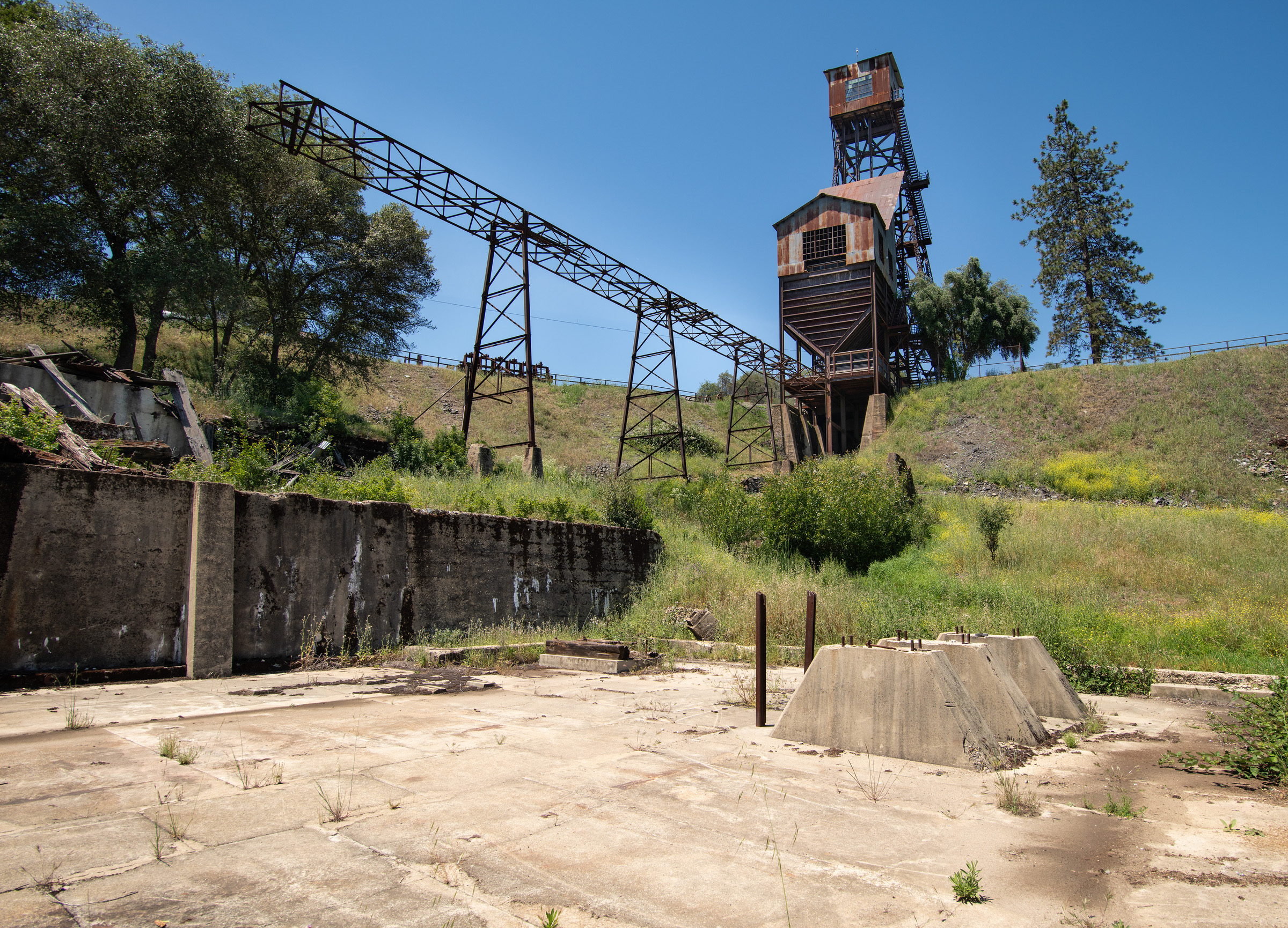 The ore was rolled over to the mill on this trestle
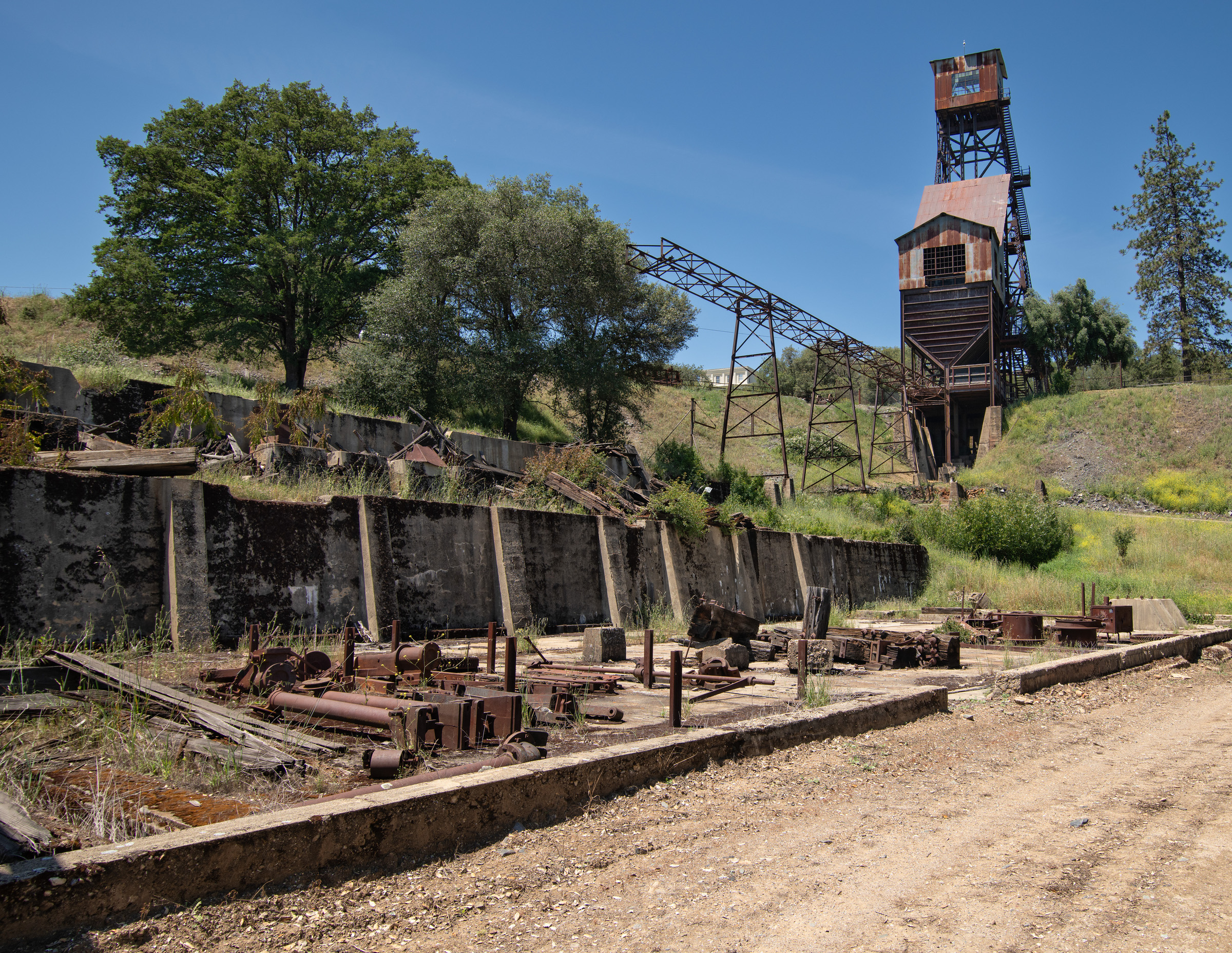 Most of the mill machinery is now gone
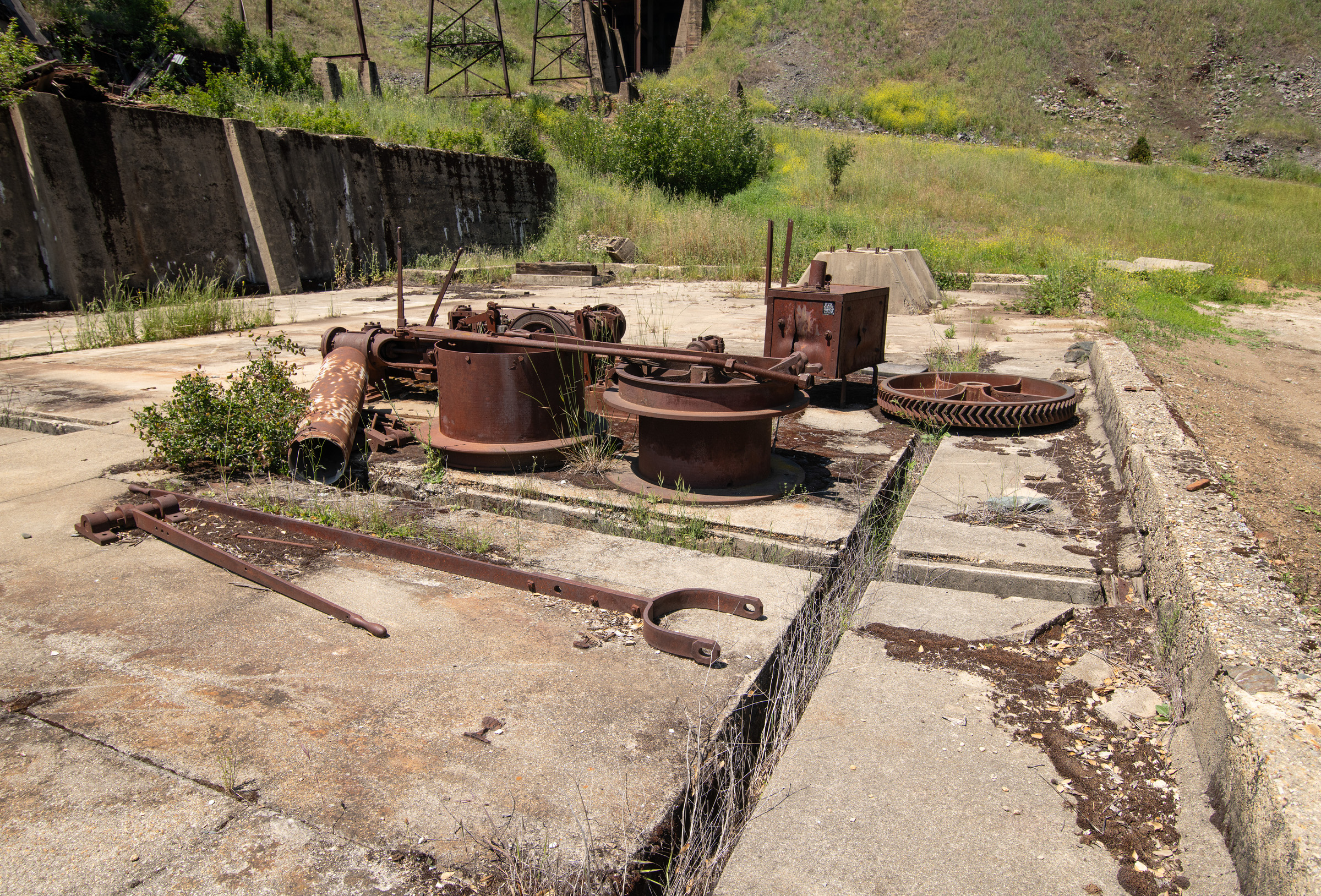 Hoist parts
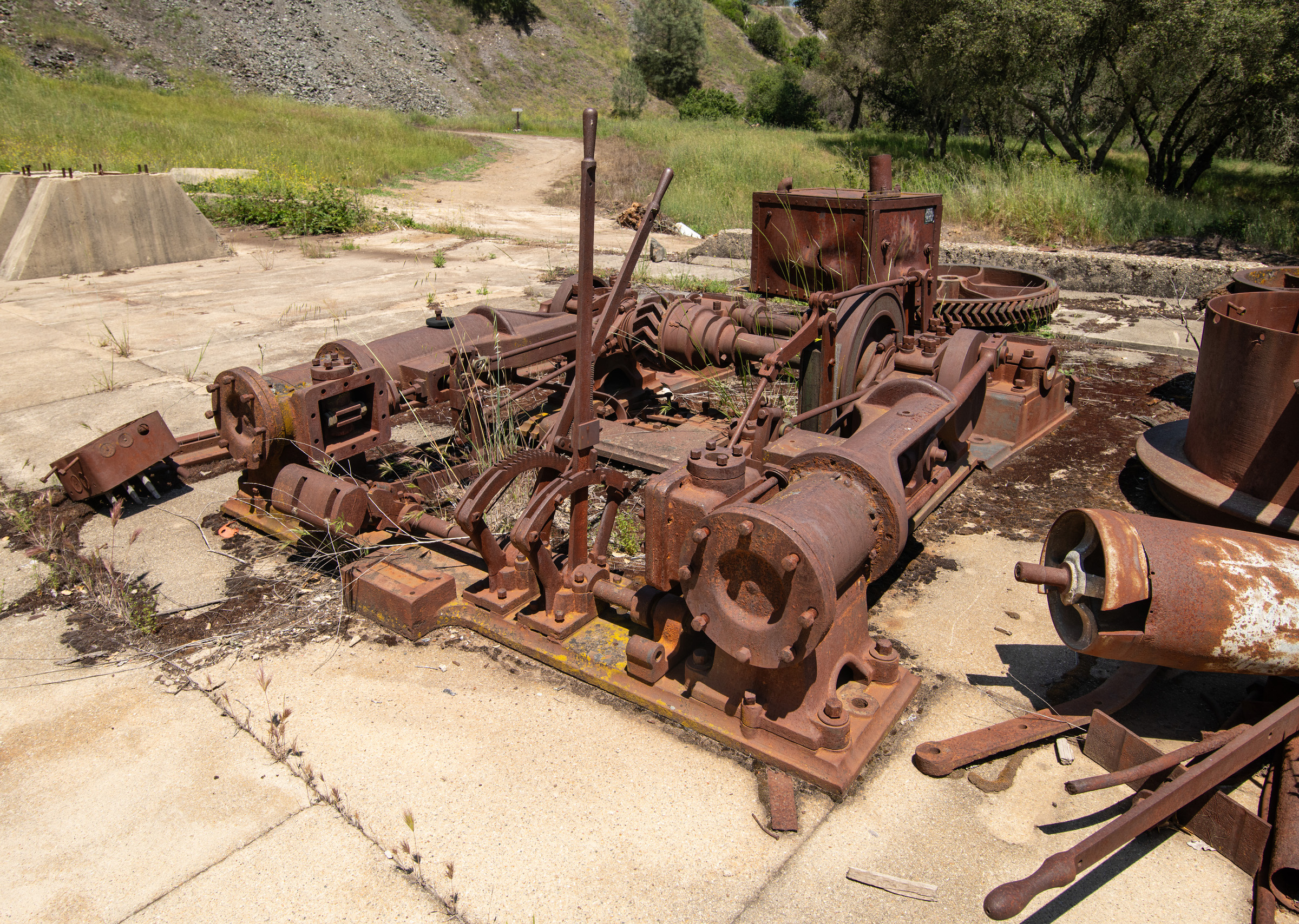 Hoist
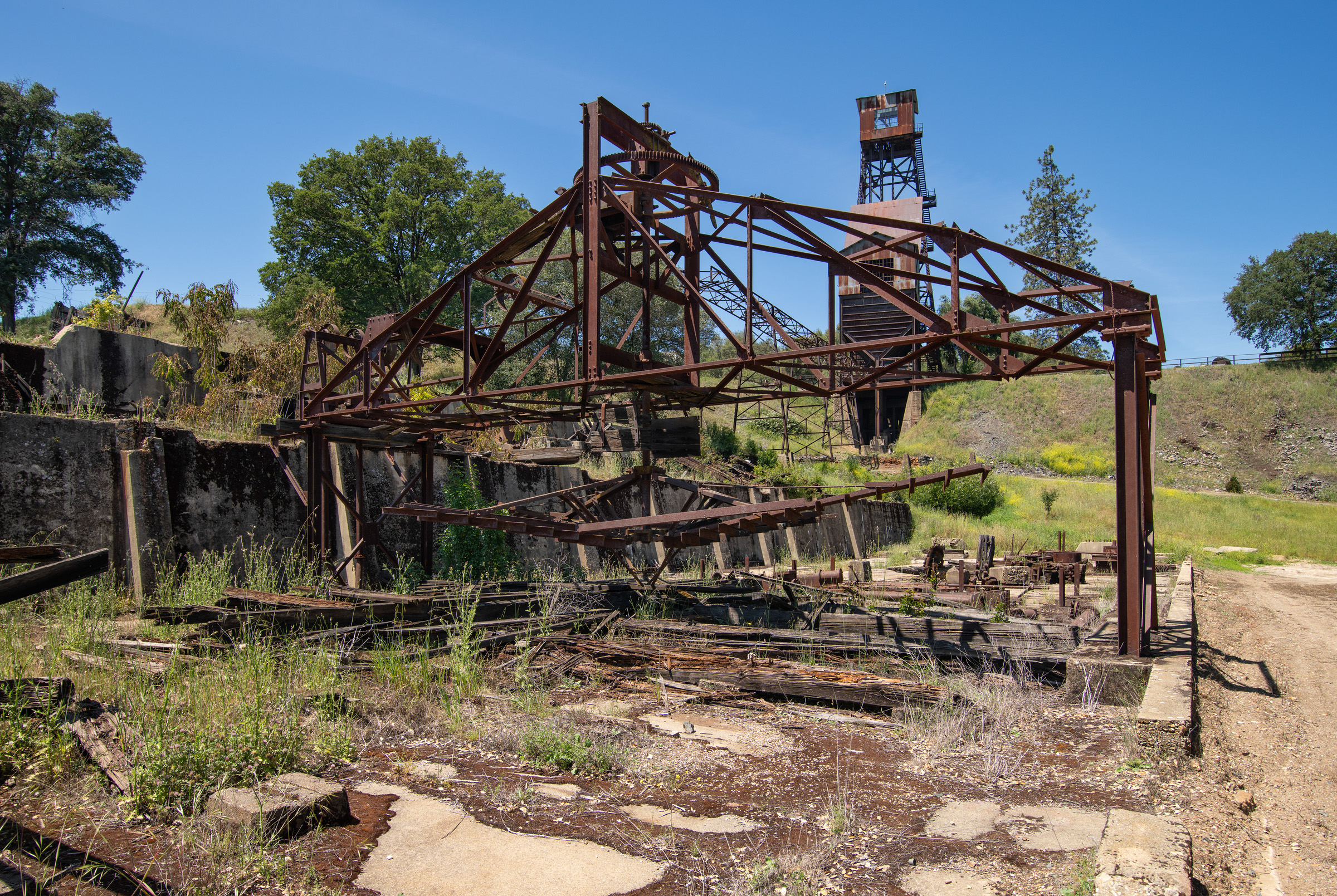 Classifier
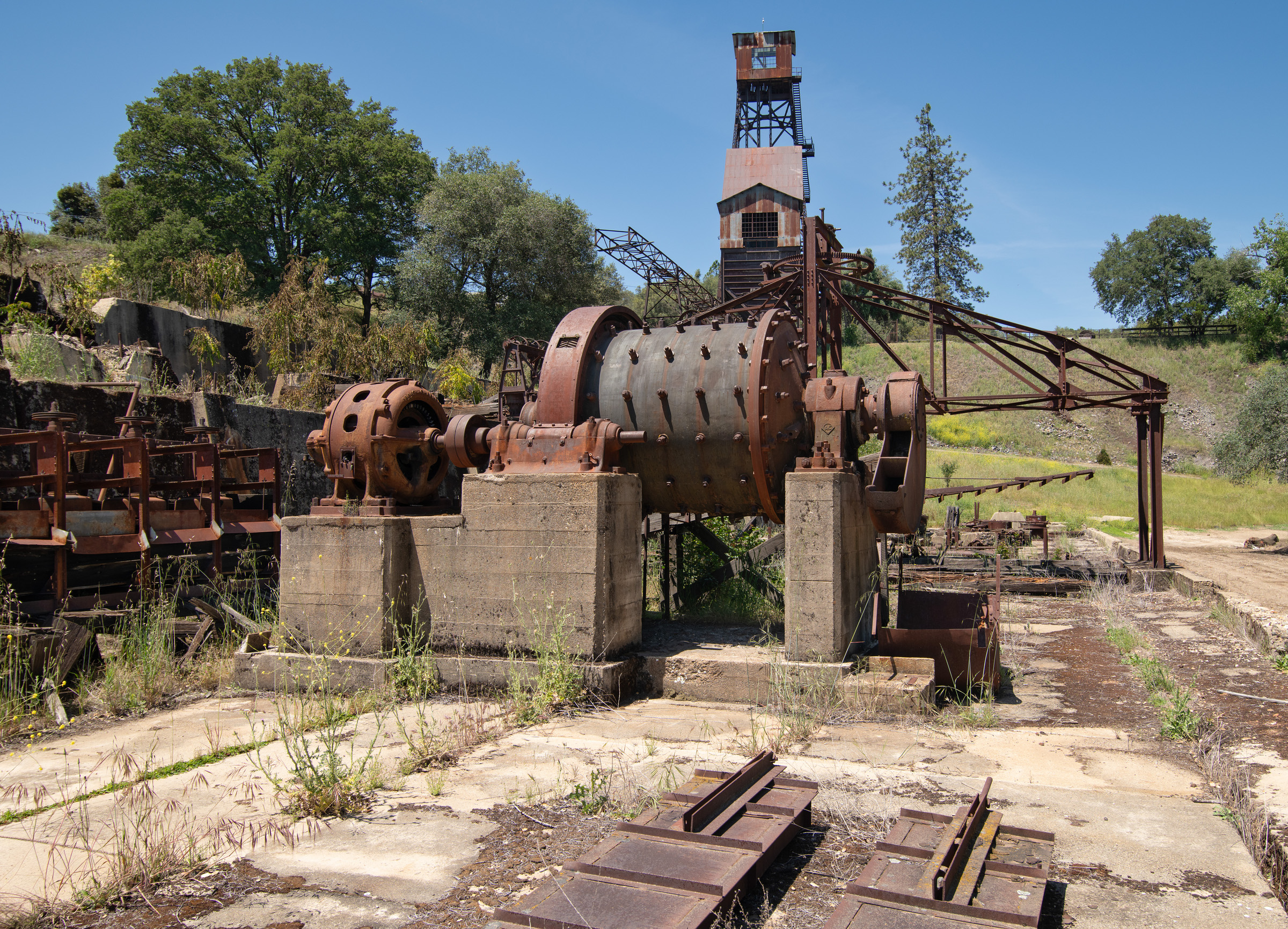 A large ball mill is still mostly intact
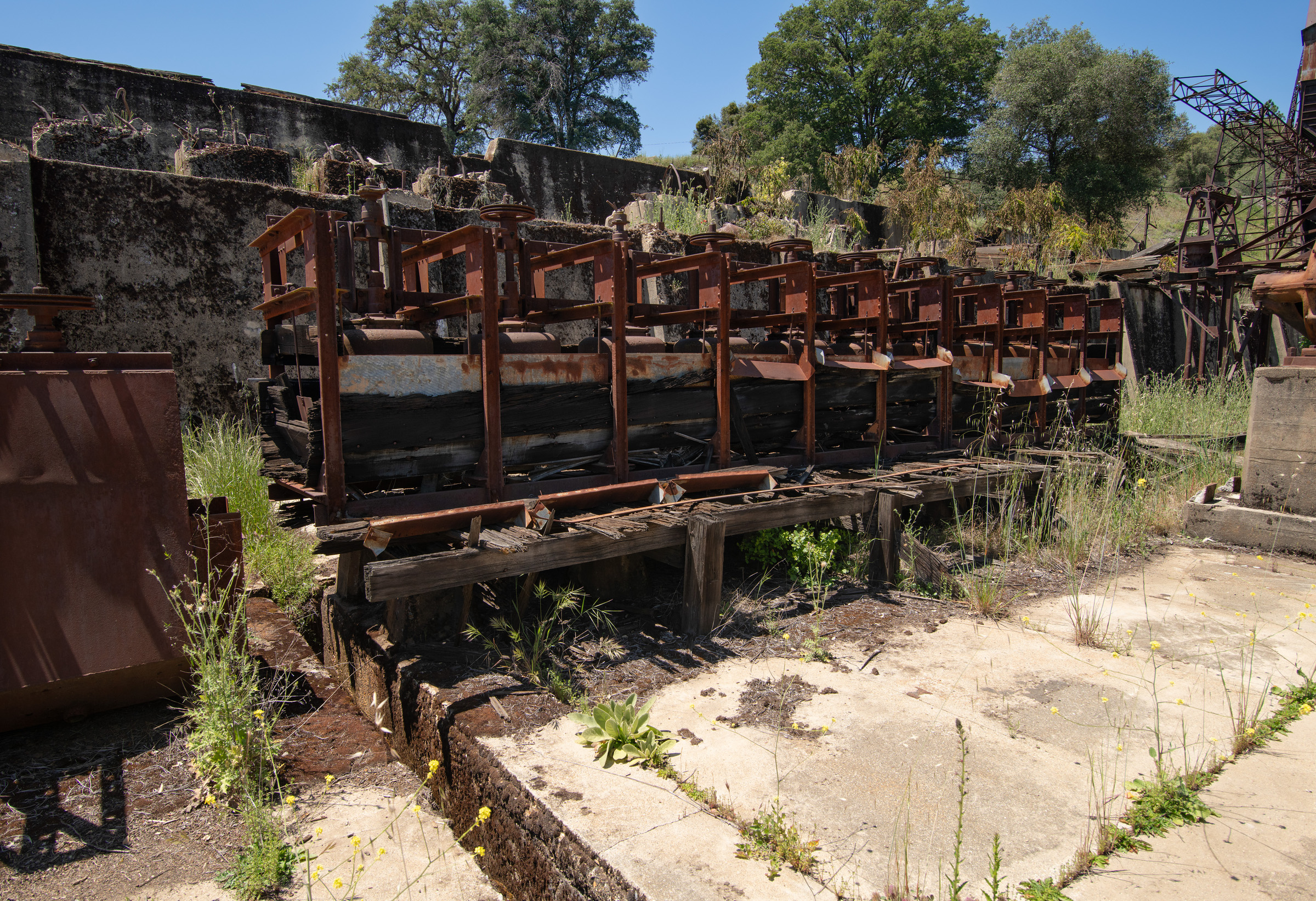 Floatation cells
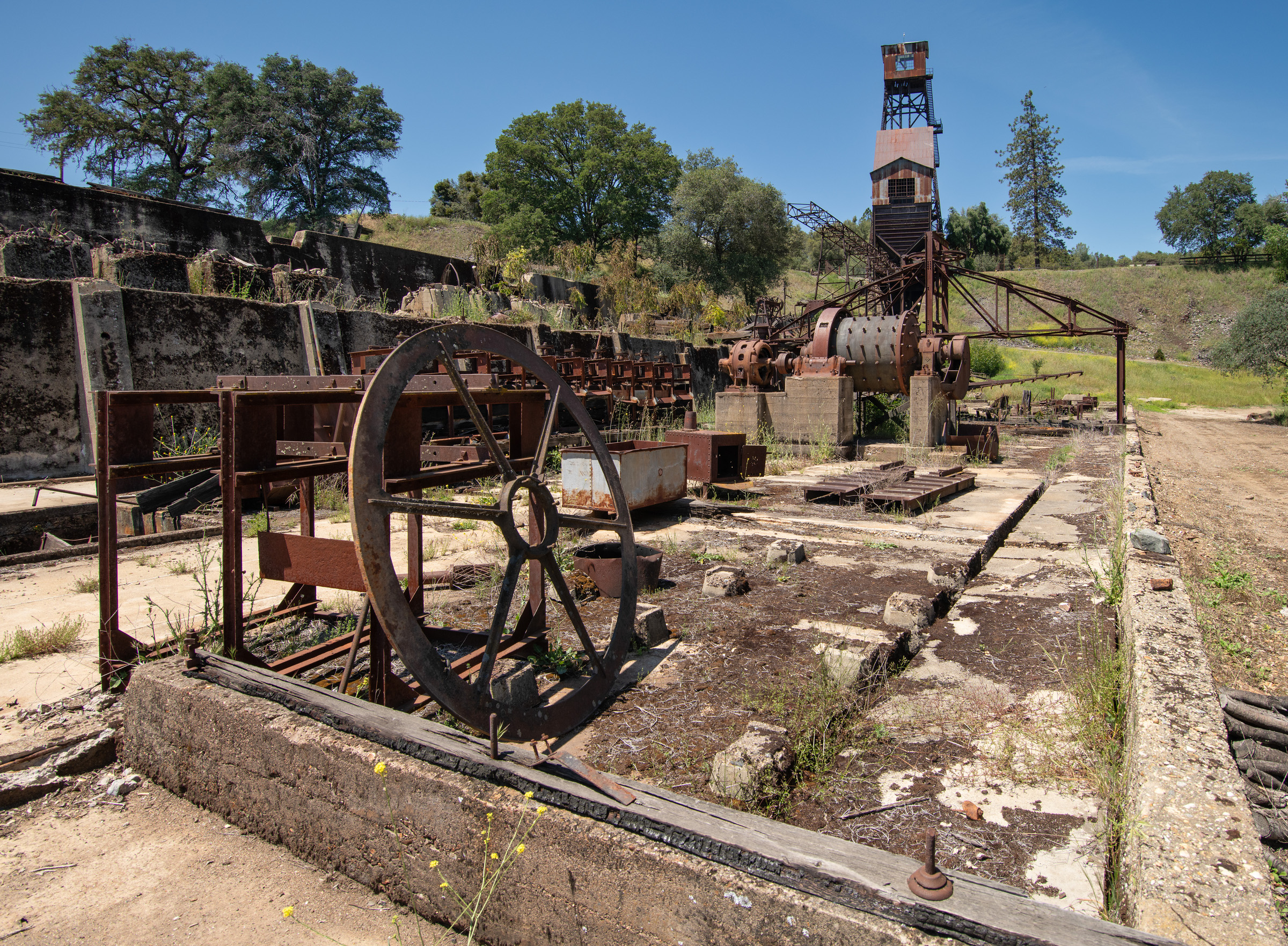
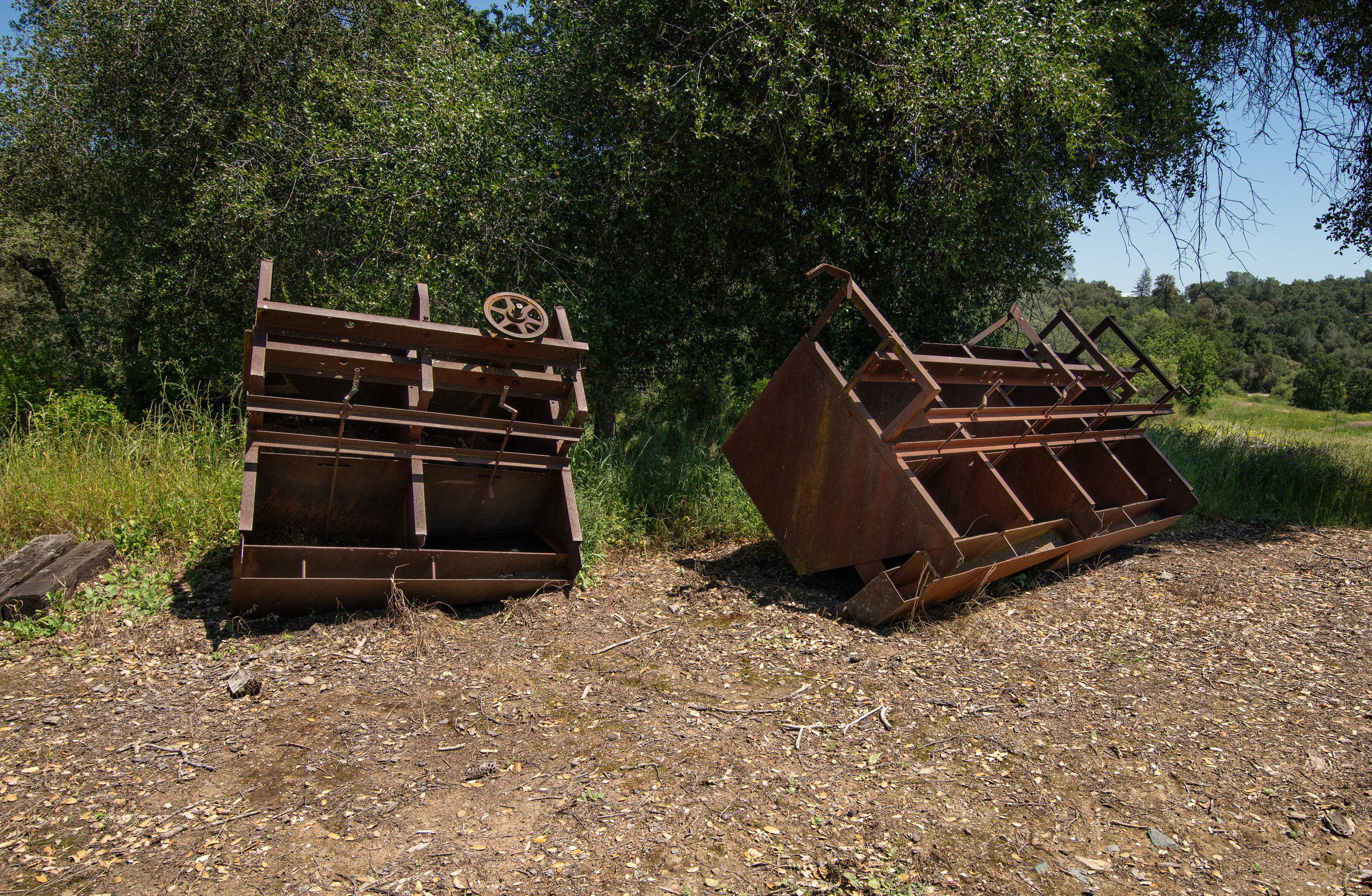 Floatation cells
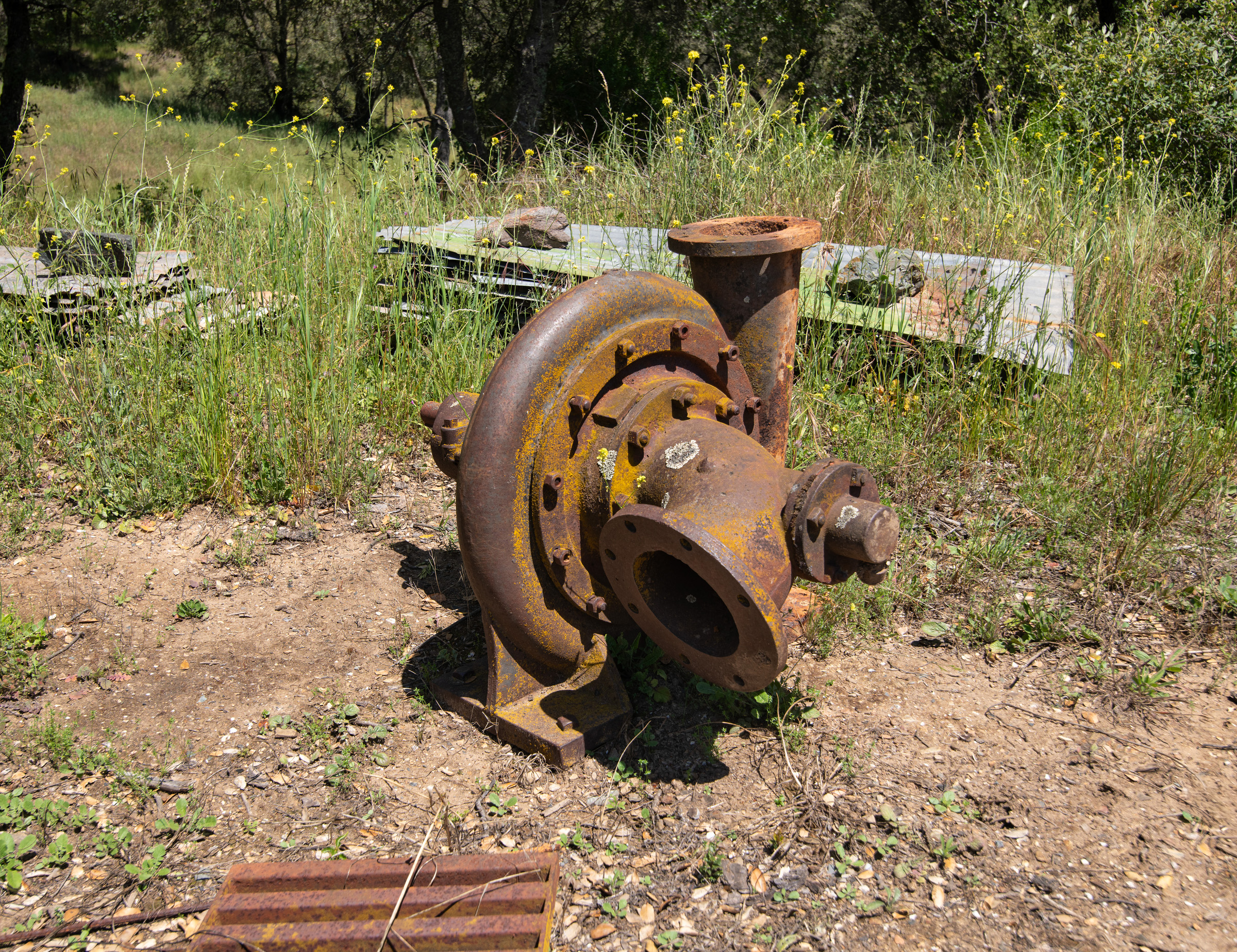 Remains of a centrifugal pump
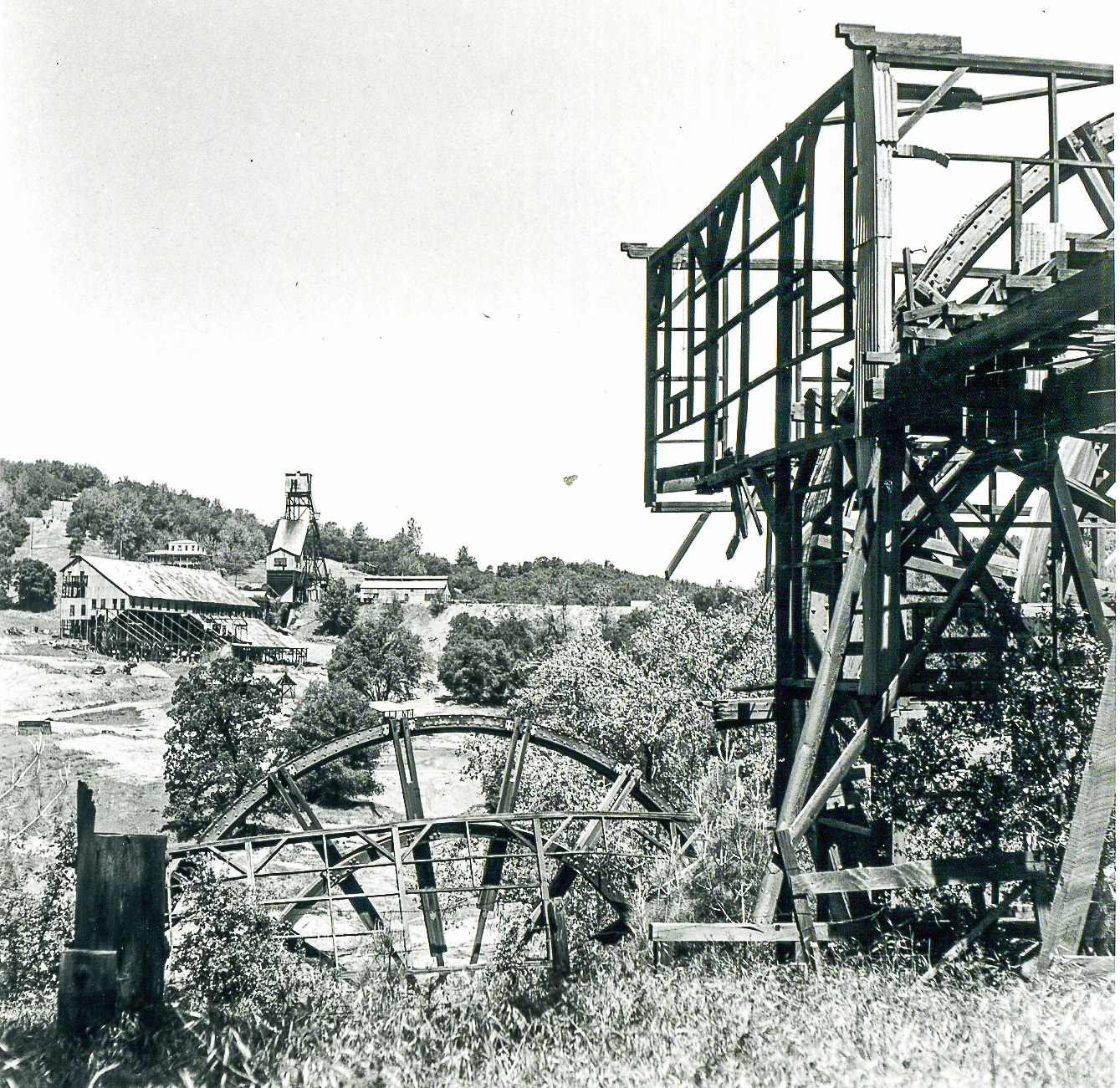 Tailing wheels 1 and 2. The flume from the mill is missing.
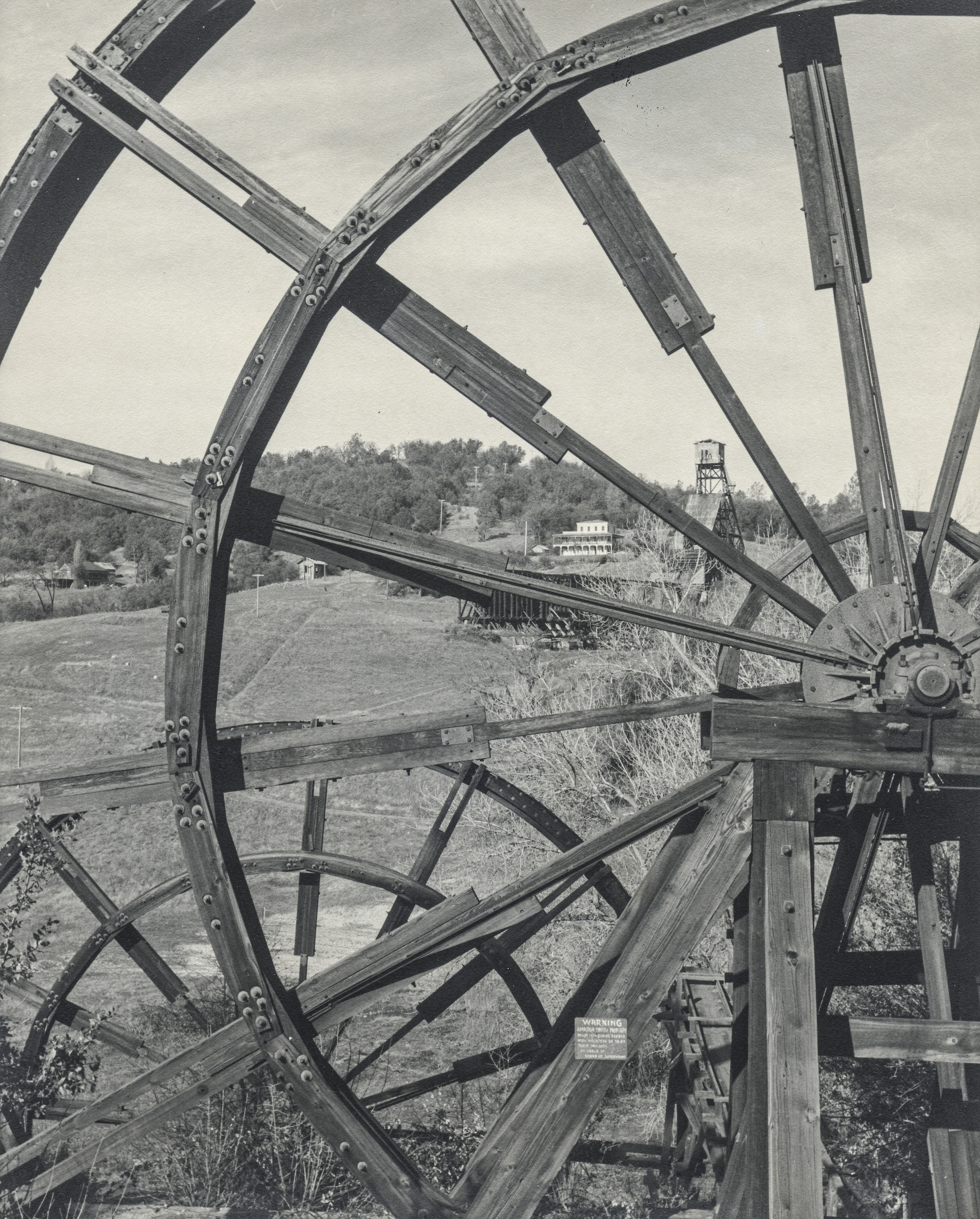 Tailing wheels 1 and 2. The mill has been mostly salvaged.
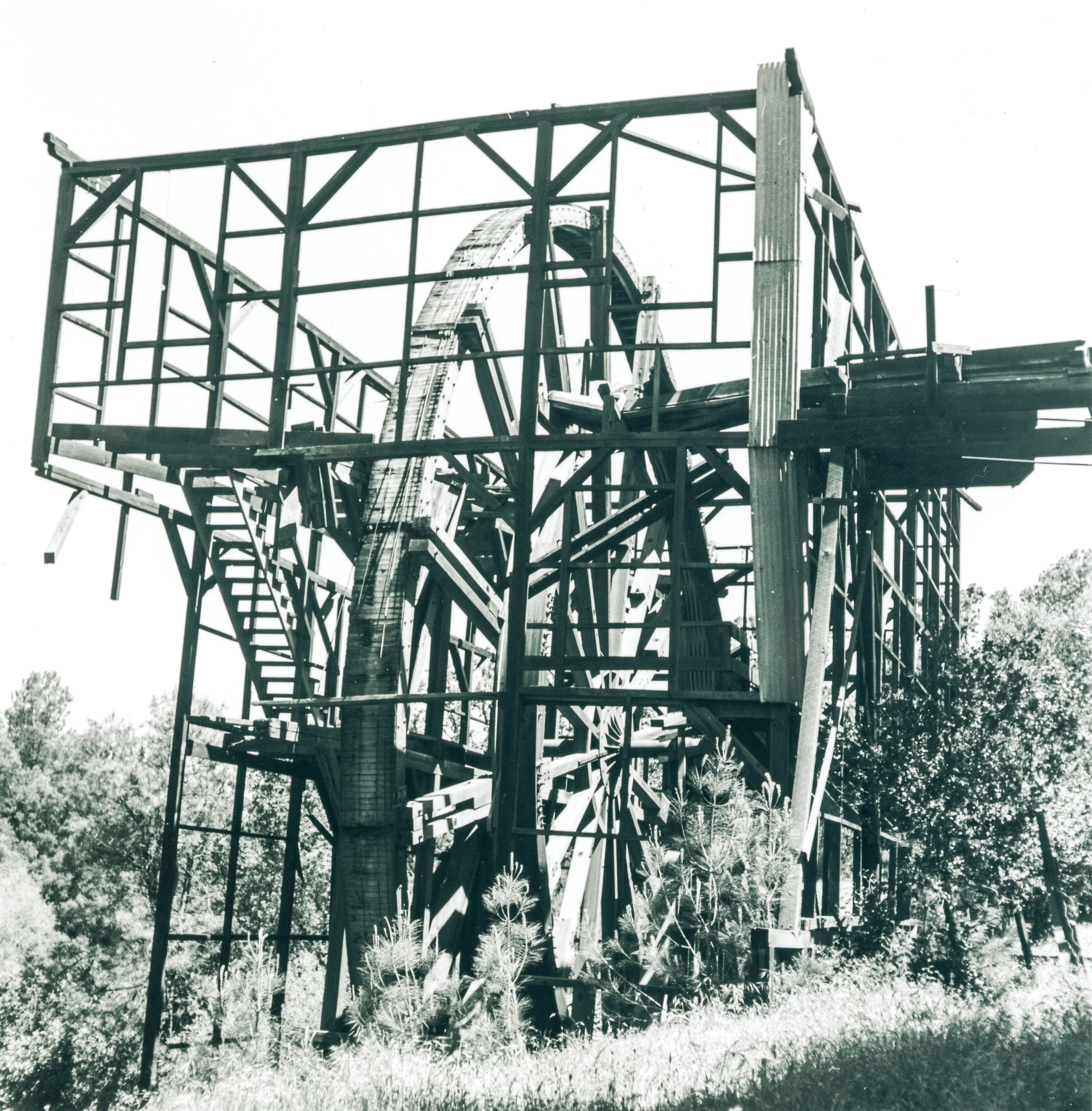 Tailing wheel 2, which today is now collapsed.
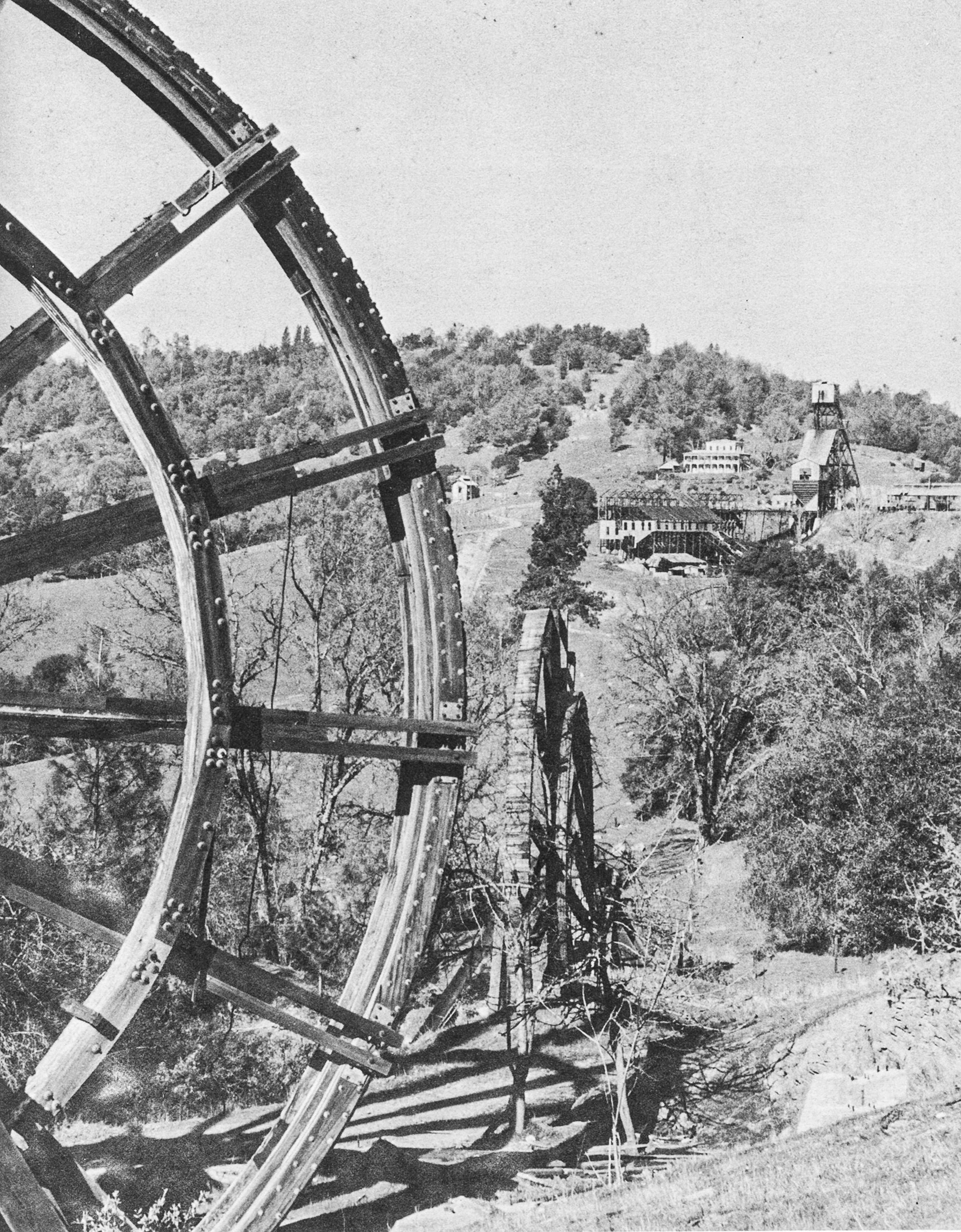 Tailing wheels 3 and 4. The mill is partially salvaged.
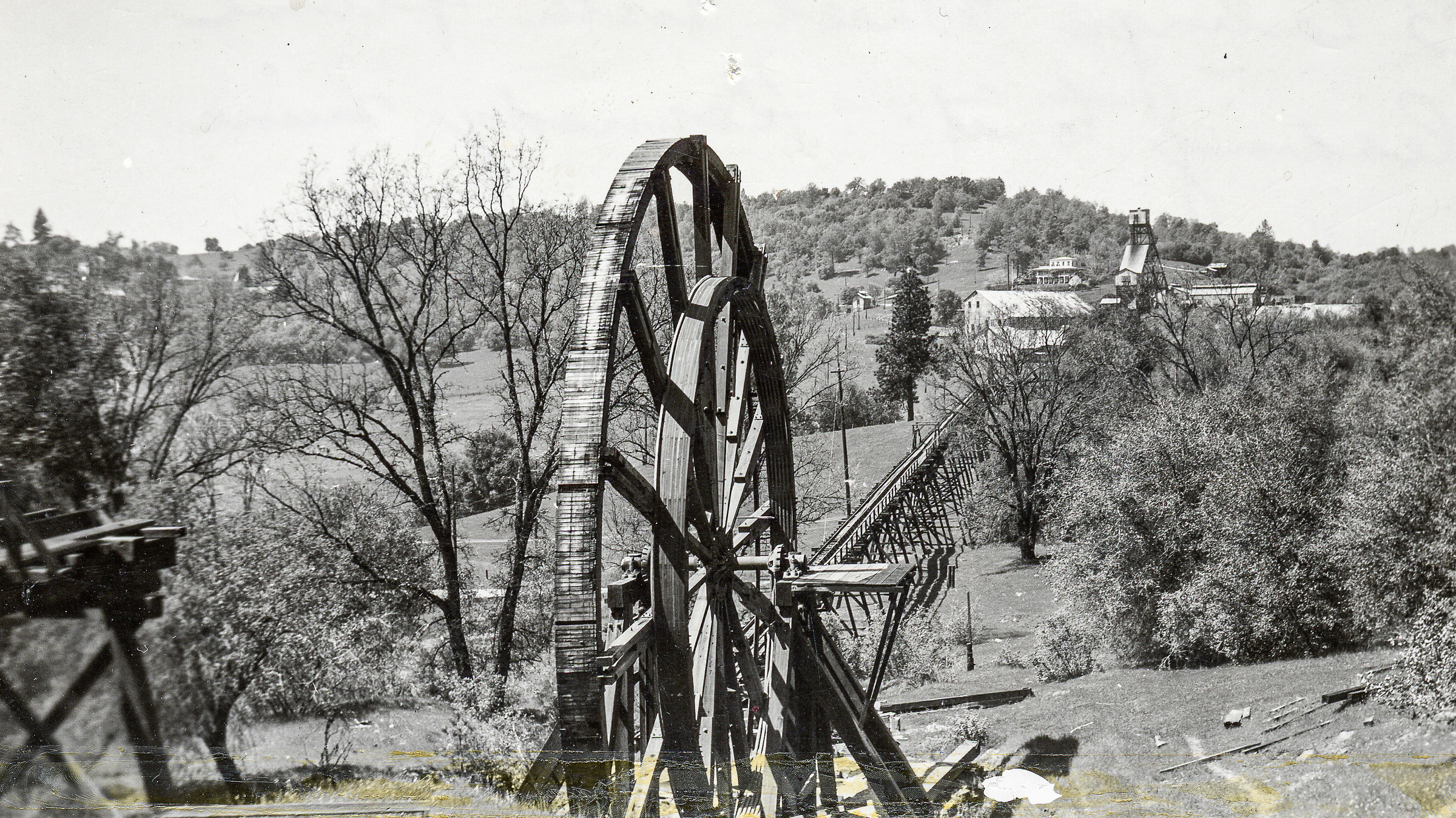 Tailing wheel 3 and flume from wheel 2. Mill is intact.
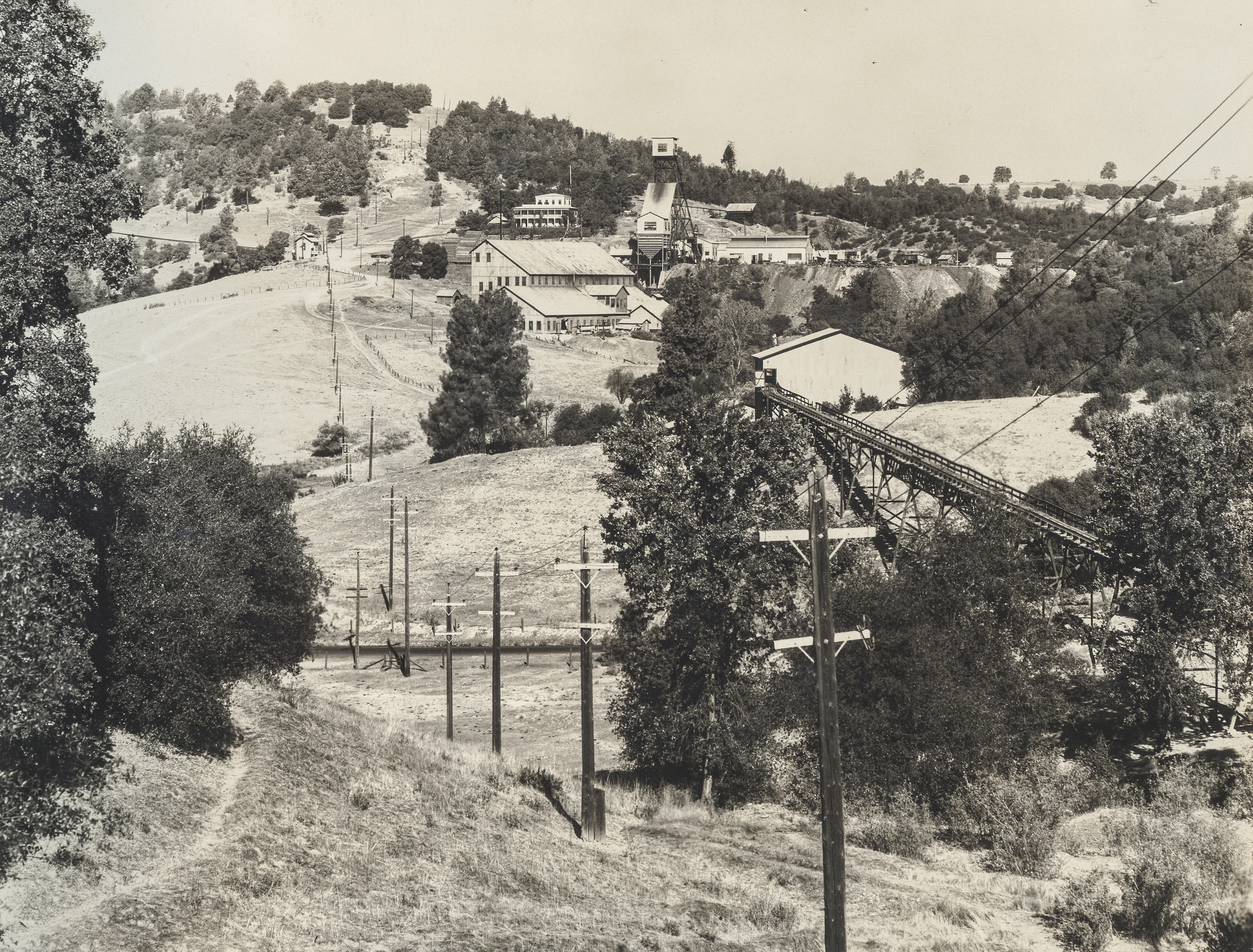 Tailing wheel 2 (in building) and flume to wheel 3. The mine is still in operation.
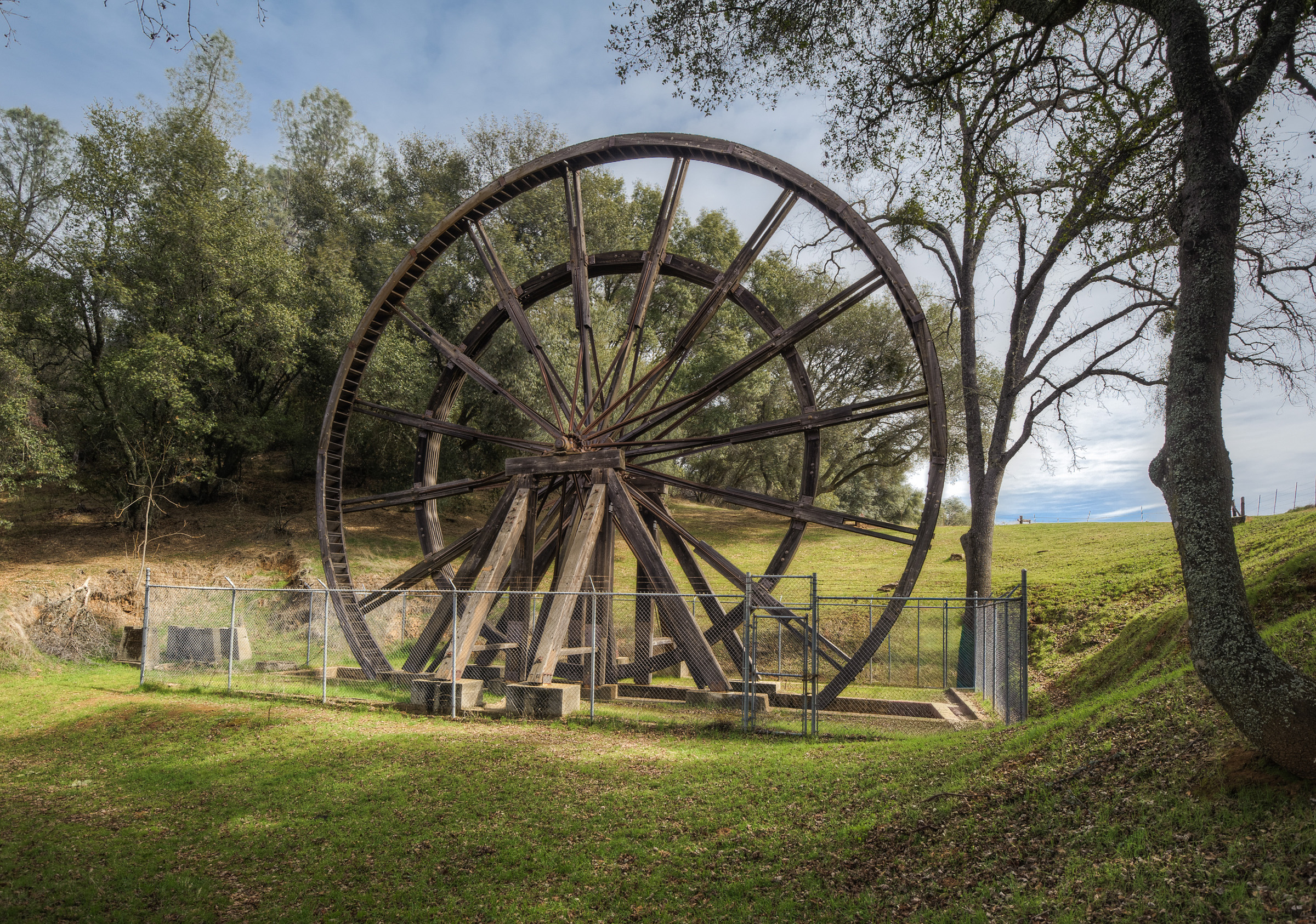 Tailing wheel 4, February 2012. The impound pond is behind the ridge.
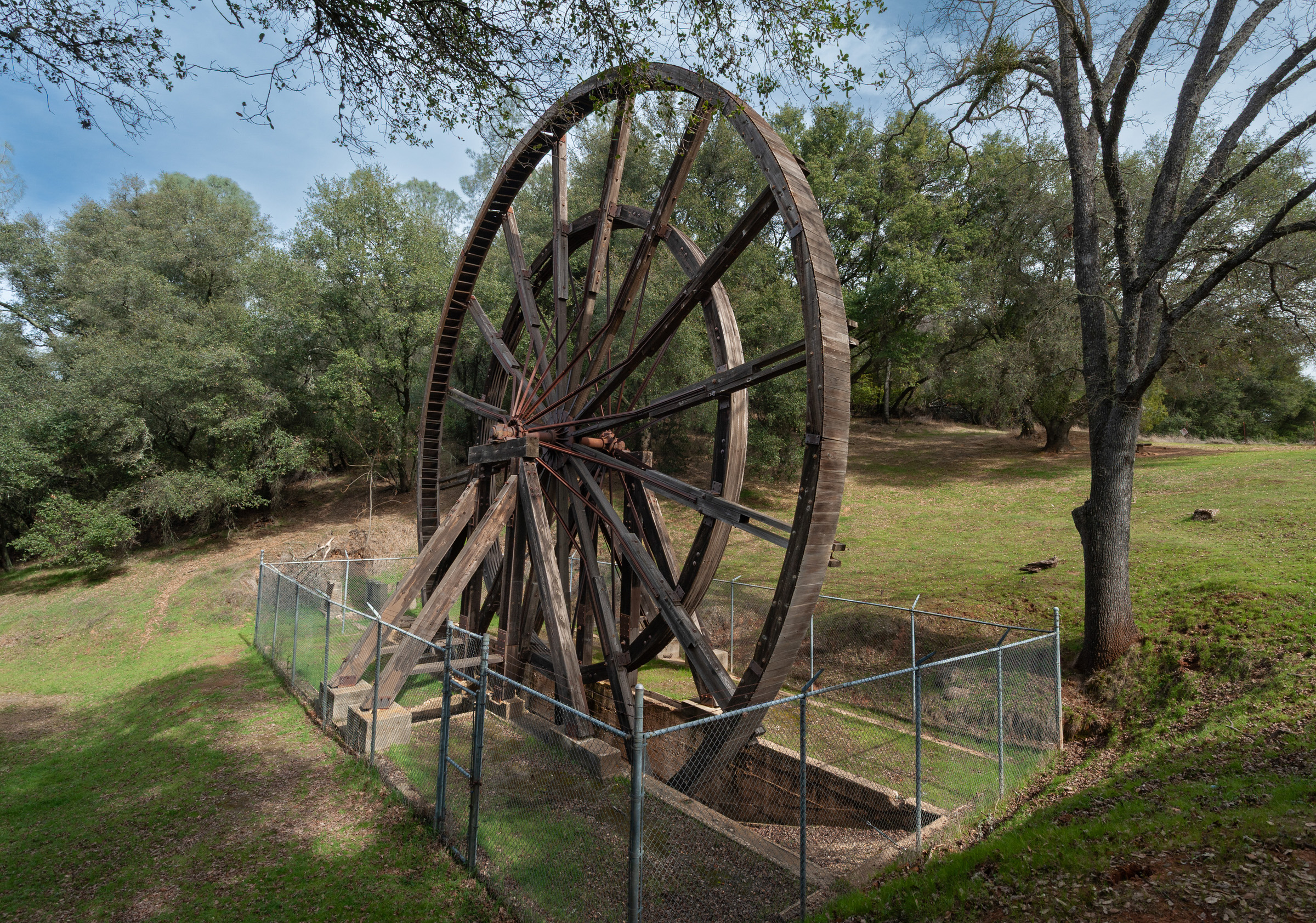 Tailing wheel 4 in 2012. It is now enclosed in a metal and glass structure.
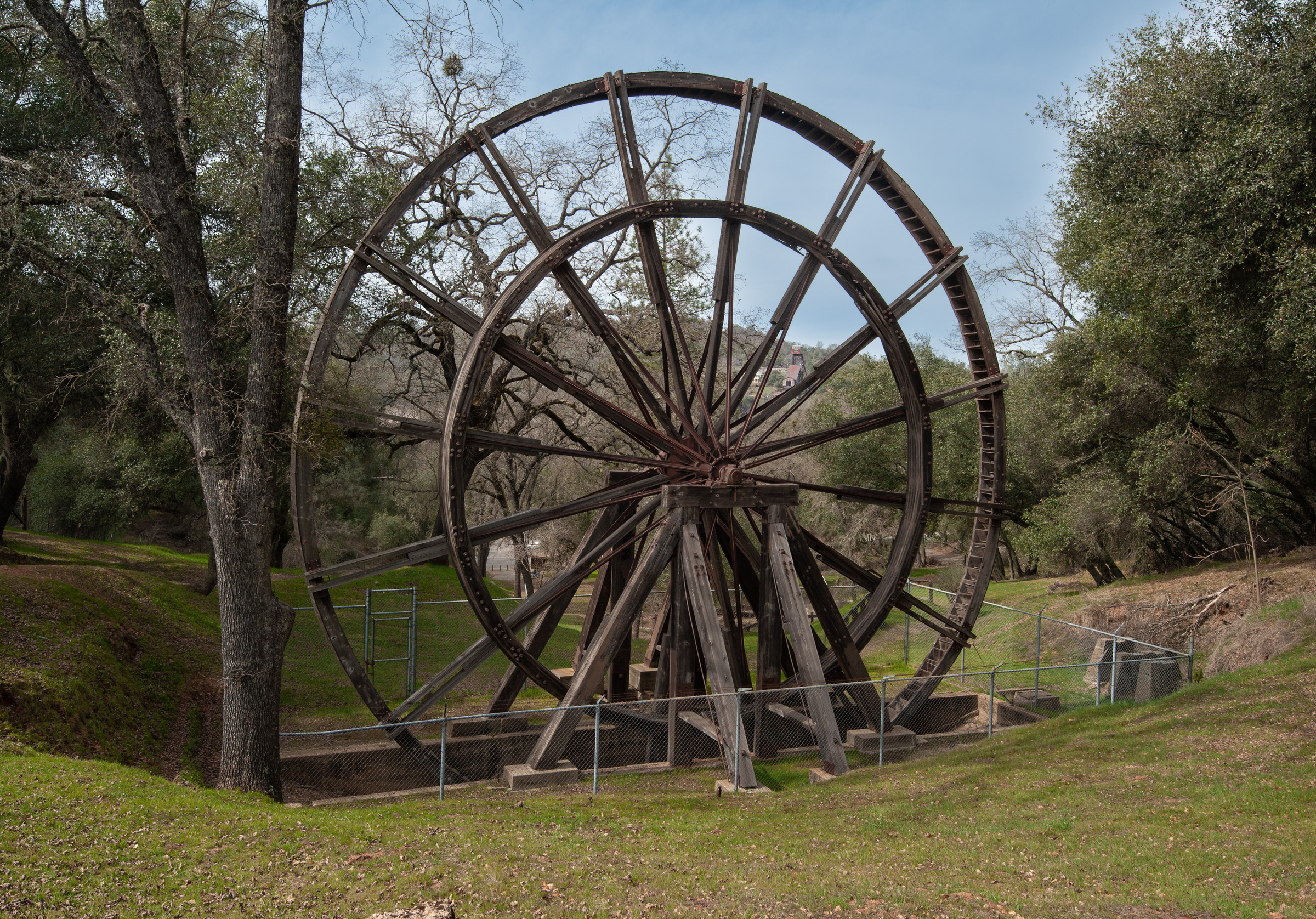 Tailing wheel 4 in 2012. The headframe is visible through the spokes.